
[ad_1]
In one of the scariest moments in modern history, we're doing our best at ScheerPost to pierce the fog of lies that conceal it but we need some help to pay our writers and staff. Please consider a tax-deductible donation.
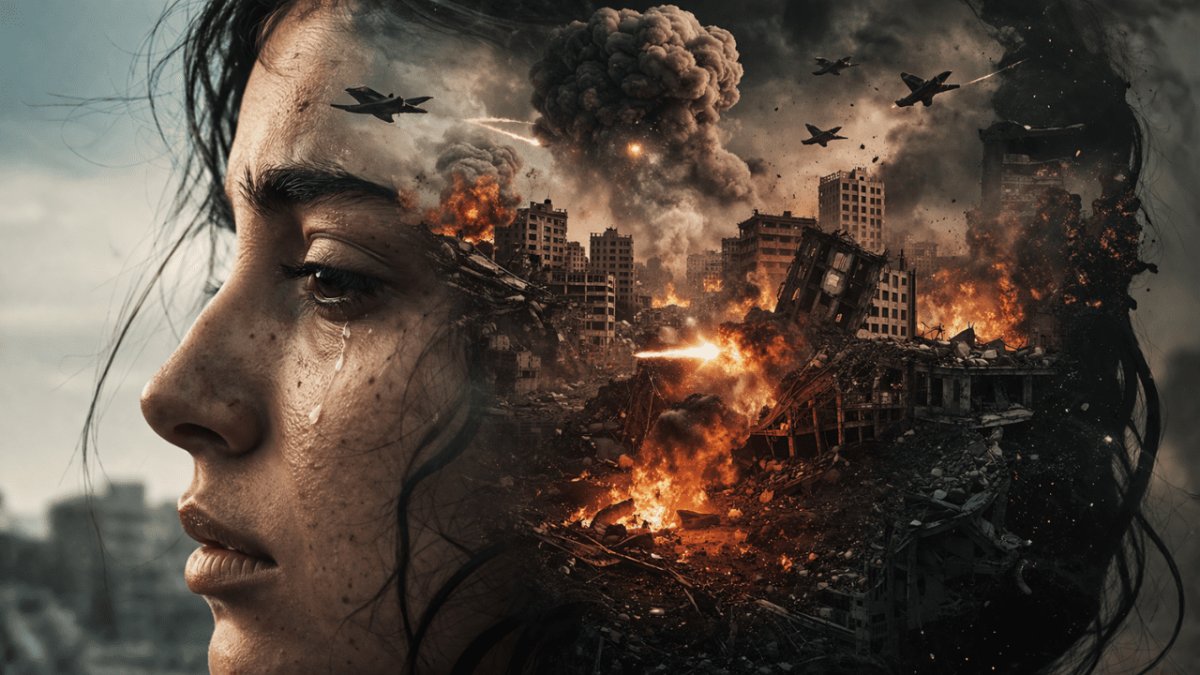
The trauma of war coupled with genocidal and demeaning rhetoric from U.S. leadership could lead to lasting mental health and social concerns for Iranians, experts say
A shaky ceasefire after 39 days of U.S.-Israeli war on Iran appears to be on the verge of collapse with Tel Aviv refusing to halt its heavy bombardment of Lebanon, while there is continued uncertainty on Iran’s reopening of the Strait of Hormuz. On April 7, a 10-point proposal by Iran was initially accepted by the U.S. as a basis for negotiations, but Tehran now says the truce has already been breached.
During more than a month of relentless airstrikes, nearly 1,900 Iranian civilians were killed and more than 100,000 civilian buildings, including commercial centers, sports venues, schools, ambulance stations, and several UNESCO World Heritage Sites, were damaged or destroyed. On Tuesday, one of Tehran’s oldest synagogues was demolished in Israeli airstrikes. Neither U.S. nor Israeli officials have expressed regret over the loss of civilian life in Iran.
Yet, no matter the fate of the truce, the road to recovery for the Iranian people, blighted by a blend of adverse events over the past months and the trauma of war, will likely be tortuous. As a nation that has carried the burden of decades of undemocratic governance, economic sanctions, and information warfare by external actors, the recent conflict has only compounded a state of collective angst.
The psychological burden inflicted by the U.S.-Israeli war has been significant, and Iranians are already struggling before the long-term impacts materialize. The Iranian Red Crescent Society reported fielding more than 130,000 calls through its psychological support helpline as of March 31. Experts say to expect that more Iranians will be seeking mental health intervention in the weeks and months to come.
Researchers are warning of a future in which the intergenerational transmission of trauma among Iranians will be a major component of their mental health profile.
Dr. Arash Javanbakht, a psychiatrist and founding director of the Stress, Trauma, and Anxiety Research Clinic at Wayne State University, researches trauma in people exposed to war and chronic stress. He said there are epigenetic changes that happen in people as a result of such exposures, which he has documented in his work on war refugees from Gaza and Syria.
“Your genes change to make you be more ready for danger, threats, and risks when you’re exposed to trauma, and then you give it to your offspring both through the genes and the behavior,” Javanbakht told Prism.
“The first thing that anybody should do is to stop this—anybody should try to stop the continuation and worsening of the trauma,” Javanbakht said. “When that hopefully happens, then what the international community can do is to [see] if there are funds and resources and even pathways to training medical staff inside Iran and rehabilitating the medical staff.”
A long simmering crisis
Global indicators have long pointed to a simmering mental health crisis in Iran. In its study of the prevalence of depression and other mental disorders in 2017, the World Health Organization (WHO) reported that 3.6 million Iranians struggled with depressive disorders, while almost 3.5 million had anxiety disorders. At 4.6%, Iran, Kuwait, and Tunisia were tied as the countries with the second-highest frequency rate of anxiety disorders among 22 countries WHO defines as Eastern Mediterranean.
Given that acknowledging mental health remains taboo in large parts of Iran, including the more conservative regions of the country, these figures could be an underestimate. Also, because many people with symptoms of emotional distress don’t seek medical intervention, their issues aren’t documented.
Suicide rates have also been steadily increasing in Iran, even though they are lower than the global average. A 2023 study by researchers of Shahroud University of Medical Sciences found that the prevalence of suicide attempts in Iran was 131 per 100,000 people while the prevalence of deaths caused by suicide stood at 8.14 per 100,000 people.
Still, statistics around self-harm are remarkably hard to gauge in Iran, both because of the government’s religious considerations as well as unwritten traditional norms. In 2009, a suicide prevention official in Iran’s health ministry said that due to cultural and social complexities, 75% of suicide cases in Iran were not reported.
Meanwhile, Iran ranked 115th out of 147 countries on the latest Happy Planet Index released by the London-based New Economics Foundation in 2021, which weighs life expectancy, quality of life measures, and the carbon footprint of countries it studies.
These numbers scratch the surface of a mental health dilemma in Iran that, against the backdrop of the scarcity of practitioners and licensed psychiatrists, has been years in the making.
Despite a large population of medical students and the rapid development of different specialties, the number of licensed practitioners remains scant compared to the population of Iran. In 2020, a Ministry of Health official said there was only one psychiatrist per 45,000 people, and the latest WHO data show the ratio of psychiatrists working in the mental health sector remains at 2.016 per 100,000 people, while in the U.S., the value is 10.54.
“We fake a smile to survive”
As with any other military intervention that leaves civilians stuck with long-term challenges, Iranians face consequences that will outlast the tenures of the current leaders of the U.S. and Israel who waged the war. According to the United Nations High Commissioner for Refugees, up to 3.2 million Iranians have been temporarily displaced, and the U.N. estimates that nearly 1,300 Iranians have departed for Turkey every day since the war started.
Meanwhile, the erasure of collective memory with the destruction of cultural sites, universities, iconic neighborhoods, bookstores, and popular businesses, as well as potential health hazards caused by airstrikes on oil facilities in Tehran and southern Iran, could lead to long-lasting mental health trauma.
On social media, Iranians who have been able to bypass the internet restrictions mandated by the government have shared their experiences with fear, exhaustion, and night terrors. These viral anecdotes, often written in Persian, have rarely been translated by the Western press and made available to a broader audience.
“It’s been more than a month that we’ve been going to bed with the roar of fighter jets and explosions, waking up to the same sounds, and trying to continue something along the lines of life amid all these fears,” Elaheh Mohammadi, a prominent Iranian journalist at Ham-Mihan, wrote on X on April 7, just before the ceasefire was announced. Mohammadi was arrested after her groundbreaking reporting on the 2022 death of Mahsa Amini in morality police custody and released after 16 months in detention
“We’re literally trapped. We lose the precious lives of civilians every day. We are frightened. We cry,” she added in her post, in which she also challenged the pro-war narratives. “Sometimes, we fake a smile to survive, and we struggle with VPN configurations day and night, and live every moment with the question of whether the house will still be standing the next minute.”
Many Iranians have been hurt by the dehumanizing language of U.S. officials, including President Donald Trump and Defense Secretary Pete Hegseth, whose constant use of pejoratives to describe the Iranian people and their culture has generated backlash. Firebrand members of the Iranian diaspora and commentators on exiled Persian-language broadcasters have reinforced this discourse against their fellow Iranians.
Some members of Congress have called to invoke the 25th Amendment to the Constitution to remove Trump from office, citing his unfitness to serve. Many of these lawmakers have highlighted Trump’s language, particularly his April 7 Truth Social post in which he promised that “a whole civilization will die tonight” if Iran didn’t accept his demands.
He subsequently backed off and accepted a ceasefire, but legal scholars are arguing that the U.S. president clearly expressed an intent to commit an act of mass atrocity.
“President Trump’s threat to end Iranian civilization is the clearest evidence of intent in modern international criminal law,” Ingrid Burke Friedman, a fellow at Harvard University’s Davis Center for Russian and Eurasian Studies, wrote in an essay in JURIST, where she serves as editorial director. She argued that Trump’s statement left no room for ambiguity.
Ramona Taheri, executive director of the Virginia-based Peace Operations Training Institute, told Prism in an email, “The persistent dehumanization of Iranians is something that has existed my entire life, but the threat of wiping out ‘a whole civilization’ took this dehumanization to an exterminationist and genocidal level.”
“We should do everything in our power to make sure such language is not normalized,” she said, adding that influencers, celebrities, and those without expertise in conflict and international relations are being platformed by major media outlets to perpetuate such tropes.
Now, as millions of people worldwide remain glued to social media and TV screens watching alarming updates and agitated debates about the conflict, Iranians will navigate the question of how to overcome the scars of the war. For many of them, ingrained images like the bombing of the Shajareh Tayyebeh school in Minab, which killed more than 150 schoolgirls on the first day of the war, and the indifferent response by influential diaspora actors are not easy to process.
“It shouldn’t be difficult for an Iranian outside or inside Iran to feel empathy for another Iranian who lost a family member in the war. That is the most basic, humane aspect of what an Iranian can do for another Iranian,” Javanbakht, the psychiatrist, said.
Other experts agreed that rehabilitating Iran as a society affected by foreign aggression and domestic crises is a responsibility that both the international community and the people of Iran should approach with care moving forward.
“Any time warfare and mass atrocities happen, it sows distrust, it ruptures the person’s sense of personal safety. They close ranks and become more closed off to receiving help, asking for help, showing kindness to others,” said Azadeh Aalai, an associate professor of psychology at Queensborough Community College in New York.
“So it’s important on the ground within communities, within neighborhoods, and for individuals to look out for each other and to remain sources of support for one another,” she added, “especially when there’s so much instability and uncertainty, systematically or institutionally, regarding what’s going to happen on the government level.”
Editorial Team:
Sahar Fatima, Lead Editor
Lara Witt, Top Editor
Rashmee Kumar, Copy Editor
Kourosh Ziabari is an award-winning journalist based in New York. His work has appeared in New Lines Magazine, Foreign Policy, UnHerd, Politico, and The American Conservative. A member of PEN America and The Authors Guild, he is the recipient of the United Nations Correspondent Association’s climate change reporting award. He was a 2022 World Press Institute fellow and a 2016/17 Chevening Scholar with the UK’s Foreign Office.
Editor’s Note: At a moment when the once vaunted model of responsible journalism is overwhelmingly the play thing of self-serving billionaires and their corporate scribes, alternatives of integrity are desperately needed, and ScheerPost is one of them. Please support our independent journalism by contributing to our online donation platform, Network for Good, or send a check to our new PO Box. We can’t thank you enough, and promise to keep bringing you this kind of vital news.
You can also make a donation to our PayPal or subscribe to our Patreon.
Please share this story and help us grow our network!
[ad_2]
Source link
