
[ad_1]
Kathy Gannon Substack

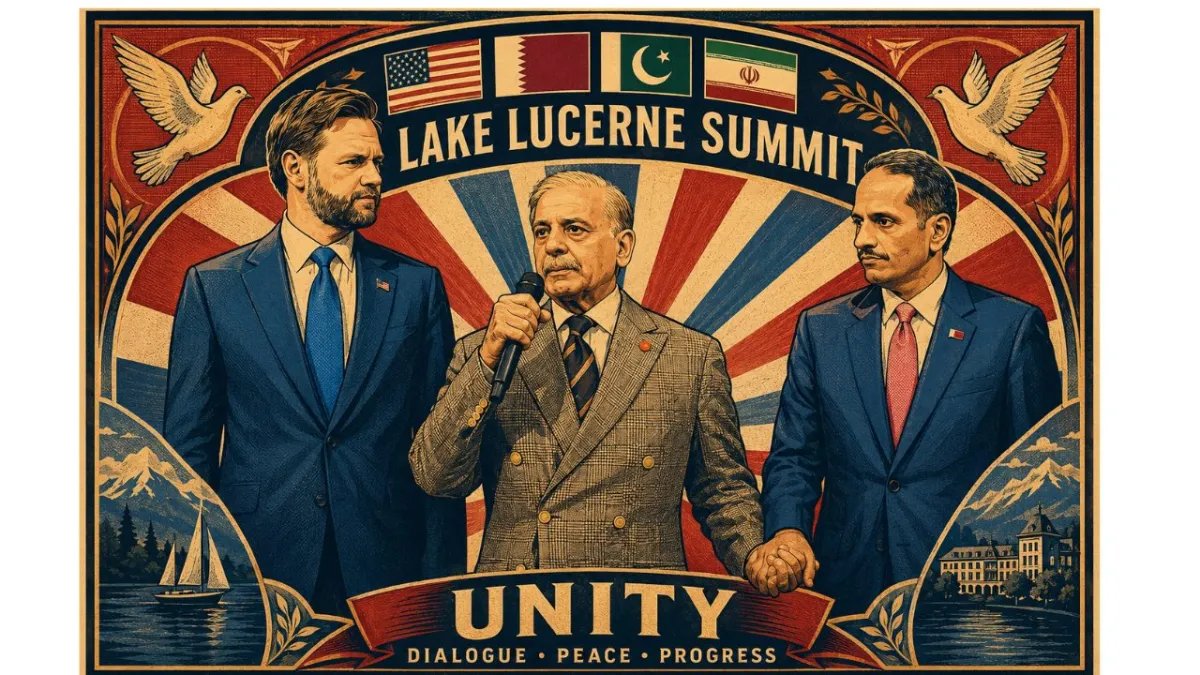
The statement that came out of the first day of meetings in Switzerland between Iran and the United States announced a number of committees or cells, including the “de-confliction” cell.
What does that even mean?
Merriam-Webster offers up one definition: “The coordination of flights, maneuvers, etc. between groups especially in areas where overlapping operations are occurring in order to reduce the risk of accidents or incidents.” Or the same dictionary offered up as an example of how it would be used: “Deconfliction is how friendly forces keep out of each other’s way,” John Bolton.
Now that’s even more confusing because according to the statement, this cell is between the parties, presumably Iran and the United States, as well as the Lebanese republic. Yet the statement went on to say this Deconfliction cell will be “facilitated by the mediators to ensure the adherence of the termination of the military operations in Lebanon as per the MoU.”
Yet neither Israel nor Hezbollah is part of this “deconfliction” cell, even though they are the ones carrying out military operations and as a result would seem critical to any termination of those operations.
Presumably even as the statement avoids saying it, and until now the reporting hasn’t cleared up the confusion, Iran would represent Hezbollah and America, Israel.
Presumably Iran would rein in Hezbollah and the United States would rein in Israel. That seems a big ask, likely more for Washington, than Tehran. Until now the U.S. has failed to stop Israel’s bombing campaign. The question then is: How is this cell that neither includes Israel or Hezbollah, going to “ensure the adherence of the termination of the military operations in Lebanon as per the MoU.”
It is a bit of a mystery how the Merriam Webster dictionary use of “deconfliction” applies to this conflict. Neither Israel nor Hezbollah fit the definition of “friendly forces.”
It’s also disappointing that, until now, news reports covering the statement have offered little to no understanding of this “deconfliction” cell, which is tasked with ending regional conflicts, a key component of the MoU, which must be settled before any peace deal is reached.
Many of the news reports have put quotes around the word “deconfliction” presumably because its definition is difficult to explain, vague or not understood, yet its official so it is used __ without explanation, but with quotes.
But Words Matter.
Words have meaning and the increasing readiness to use words and terms without explanation, or without calling out distortions makes us all less informed. It also distorts our understanding of events, of progress or failure.
It is no longer even clear who is responsible for success or failure and that is problematic because it allows those who negotiate in poor faith to deflect or avoid blame.
The blind acceptance of confusing words and terms we don’t understand also dulls our thinking, dulls our reporting and plays into the hands of the governments, who are involved in this negotiation process, and who want to limit and control scrutiny. .
This MoU itself has often been defined by misleading, vague or confusing terminology. In the initial stages it was referred to as a peace agreement by mediators, who announced the MoU and repeated in news reports. It is not. It is not even an agreement.
It is simply a 60-day pause in fighting, while the thorny issues that have, until now, prevented a peace agreement are discussed with the hopes that it will eventually lead to a peace agreement.
As the pause and negotiations begin, it seems a a new wave of confusing, self-serving terminology is being used to obscure what work is being done, who is doing it, and whether real progress is occurring.
Editor’s Note: At a moment when the once vaunted model of responsible journalism is overwhelmingly the play thing of self-serving billionaires and their corporate scribes, alternatives of integrity are desperately needed, and ScheerPost is one of them. Please support our independent journalism by contributing to our online donation platform, Network for Good, or send a check to our new PO Box. We can’t thank you enough, and promise to keep bringing you this kind of vital news.
You can also make a donation to our PayPal or subscribe to our Patreon.
Please share this story and help us grow our network!
[ad_2]
Source link
