
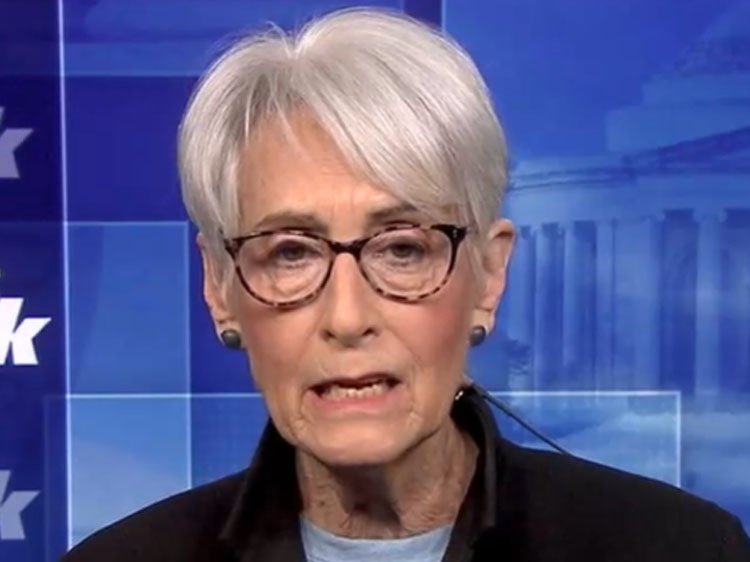
“We see a stalemate between the United States and Iran. We’ve just heard about the economic warfare that’s going on. We have a military standoff, actually,” Sherman said. “And quite frankly, what this requires is really tough diplomacy.”
“You can’t do this in one day. This is a very complex negotiation,” she said. “You have to do it with experts. You have to be ready to be in for a long haul to get a very complicated job done.”
“We are creating a situation which is really superpower suicide,” Sherman said. “We have effectively given Russia a way forward to get money for its war against Ukraine. We’ve put ourselves in a weaker position vis-à-vis the president’s trip to China, and we’ve put our allies and partners, both in the Gulf and Europe, in difficult positions because of the decisions we have made.”
Former CFR chief Richard Haass agreed, adding: “I think history is going to properly be extremely critical about this war, and about the assumptions we made going into it.”
“It almost reminds me of Vietnam. We’re winning in terms of the narrow military calculation, but in the larger, strategic sense, we’re losing this war,” Haass added.
“There’s always been debate inside of Iran,” Sherman said. “We tend to think, because there’s a ‘supreme leader’ it is iron clad, but it’s not. It has politics. But right now, what has happened is the Islamic Revolutionary Guard Corps is in full control.”
“All the assumptions have been wrong here,” she said. “We have always gamed out that the Strait of Hormuz was a problem. We have always gamed out that Iran could hit our partners in the Gulf. The administration has not understood that this is a culture of resistance, and Iran is not about to give up ever the things that it says is part of its national identity.”
Sherman concluded: “There is a way forward here. If we suspend the blockade and Iran suspends its closure of the Strait of Hormuz, during a negotiation for some agreed period to see if progress can be made. But unless we are about to really engage in tough diplomacy, we’re not going to get anywhere any time soon.”
WENDY SHERMAN, FORMER DEPUTY SECRETARY OF STATE: I think, George, that we see a stalemate between the United States and Iran. We’ve just heard about the economic warfare that’s going on. We have actually a military standoff and quite frankly, what this requires is really tough diplomacy.
There’s no question that the United States has a credible threat of force, but the blockade really blockades ourselves as well as Iran. And the United States has to decide what it’s willing to do to get back to these talks and really begin some true diplomacy. You can’t do this in 20 hours, in one day. This is a very complex negotiation.
You have to do it with experts. You have to be ready to be in for a long haul to get a very complicated job done. The last point I want to make, as others have said, we are creating a situation which is really superpower suicide. We have effectively given Russia a way forward to get money for its war against Ukraine. We’ve put ourselves in a weaker position vis a vis the president’s trip to China, and we’ve put our allies and partners, both in the gulf and in Europe, in difficult positions because of the decisions we have made.
…
RICHARD HAASS, PRESIDENT EMERITUS, COUNCIL ON FOREIGN RELATIONS: When historians write about this, they’re going to say this was an ill-advised war of choice. Yes, Iran is conventionally weaker. Its military forces are somewhat weaker. But the cost, the economic cost, the cost to alliances, the cost to U.S. standing, American guarantees, the local partners in the Gulf, they’ve been — they’ve been hurt by this war.
So, I think history is going to properly be extremely critical about this war, about the assumptions we made going into it, that Iran couldn’t stand up, that it wasn’t going to attack its neighbors, it wasn’t going to close the Strait of Hormuz. Every one of these assumptions has been proven wrong. So, we’re winning. If you — it almost reminds me of Vietnam, George. The body counts. We’re winning in terms of the narrow military calculation, but in the larger, strategic sense, we’re losing this war.
STEPHANOPOULOS: And, Wendy, you spent a lot of time negotiating with the Iranians. What’s your sense of who is in charge right now? We’ve heard President Trump talk about the divisions there. It’s unclear who is leading the negotiations and who they’re answering to.
SHERMAN: So, there’s always been debate inside of Iran. We tend to think, because there’s a supreme leader, that it’s iron clad, but it’s not. It has politics. But right now what has happened is the Islamic Revolutionary Guard Corps is in full control. The folks that I call the hard hard-liners are really dictating how we go forward. Mojtaba Khamenei is probably alive, but Vahidi, who is head of — the commander of the IRGC is probably calling the shots. Abbas Araghchi, who was my counterpart during the 2015 negotiations, now the foreign minister, is very smart, very tough, knows every detail of this constant problem that we’re facing to make sure Iran never has a nuclear weapon and he has bona fides out of the revolution in 1979. So, he knows how to deal with this.
And Richard is quite right, all the assumptions have been wrong here. We have always gamed out that the Strait of Hormuz was a problem. We have always gamed out that Iran could hit our partners in the Gulf. The administration has not understood that this is a culture of resistance, and Iran is not about to give up ever the things that it says is part of its national identity.
STEPHANOPOULOS: Yes, and then if — and that means the right to enrich nuclear materials. The president — and I wonder what you think about this. President Trump keeps saying the objective is that Iran will not have nuclear weapon. They forswear that that’s their goal. They say it’s not their goal. Do you think the president understands that and is he looking for some wiggle room in the negotiations?
SHERMAN: I hope he’s looking for some wiggle room because we’re not going to get anywhere if we say that they don’t have a right. The United States has never believed that the nonproliferation treaty gives that right. But President Obama was willing to allow Iran to have a very small civil enrichment program under very intrusive monitoring and verification.
There is a way forward here. I could even imagine that we suspend the blockade. Iran suspends its closing the Strait of Hormuz during a negotiation for some agreed period to see if progress can be made. But, quite frankly, unless we are about to try to really engage in tough diplomacy, we’re not going to get anywhere any time soon.
Bill Burns has laid out in a “New York Times” editorial — op-ed piece that, in fact, we could get Iran to suspend perhaps enrichment for a period of time and then maintain a very small program, again under that intrusive monitoring. There are solutions here, George, but they have to be negotiated. Richard, you this week laid out three possible courses — either escalation, drift, or some kind of negotiations leading to deal.
