
[ad_1]

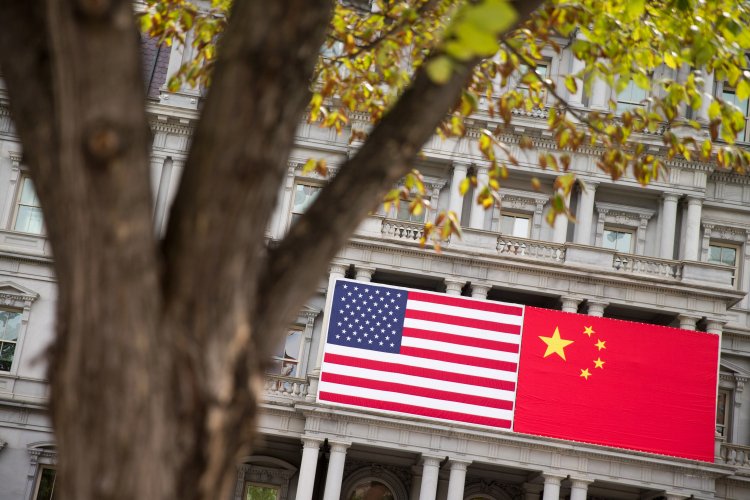
For nearly two decades, Pew Research Center surveys delivered the same reliable finding: The world viewed the United States more favorably than China. That era is over. In its July 2026 report, Pew found China now ranks higher in favorability than the United States across most of the 36 countries surveyed. Gallup data from 2025 already showed China’s median approval edging past America’s. Confidence in Xi Jinping now exceeds confidence in Donald Trump by a clear margin in the countries Pew tracks annually. The Council on Foreign Relations rightly asked what happened. The answer is simpler – and more damning – than most analysts want to admit.
The single most influential reason China looks better to the world than the United States is that Western media, Hollywood, journalists, multinational corporations, sports leagues, politicians, and cultural institutions have been systematically unable, or unwilling, to portray China in any meaningfully negative light. Beijing made the rules clear: Criticize us, depict our system honestly, or even hint at Taiwan’s separate status, and you lose access to the world’s largest consumer market. The penalty for disobedience is banishment.
We complied. The result is a global information environment in which America’s flaws are dissected in real time while China’s are airbrushed out of existence.
I know this dynamic from the inside. For 17 years I served as president of a studio’s motion picture division, pioneering the opening of China’s market to Hollywood. We told ourselves we were spreading American soft power, building domestic GDP, and creating cultural glue between superpowers. In practice, we rewrote scripts, moved settings, and scrubbed content to satisfy Beijing’s censors. The original “Looper” script sent stars Bruce Willis and Joseph Gordon Levitt to France. We moved the plot’s destination to Shanghai instead and even added lines that made China the envy of the world. “Iron Man 3” received heavy Chinese brand integration and a heroic, best-in-the-world Chinese scientist. When “Red Dawn” originally cast China as the invader, Sony and MGM reshot it – under the angry demands of Beijing – replacing the PLA with North Korea’s military as the enemy. Paramount removed Taiwan and Japan flags from Tom Cruise’s jacket in “Top Gun: Maverick” – not just for Chinese screens, but for the entire world. These were not isolated creative choices. They were the price of admission.
The same leverage operates far beyond film. When Houston Rockets general manager Daryl Morey tweeted support for Hong Kong in 2019, the NBA faced an immediate and severe market freeze. Players and executives quickly learned the lesson: Stay silent on Beijing’s red lines or watch billions of dollars vanish. Marriott was forced to change its global maps and websites after listing Taiwan and Tibet as separate entities; its Chinese sites were shut down until the company publicly affirmed Beijing’s territorial claims. Consulting firms, like Mintz Group and Bain & Company, conducting due diligence that might reveal uncomfortable truths about Chinese partners, have faced raids and restrictions. Industry leaders like JP Morgan, Burberry, Marriott, American Airlines, and GM and individuals ranging from John Cena to Brad Pitt to Marco Rubio have all absorbed the same message. Speak freely about Xinjiang, Hong Kong, Taiwan, or the CCP’s authoritarian practices, and the market door closes.
This is not ordinary market sensitivity. Various countries request local edits for content and a certain decorum when visiting. Beijing, however, demands complete global narrative control. The censorship is preemptive. Sensitive topics – Chinese villains, human-rights abuses, traditional diligence and critique, research and data, historical events the Party prefers forgotten – rarely reach the script or presentation stage because both studios and industries know the downstream cost. Journalists and platforms self-censor for the same reason. Politicians who once spoke bluntly now calculate the commercial blowback on American companies in their districts. The cumulative effect is profound: The world consumes a steady diet of American self-criticism while receiving a carefully curated, often flattering, or simply absent, portrait of China.
Contrast this with how the United States is portrayed. American media, entertainment, and political discourse freely and relentlessly highlight our polarization, inequality, foreign policy missteps, and institutional failures. That openness is a strength of open societies, but it becomes a strategic liability when the competing power systematically suppresses equivalent scrutiny. The Pew and Gallup numbers are not primarily the product of China’s soft-power genius or America’s recent policy volatility. They are the predictable outcome of a decades-long information asymmetry that we ourselves enforced through commercial fear.
A perfect illustration of how sustained cultural portrayals lock in generational perceptions sits right in front of us with Russia. Ask the average Generation X American – those who came of age in the 1970s, 1980s, and early 1990s – what image flashes when they hear “Russia” or “Moscow,” and the answers are remarkably consistent even in 2026: cold and gray streets, KGB spies in trench coats, miserable citizens standing in bread lines, heavy drinkers, drab fashion, concrete apartment blocks, and an atmosphere of perpetual suspicion and scarcity. Why does that stereotype still dominate? Because for decades Western media, news, entertainment, and popular culture were completely free to portray the Soviet Union and later Russia exactly that way – accurately – without any market punishment or corporate self-censorship.
Think of the cultural catalog Gen X absorbed: the Bond films from “From Russia with Love” onward, the Bourne franchise’s icy Eastern European underworlds, “Gorky Park,” countless Cold War spy thrillers, and “Rocky IV,” where Ivan Drago and the Soviet system embodied emotionless, state-engineered menace. Nightly news footage of empty shelves, May Day parades, and defectors only reinforced the picture. Corporations and advertisers had no incentive to soften the image; there was no massive Russian consumer market holding a veto over global content. The result is a durable mental model that has outlasted the Soviet collapse itself. Gen X still carries that cold, gray, spy-ridden Russia in their heads because the West never stopped showing it.
Now fast-forward one generation and reverse the dynamic. When I ask my own 19-year-old kids what they think of China, their answers are just as consistent – and almost the photographic opposite. They describe blue skies, gleaming high-speed rail and infrastructure, best-in-class malls, shiny tall skyscrapers, world-leading GDP growth, happy people, polished influencers, and a place that somehow has no crime. That is all they have seen. It is the only China that Western news, entertainment, social media, and corporate imagery have been allowed to show them for most of their lives. There was never a sustained cultural library of the harder realities – surveillance, demographic pressure, political control, or the costs of rapid development – because Beijing’s market leverage made those portrayals commercially radioactive. The information environment they grew up in simply did not permit the equivalent of a “Rocky IV” or a “Gorky Park” for China.
The generational contrast is the proof of concept. Unrestricted negative storytelling locked in a lasting image of Russia for Gen X. Restricted, sanitized storytelling locked in a lasting positive image of China for their children. The Pew favorability numbers are the natural downstream result.
I used to believe the compromises were temporary and justified. We were “feeding the dragon” in the hope that engagement would liberalize Beijing and expand American influence. My own wife warned me during the “Iron Man 3” production that we were feeding a monster that would eventually become uncontrollable. She was right. We taught China’s film industry our methods, handed them narrative victories, and accepted global censorship across all industries as the cost of doing business.
Today Hollywood’s share of China’s box office has collapsed from majority dominance to single digits. Rinse and repeat the same for global businesses in every category. We lost the market and, more importantly, we distorted the world’s perception of both countries along the way. This cannot continue.
The Pew findings are a warning, not a permanent verdict. Soft power is mercurial. Public opinion can shift when information flows more freely. The fastest way to restore balance is to stop letting Beijing write the rules for what the rest of the world is allowed to see and say about China.
We fed the dragon for years. It is time to take back the microphone.
Chris Fenton is a longtime media executive, producer, USC Professor, and author of “Feeding the Dragon: Inside the Trillion Dollar Dilemma Facing Hollywood, the NBA, and American Business.” As an informal advisor to Congress’ Select Committee on China and a member of the U.S.-Asia Institute, Council on Foreign Relations, National Committee on U.S. China Relations, and Third Way Think Tank, he founded his own firm, FENTON · International Business Strategy & Communications, to help businesses thrive and scale in today’s complicated world. Follow him on X @TheDragonFeeder.
[ad_2]
Source link
