
[ad_1]
In an unprecedented move, the Trump administration announced a decision to impose sanctions on officials in Lebanon’s military and security apparatus who are accused of aiding Hezbollah. The sanctions targeted a Lebanese Army general and a branch chief of the Lebanese Armed Forces’ Intelligence Directorate, marking the first time an American administration has taken such measures against members of Lebanese state institutions. Sanctions were also announced against members of the Lebanese Shi’ite Amal party, which is a close ally of Hezbollah, along with members of Hezbollah itself and Iran’s ambassador designate to Lebanon.
“Today’s designations target individuals who are impeding Hizballah’s disarmament, including members of parliament, an Iranian diplomat violating Lebanon’s sovereignty, and Lebanese security officials who have abused their roles to benefit a terrorist organization,” read a statement from the State Department.
These designations come as Washington is taking up a more active role in Lebanon, hosting three rounds of direct talks between Lebanese and Israeli representatives, the first since 1993. The talks are being framed as part of a broader effort to reach a lasting peace between the two sides. Parallel efforts meanwhile are under way to crack down on Hezbollah. Prior to the recent sanctions, Secretary of State Marco Rubio revealed a plan to establish vetted Lebanese Army units tasked with Hezbollah’s disarmament. The Pentagon is also set to host a meeting between Lebanese and Israeli military officials next week, where it is expected that the issue of Hezbollah’s disarmament will be high on the agenda. According to media reports, the United States and Israel are pushing for Lebanese-Israeli military collaboration to end the group’s military presence in southern Lebanon, which is the country’s main battlefront with Israel.
That Trump is going further than any of his predecessors to disarm Hezbollah by sanctioning Lebanese security officials is another example of the immense and unprecedented influence Israel and its Washington allies exercise over American policy. Many of the prominent American “Israel Firsters” that pushed for and cheered the war on Iran are the same people who have advocated a tougher stance against the Lebanese state as a way to force it to confront Hezbollah.
Earlier this year Senator Lindsey Graham (R-SC) cast doubt on the Lebanese Army’s credibility as a partner, after a brief and tense meeting with Lebanon’s Army Chief Rudolph Haykal in which the latter said that he does not consider Hezbollah a terrorist organisation.
The newly announced sanctions also appear to come from the playbook of the “Israel First” expert community in Washington. David Schenker of the staunchly pro-Israeli Washington Institute for Near East Policy (WINEP) recently emphasized the need to rid the Lebanese Army’s ranks of individuals suspected of links with Hezbollah or harboring sympathies towards the group. Schenker’s colleague at WINEP, Hanin Ghaddar, argued during a congressional testimony in February that sanctioning senior officials in the Amal movement—Hezbollah’s Shi’ite ally and one of the targets of the latest sanctions—would go a long way in weakening Hezbollah.
As is the case with practically all the policies advocated by this camp, this path carries with it major risks. It is worth mentioning that all nine of the individuals recently sanctioned—including the two officials from the Lebanese military and General Security—belong to the Shi’ite sect. Washington risks creating a situation in which it will be seen as attempting not only to weaken Hezbollah but the entire Lebanese Shi’ite community. This is somewhat reminiscent of how the situation unfolded in Iraq following the U.S.-led war that toppled Saddam Hussein. American-administered policies like deba’athication—expelling members of the Ba’ath party from public sector jobs—led to a sense of Sunni marginalization, owing to the fact that many Ba’athists were Sunnis. That ended up working to the advantage of Abu Musab al-Zarqawi, the founder of Al Qaeda in Iraq, whose ideology planted the seeds for the later emergence of ISIS. Initially, at least, al-Zarqawi was able to attract a significant segment of Sunnis who saw in him their protector in post-Saddam Iraq.
While there are notable differences between the cases of Iraq and of Lebanon, there are nevertheless important commonalities. Like Iraqi Sunnis before them, Lebanese Shi’ites today consider themselves to be in an unprecedented vulnerable situation. This owes largely to two factors. The first stems from the recent Israeli military aggression against predominantly Shi’ite areas in Lebanon. According to UN experts, this aggression has taken place on an unprecedented scale. The second stems from the situation in post-Assad Syria and what many Lebanese Shiites likely perceive to be an anti-Shi’ite Salafi-jihadi threat leadership represented by the regime of Ahmad al-Sharaa.
Subscribe Today
Get daily emails in your inbox
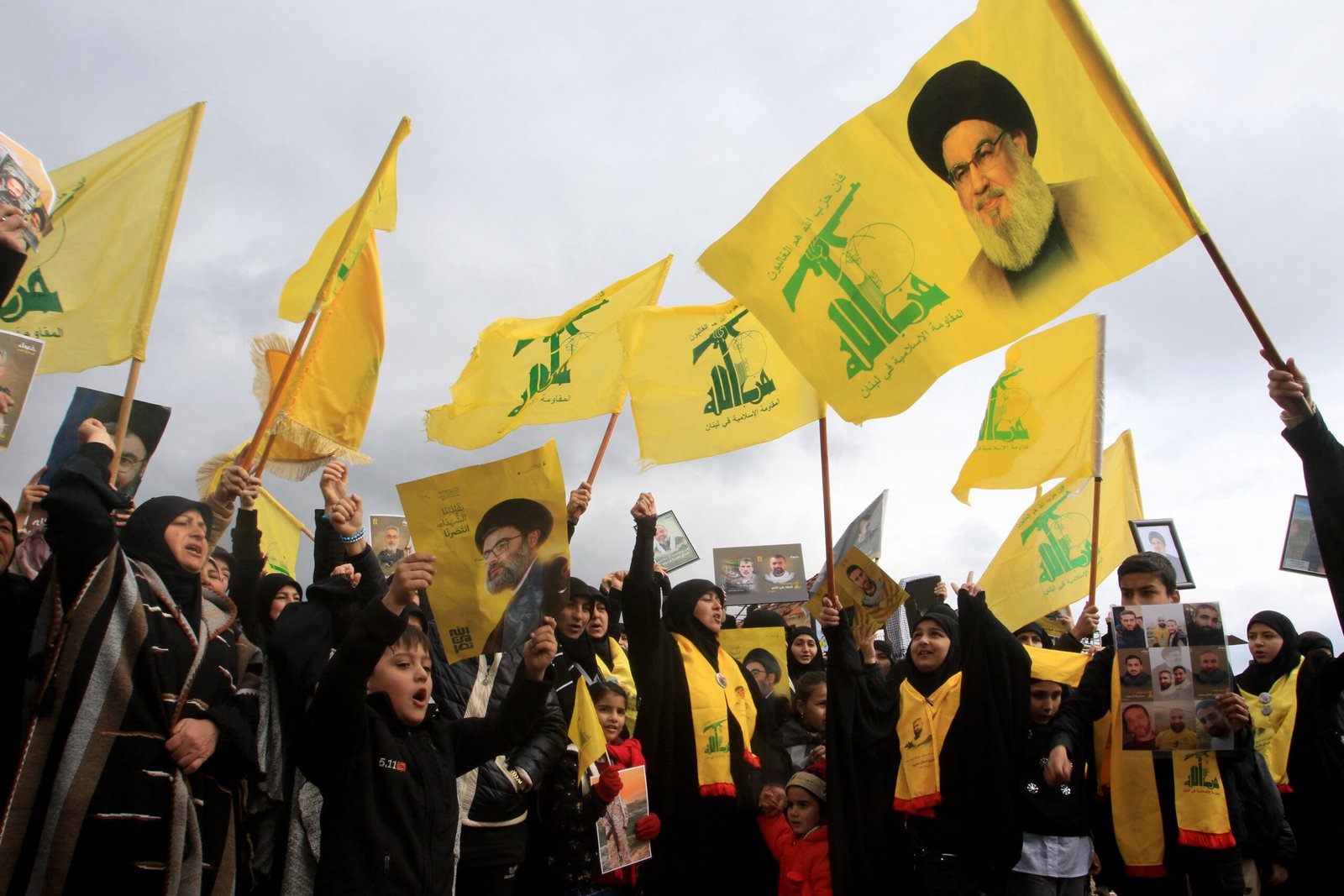
There is evidence showing that an overwhelming majority of Lebanese Shiites see Hezbollah as their protector under this current situation. Based on a recent poll, 88 percent of the Shi’ite community are against the disarmament of the group.
By broadening its campaign to target not only Hezbollah but other Shi’ite political parties and members of this sect in the military and security services, the Trump administration will therefore probably reinforce the already existing sentiments among Lebanese Shi’ites that they have no one to turn to except Hezbollah. Rather than weakening the group, this will solidify its support and render its weapons a Shi’ite—as opposed to Iranian—cause. As a result, the prospects of sectarian strife resulting from any forceful attempts to disarm Hezbollah will increase even more, threatening to plunge the country into complete chaos.
The Trump administration would be better off if it ceases to heed the advice of the Israel Firsters on how to deal with Lebanon and the question of Hezbollah—not least given that this group has never attacked the United States. Fortunately, there are encouraging signs that the influence of the pro-Israel camp over Trump is waning, as Washington and Tehran appear to be on the verge of an agreement to avert further war.
[ad_2]
Source link
