
[ad_1]
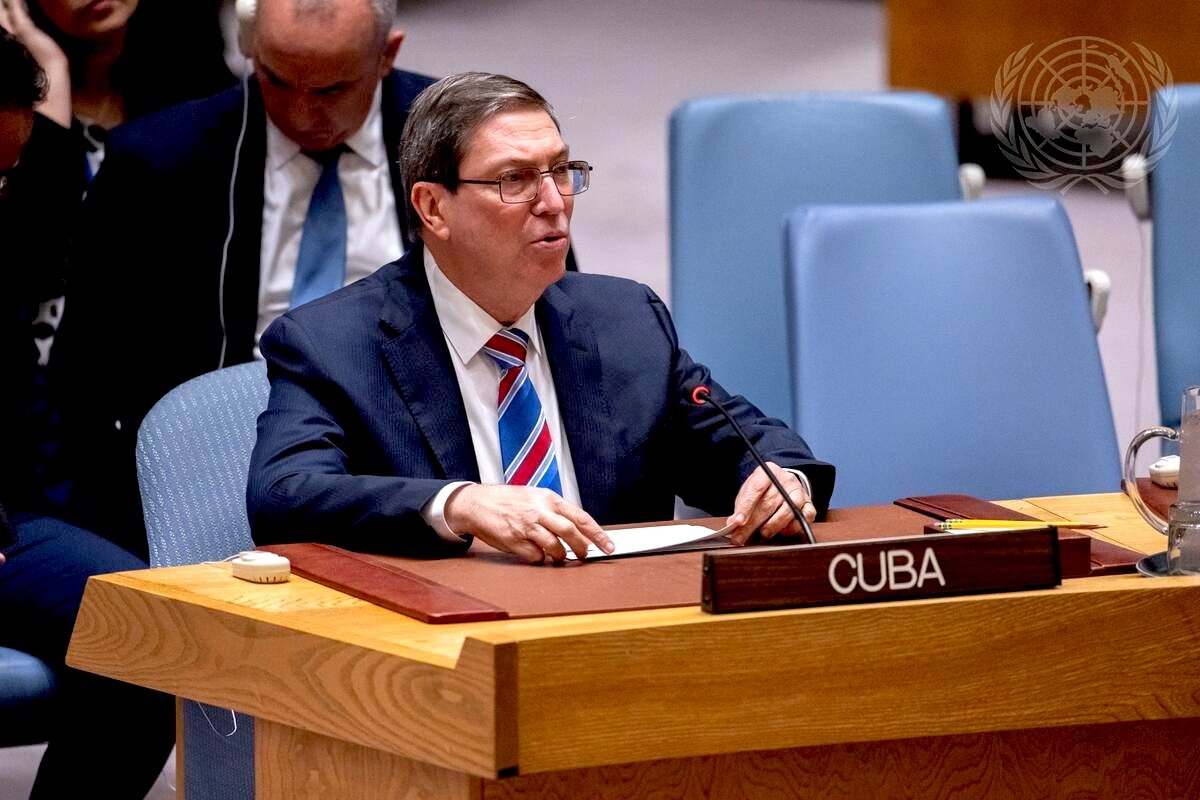
“In the last few months, the humanitarian damage to our population has intensified and led to worsening in the quality of life,” said Cuba’s foreign minister, Bruno Rodríguez, during a 25-minute-long speech he gave at the rostrum. “The hostility and threats that Cuba faces today are part of a worrying sequence of violations of international law and are a prelude of what might happen to any other country tomorrow.”
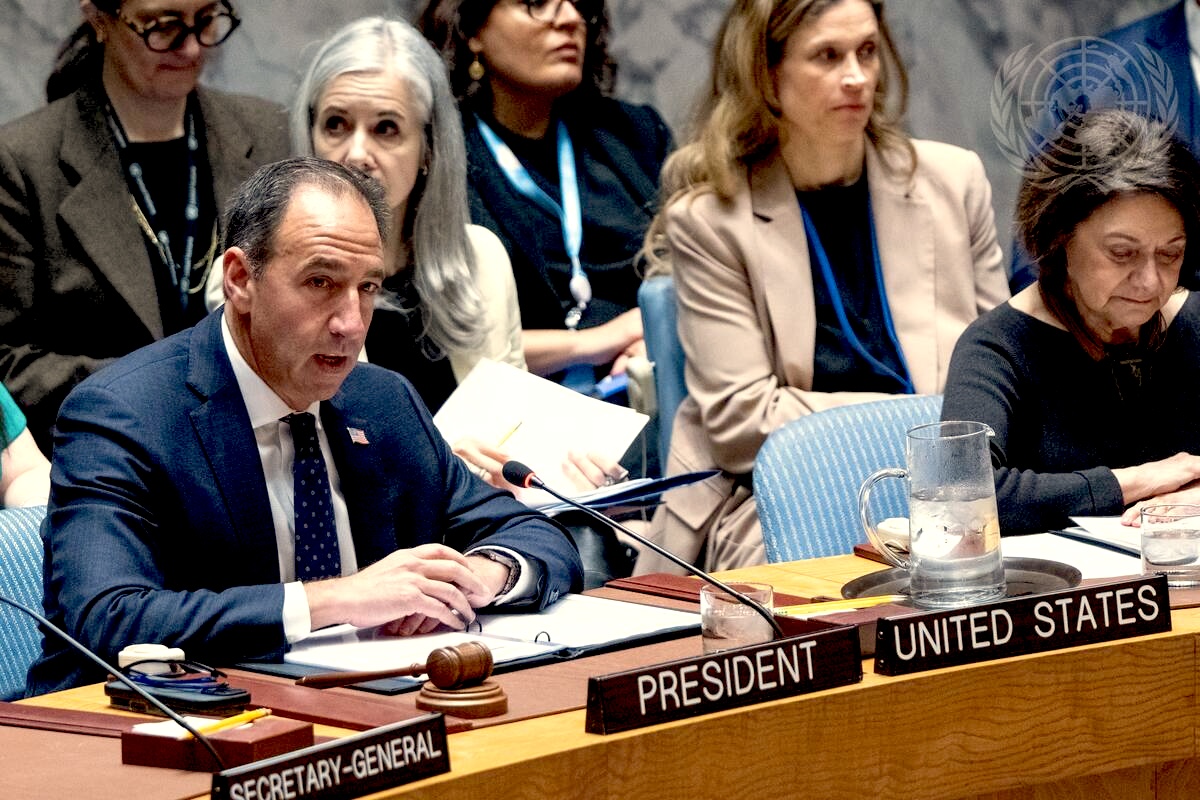
Jeff Bartos, U.S. representative, during a Security Council meeting earlier this year. (UN Photo/Eskinder Debebe)
The U.S. representative, Jeff Bartos, who had called for a vote to block the debate, described the meeting as wasteful and politically motivated, adding that the $84,000 cost of convening for three hours could instead buy emergency health kits, solar lanterns or food for thousands of Cuban families.
“Havana calls this meeting year after year, and now twice in one session, because it wants to make this Assembly complicit in its machinery of repression,” Bartos, who described himself as the “budget guy,” told the Assembly on Tuesday. “It wants the U.N. to buy it another propaganda clip, it wants to use your voices and your silence to show the world that a brutal Communist dictatorship can keep polite company.”
Rodríguez countered the remarks by Bartos by saying the effect of U.S. sanctions have worsened in the last seven months, likening the fuel blockade to a “naval blockade.” He quoted President Donald Trump as having said that he did not “think you can have much more pressure other than going in and destroying the place.”
Rodríguez said infant mortality rose to 9.9 deaths per 1,000 live births under the intensifying sanctions; childhood cancer-survival rates fell to 65 percent from 85 percent; and economic damages of $8.083 billion have accrued over the past year alone. The U.S. did not deny these effects but blamed Cuba’s problems on its own government.
“The cumulative impact of the blockade, since it was first imposed, amounts to $178,700,000,000 at current prices,” Rodríguez said, rejecting Washington’s assertions that Cuba’s economic troubles are self-inflicted.
Over Seven Decades of Strained Relations
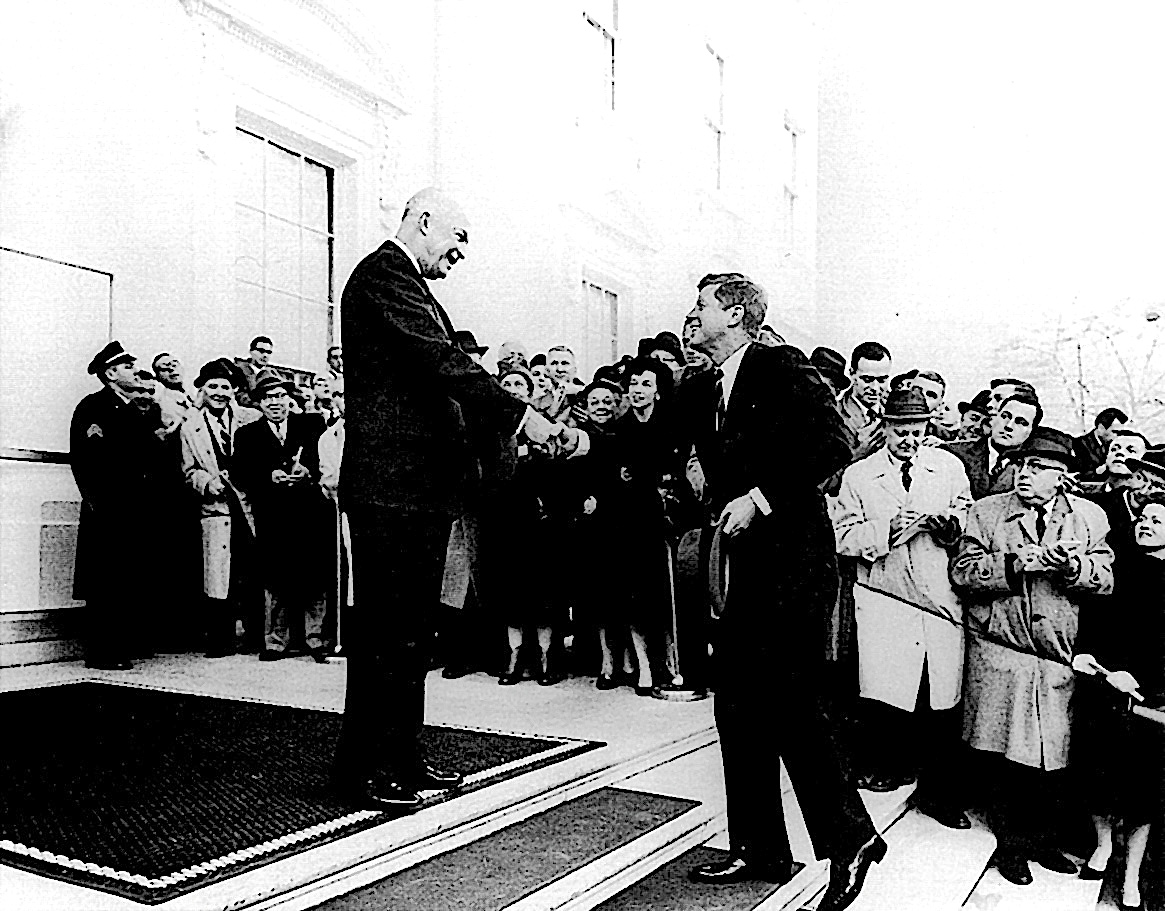
President Dwight Eisenhower greeting President-elect John F. Kennedy at the White House on Dec. 6, 1960. (Wikimedia Commons/Public Domain)
The estranged U.S.-Cuba relationship started over seven decades ago, when former U.S. President Dwight Eisenhower cut off exports after Fidel Castro nationalized American-owned businesses without compensation. President Kennedy converted the punishment into a full trade embargo in February 1962.
The embargo has been loosened and tightened by successive administrations ever since then, but Trump reimposed some of the sanctions that were lifted by previous presidents.
Since January 2025, the Trump administration has pursued a maximum-pressure campaign, reimposing travel and financial restrictions and restoring Cuba to the State Department’s list of state sponsors of terrorism.
On Jan. 29, Trump signed Executive Order 14380, declaring a national emergency over what he called Cuba’s “unusual and extraordinary threat” to U.S. security and authorizing tariffs on any country supplying the island with oil, providing no proof of Cuba’s dangers.
A follow-up order on May 1 extended secondary-sanctions risk to foreign banks and companies doing business with Cuban entities in energy, defense, mining, finance and security.
Mike Waltz, the U.S. envoy to the UN, spoke vehemently from the Assembly rostrum when the debate got into full swing. He said the real embargo was imposed by the Cuban regime against its own people, citing repression of speech, faith, enterprise, dissent and human rights. More than 800 political prisoners are jailed for peaceful expression, he said, naming an artist, a musician and a poet each imprisoned by the Cuban government because of their work.
‘Pound Away’
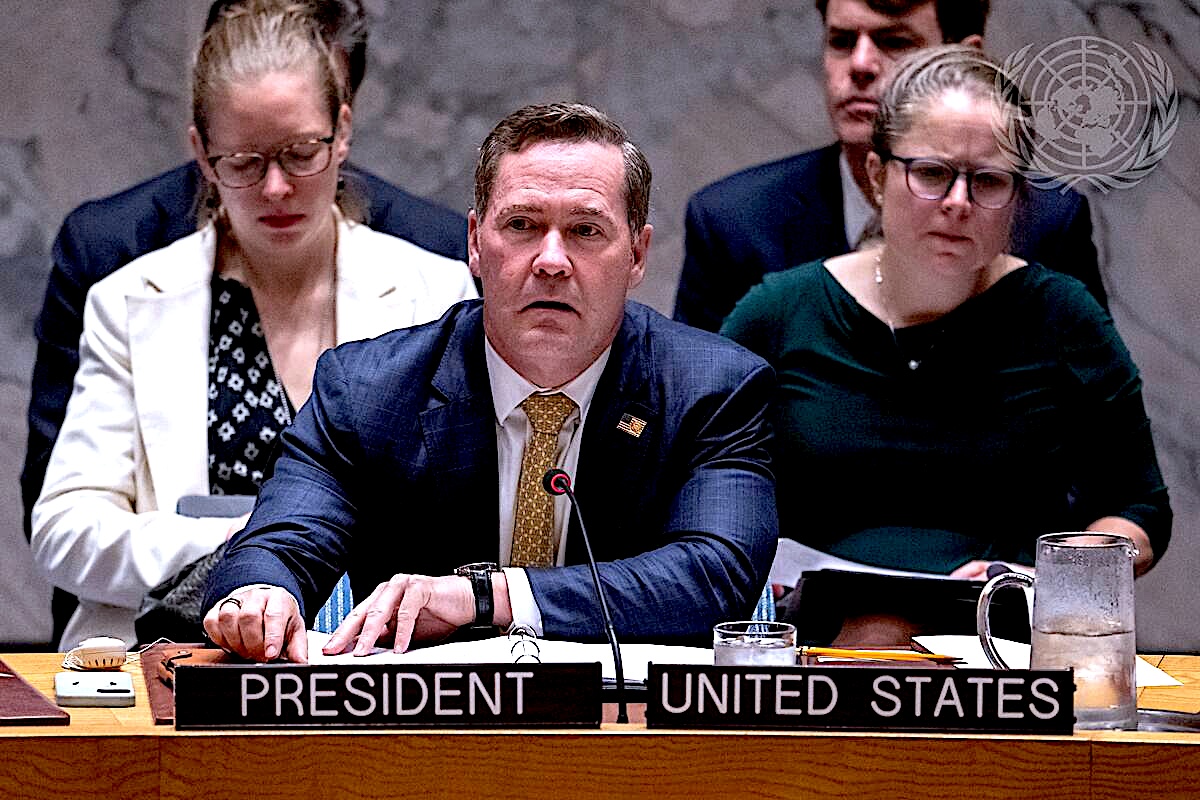
U.S. Ambassador to U.N. Michael Waltz addressing the Security Council in March. (UN Photo/Manuel Elías)
“The only embargo in Cuba is the guillotine the regime keeps over the heads of its people,” Waltz said.
Rodríguez occasionally banged the plastic earpiece at his seat in the Assembly to protest Waltz’s remarks (and Bartos’), prompting Waltz to shout at at one point
“You can pound away my friend. This is not Havana. This is the United States of America. This is the United Nations. And we will speak, we will be heard, and we will not be silenced like your own people. So, pound away.”
Independent human-rights monitors have documented the repression of Cuba’s one-party Communist government. Human Rights Watch’s most recent annual report found that Cuban authorities held hundreds of political prisoners, including artists and musicians convicted for actions as narrow as social-media posts or displaying protest slogans.
The government has denied independent monitors access to its prisons; judicial courts remain subordinate to the Communist Party, according to Human Rights Watch; and the state controls virtually all media, periodically blocking news sites and restricting mobile data for critics.
Most of the speeches delivered in the first three hours of the session (costing the U.N., according to Bartos’ original predictions, approximately $84,000) were made on behalf of regional and political groupings, a possible work-around to avoid fallout from the U.S., which had pressured countries from speaking against its actions in Cuba.
A leaked State Department cable, reported by The Nation, revealed Washington’s coordinated campaign to suppress the Assembly debate by pressing allies to publicly rebuke Cuba, telling nonaligned states to stay silent and warning traditionally pro-Cuba governments it would be “listening very closely.”
Over several hours, representatives spoke for the Group of 77 and China, totaling 134 developing nations; the Association of Southeast Asian Nations; the Non-Aligned Movement’s 121 members; the Group of Friends in Defense of the UN Charter; the Organization of Islamic Cooperation; the Caribbean Community; the African Group; and the European Union.
Each bloc condemned the embargo’s extraterritorial reach and called for Cuba’s removal from the U.S. list of state-sponsored terrorism. The Group of 77 and China criticized new measures obstructing oil supplies and sanctioning third states as contrary to the U.N. Charter, international law and a rules-based, nondiscriminatory multilateral trading system.
The African Group, whose remarks were delivered by Mali’s ambassador to the U.N., called to end the blockade, to remove post-2017 additional measures and reiterated support for Cuba’s international medical cooperation, adding that the country poses no threat to international peace and security.
The European Union condemned the embargo’s “adverse humanitarian impact” and reaffirmed support for a diplomatic resolution but criticized Havana’s human rights record and support of Russia in the Ukraine war through votes in the General Assembly and sending soldiers to help Putin fight against Ukraine.
“The EU will continue its critical yet constructive engagement with Cuba to support the country’s institutional, economic, social and political modernization; we stand ready to share our experience,” Stavros Lambrinidis, the EU ambassador, said.
Damilola Banjo is an award-winning staff reporter for PassBlue who has covered a wide range of topics, from Africa-centered stories to gender equality to U.N. peacekeeping and U.S.-U.N. relations. She has worked for WFAE, an NPR affiliate in Charlotte, N.C. Banjo has a master’s of science degree from the Columbia University Graduate School of Journalism and an undergraduate degree from the University of Ibadan in Nigeria.


[ad_2]
Source link
