
[ad_1]
U.S. political leaders and opinion shapers now openly regard the People’s Republic of China (PRC) as a dangerous challenger to America’s status as the dominant global power. Sometimes that point is made in relatively polite ways, for example, using the term “economic competitor” or “peer power” with respect to China. Increasingly, though, the preferred labels in Washington are: rival, challenger, expansionist threat, security threat, and the like. Although many prominent figures within America’s political and foreign policy establishments treat Russia as merely the Soviet Union under a different name and still regard Moscow as the principal threat to U.S. hegemony, a growing, vocal faction, including some officials in the intelligence agencies, argues that the PRC deserves that designation.
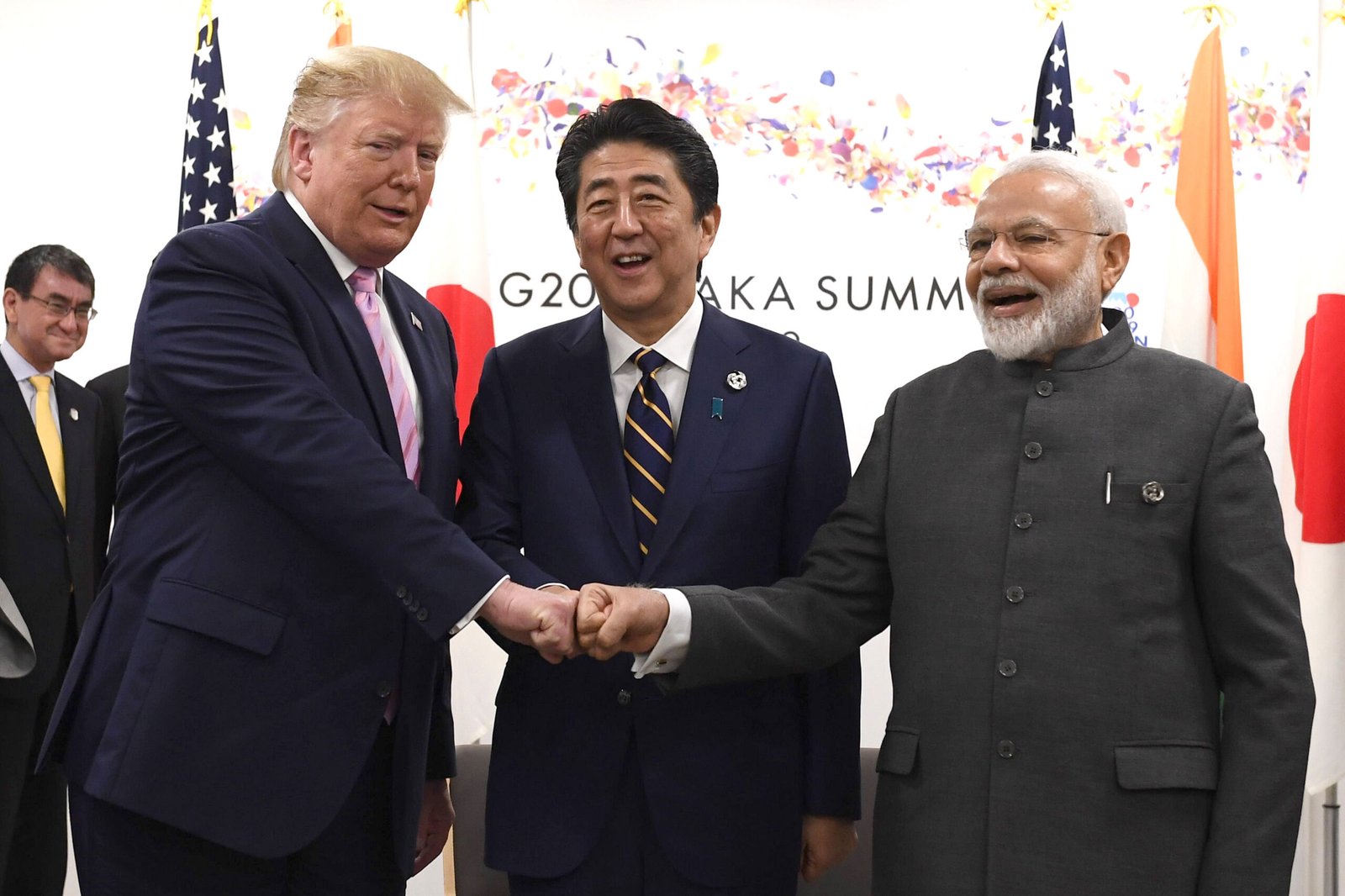
There also is a growing inclination among policymakers wary of China to insist that the United States forge and lead a global coalition of major powers to contain Beijing’s influence and ambitions. There is a very large problem with such a strategy, however. Most proposed coalition partners for such a mission are simply not up to the task. Moreover, that deficiency will become increasingly obvious and debilitating in the near future.
The most frequently suggested core members for a U.S.-led, anti-PRC great power coalition are Japan, India, and the European Union (EU). In the unlikely event that a democratic, anti-Putin government took power in Russia, Moscow might also become eligible for that “honor.”
The core great power members supposedly would be aided by smaller, like-minded allies, such as the Republic of Korea (ROK), Taiwan, Canada, and—less likely—Vietnam and other members of the Association of Southeast Asian Nations (ASEAN). However, such secondary actors would be of only limited importance in a strategic showdown against Beijing. Even the bigger powers on the list are not credible candidates to join a U.S. crusade to contain China. Although all of them have major strengths, they also have equally substantive drawbacks.
Japan, for example, is undoubtedly an economic great power. Based on gross domestic product, Tokyo leads the world’s fourth largest economy. Prime Minister Sanae Takaichi’s government also seems serious about significantly increasing the country’s military capabilities. Even the acquisition of an independent nuclear deterrent now appears to be a possibility. Tokyo’s suspicions about Beijing’s ambitions in East Asia and beyond are also on the rise, and the current Japanese government is embracing a noticeably more assertive, even confrontational, policy toward the PRC.
However, other factors make Japan a less credible candidate to be the linchpin in a U.S.-directed coalition against Beijing. Despite ongoing and proposed buildups, the country’s overall military capacity remains modest. Tokyo’s 2026 military budget is $64.2 billion. China’s estimated 2026 spending of $336 billion dwarfs that figure.
Moreover, the two leading East Asian powers are intertwined in an extensive, diverse economic relationship. China is Japan’s largest trading partner. Joining an explicitly anti-PRC coalition would automatically jeopardize Tokyo’s lucrative bilateral commercial ties, deterring Japanese policymakers from taking that path.
Still other factors would diminish Japan’s ability or inclination to act as Washington’s anti-PRC consiglieri. Chief among them is demographics. The country’s population is now a mere 120 million, and it is shrinking at an alarming pace because of an extremely low birth rate. By 2050, Japan is more likely to be merely another unexceptional midsize country, rather than a front-line major state able to confront and contain the power of its much larger neighbor.
The EU confronts similar worrisome demographic trends as Japan. Worse, unlike Japan, the EU is not a cohesive nation-state but a multinational entity with decidedly uncertain prospects for unity in the future. Indeed, one could legitimately describe the association as little more than a shrinking collection of trendy “woke” cultural enclaves uneasily sharing the same neighborhood with a growing collection of Islamic beachheads. Such an entity is not a great candidate for a leading role in a project to contain the PRC.
Moreover, despite an intensive propaganda campaign to highlight the EU’s alleged determination to play a more serious role in both European and global security affairs, there appears to be little real substance involved. To the extent that there is genuine determination and not merely empty posturing, the primary motive seems to be a desire among both officials and European publics to wean their nations off an excessive, pervasive dependence on the United States for the region’s security. That dependence has existed since the end of World War II, but a growing chorus of pundits on both sides of the Atlantic contend that President Donald Trump’s behavior has greatly increased European desire for regional self-reliance and independent security initiatives.
Even if that speculative thesis proves true, it would not necessarily translate into a greater willingness on the part of a more robust EU to enlist in a U.S.-orchestrated containment policy against the PRC. Indeed, it would seem more likely that European leaders would seek to distance the EU from such a scheme hatched by Washington and designed primarily to benefit the United States.
A more vigorous, effective European security body is unlikely in any event. Such a shift would require the members to take meaningful, painful steps and no longer count on Washington’s lucrative de facto subsidy of Europe’s defense. Polling data reveal little appetite for making either the massive tax hikes or the deep cuts in entrenched, popular domestic welfare state programs that a major military buildup would require. Those factors, combined with the lack of an independent nuclear weapons capability (except for France’s small national arsenal), mean that the EU is not a credible candidate to join a great power coalition to contain the PRC.
India is just marginally better for playing such a role. The country does have a substantial arsenal of nuclear weapons (estimates range from 180 to 190 warheads) and the necessary delivery systems in the form of both aircraft and missiles. However, the size and capabilities of the PRC’s nuclear deterrent and conventional military forces seem to outmatch Delhi’s. India’s economic foundation is improving, but in several respects, the country does not yet deserve to be on the roster of the world’s major commercial powers despite ranking 6th overall in terms of GDP. It is highly questionable whether the country could bear the burden of sustained funding for a first-class military.
Worse, deep religious, cultural, linguistic, and political divisions continue to characterize India, making a sense of national unity extremely fragile. Such a lack of unity could create major problems in any showdown with the PRC.
Subscribe Today
Get daily emails in your inbox
Finally, the current government of Prime Minister Narendra Modi might be ambivalent at best about embracing a blatant containment strategy against the PRC. Delhi undoubtedly has reasons to be wary about Beijing’s ambitions, territorial and otherwise. The two countries have waged nasty skirmishes along their disputed border in the Himalayas on several occasions. There also is little doubt that Modi and other members of India’s political elite do not want to see China become the de facto hegemon of East and South Asia.
At the same time, they have little reason to help Washington preserve its hoary global hegemony, which is under growing strain. A discreet neutrality between the United States and its new dynamic challenger would logically have considerable appeal to Indian leaders. Indeed, the most recent trends in India’s foreign policy hint of a slight tilt toward China. For example, Delhi has been about as adamant as Beijing in rejecting Washington’s pressure to forge an international coalition to isolate Russia because of its 2022 invasion of Ukraine. India is not a promising candidate to join an even broader, more controversial, multilateral effort to ostracize China.
The bottom line is that trying to assemble a U.S.-led coalition of great powers to neutralize Beijing’s rising international clout by establishing an effective containment policy is an unrealistic objective. Washington simply does not have enough capable geostrategic teammates to play that game.
[ad_2]
Source link
