
[ad_1]
Image by Pierre Bamin.
This week in the Anthropocene
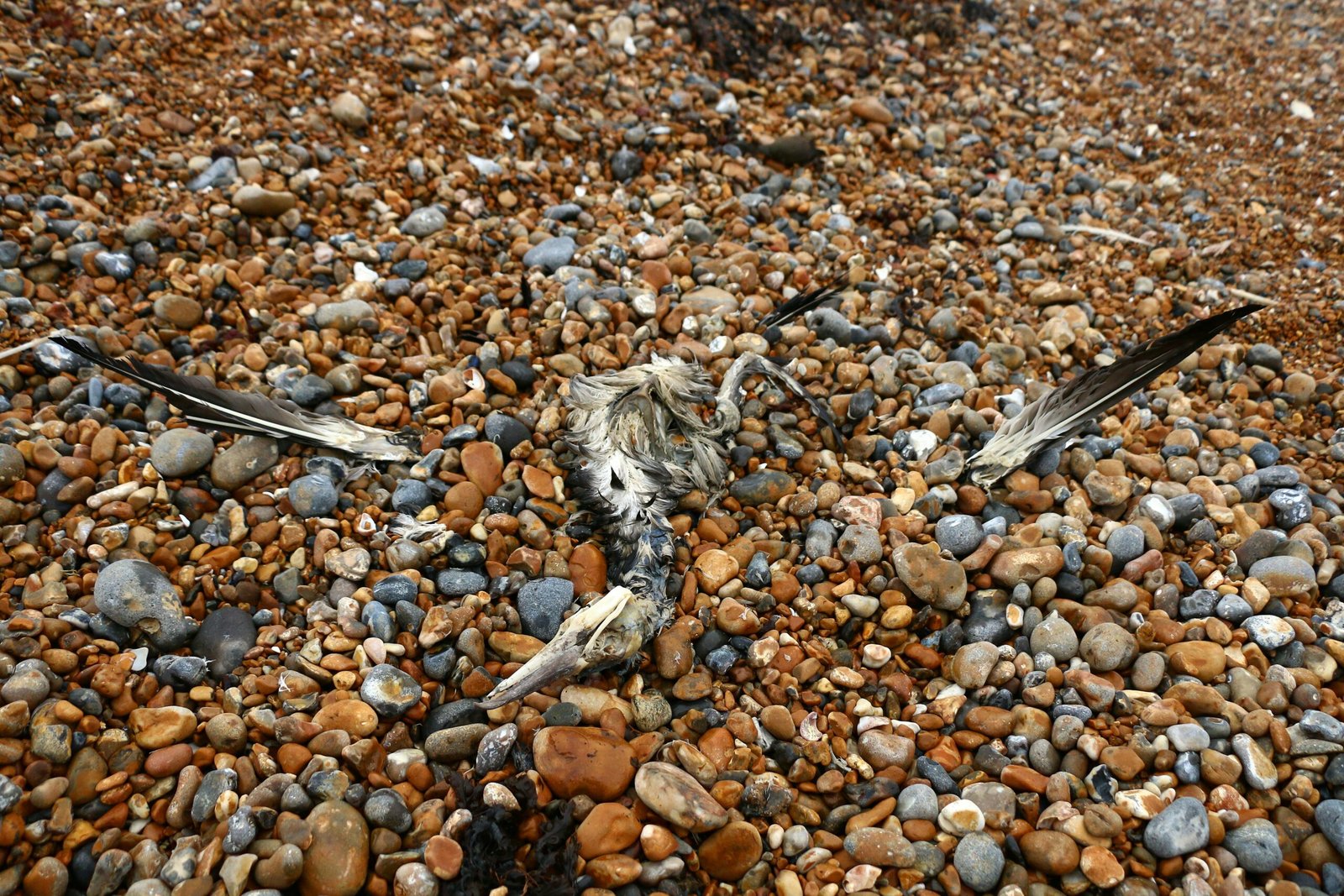
I’ve seen dead birds. Dozens of them. Washed ashore in various stages of decay, lining the beaches of Southern California.
Seagulls, cormorants, pelicans, puffins, loons. All of the most glorious of California’s seabirds. They are often emaciated and frail, as if they’ve starved. This week, we began to understand what may be causing these deaths.
Researchers at Scripps in La Jolla have a theory. Warmer ocean temperatures reduce what’s called upwelling, the process by which nutrients rise from the depths. Fewer nutrients at the ocean’s surface mean there are fewer nutrients for krill to consume. In turn, krill must go deeper to find food.
With fewer krill near the water’s surface, there aren’t many krill for seabirds to munch upon. With little to eat, these birds are dying of malnutrition.
It’s a deadly cycle, and man-made climate chaos is to blame.
Ocean temperatures have been steadily rising. As someone who spends a lot of time in the ocean, I can attest that it has been exceptionally warm this year. And the data backs it up. Surface temperatures are up 3 to 7 degrees above average in parts of Southern California. This marine heat wave is about to worsen.
Record-breaking El Niño conditions are predicted to further warm the Pacific in the months ahead, peaking through next fall and winter. Every El Niño that’s hit in recent decades has been hotter than the last, and this one will no doubt be on trend. Scientists are worried that this 9,000-mile freight train of warm water will be the most severe we’ve seen in over 150 years, when El Niño conditions in the late 1870s led to the deaths of 50 million people.
What this current El Niño means for krill and seabirds remains to be seen, but if the past few months are any indication of what lies ahead, it’s not looking good.
Another, much larger problem is unfolding in the Atlantic at a faster pace than scientists have anticipated. Climate breakdown is altering ocean temperatures and salinity there, disrupting crucial ocean circulation (known as the Atlantic Meridional Overturning Circulation, or AMOC). If (when?) this happens, Europe’s climate will shift dramatically, as warmer waters from the tropics would no longer reach Northern Africa and Europe.
Such a scenario would cause big, big trouble. If ocean currents in the Atlantic stopped bringing warmer waters north, a cascade of horrific events would quickly follow. Much of Europe would dry out, wreaking absolute havoc for hundreds of millions of people. A large swath of the continent would become frigid, leading to the collapse of agriculture. Rivers would dry up, and food would become scarce. Mass migration would ensue. It’s difficult to grasp the upheaval that lies ahead unless we radically (and rapidly) alter course by abandoning fossil fuels and its capitalist machinations.
+++
Climate disruption isn’t the only existential threat to the planet’s oceans.
A massive oil slick, the consequence of Trump’s insane and illegal war on Iran, is coating the beaches of the isolated Shidvar Island. The island is considered the Maldives of the Persian Gulf, and is Iran’s most important nature preserve. Sea turtles, birds, and crabs are trapped in tar and slowly dying. The impact on the island’s delicate, ecologically vital coral reef is unknown, but it’s also likely to have been bathed in oil.
Of course, the ocean’s coral reefs are already at a tipping point, but at least in Iran, Trump’s brand of imperialism is making it all worse.
Back here in the Belly of the Beast, Trump’s Fish and Wildlife Service this week approved the use of atrazine, a toxic weedkiller that’s sprayed on crops. Some believe atrazine is the largest herbicide polluter of waterways in the United States (which often end up in the ocean). Atrazine is an endocrine disruptor and is linked to various cancers. The EPA, these days the arbiter of death and not protection, has also rolled back regulations on forever chemicals in drinking water.
MAHA moms got what they voted for. More poison in our daily lives.
It’s only May, and we’re already experiencing massive wildfires, from Kansas to California. The Sandy Fire in California is making its way toward a former nuclear reactor site, which is laden with radioactive leftovers. What could possibly go wrong?
Officials in Denver, Colorado, which has just experienced one of the warmest and driest winters on record, have just released a massive evacuation plan in case flames threaten the city.
In Arizona, the Pinyon Plain Mine (formerly the Canyon Mine) is actively mining uranium on Indigenous land, just 10 miles south of the Grand Canyon. There’s a call to action (check it out) to shut down the mine.
+++
Okay, okay, enough with the sour news. There’s plenty to celebrate this week.
Thousands of new species have been discovered in the deep sea over the last year. These findings make the push to mine the deep ocean for critical minerals all the more ridiculous and dangerous. We shouldn’t be wrecking the ocean (an enduring carbon sink), which we know so little about, under the guise of green energy.
In Southern Oregon, environmental groups halted logging on 2,400 acres of forest in Douglas County. The court ordered the BLM to shelve the entire logging plan, known as Blue and Gold, until the agency studies its impacts on old-growth trees.
Here in LA, the largest urban oil field in the country is finally shutting down. The Inglewood Oil Field has been operating since 1924, producing over 400 million barrels. Recent state legislation requires all low-producing oil wells like these to be plugged by 2030.
And last, but certainly not least, for the first time in over one hundred years, a dark-furred gray wolf (BEY03F, or Bey) has entered Sequoia National Park, south of Mount Whitney, after trekking hundreds of miles and gaining more than 13,000 feet in elevation. Born in Plumas County, the three-year-old wolf had already visited LA County and Inyo looking for a mate. Her search continues. Long live Bey! Long live Sequoia!
Nibble on that, and I’ll see you next week.
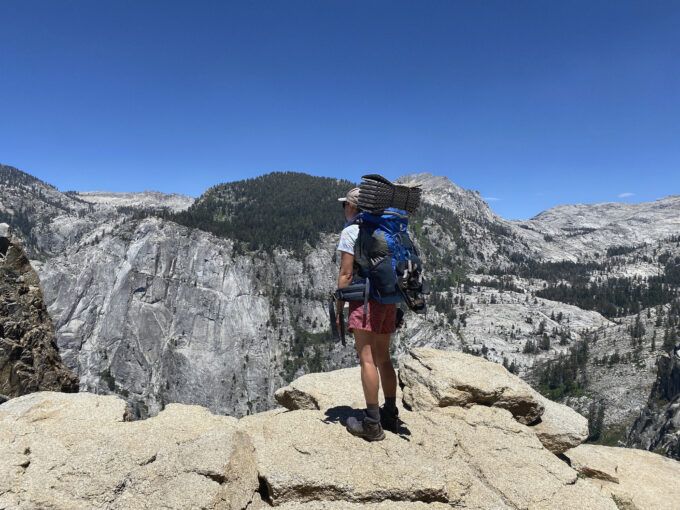
Take us back to Sequoia, 2020.
[ad_2]
Source link
