
[ad_1]
Plans for a National Mall concert series celebrating the nation’s 250th anniversary fell apart, leaving behind canceled performances and scathing Truth Social posts.
On May 27, Freedom 250 — a public-private partnership tasked with celebrating the nation’s 250th anniversary — announced a lineup of nine musical acts that would perform June 25 to July 3 in the nation’s capital.
But in the days that followed, the majority of the named performers bowed out, with most saying they feared the event had become politicized.
The controversy quickly overtook social media, including inspiring a new version of a popular Secretary of State Marco Rubio meme that showed him dressed as a pop star.
The performances had been envisioned as anchor events for “The Great American State Fair” concert series, part of a festival that would showcase the culture and history of every state and six U.S. territories, alongside livestock competitions and a Ferris wheel, Axios reported.
Here’s a rundown of how Freedom 250 has evolved.
What is Freedom 250, and how is it different from America250?
Freedom 250 is a public-private partnership that describes itself as a “national, non-partisan organization leading the celebration of our Nation’s 250th birthday.” In addition to “The Great American State Fair,” it is planning a July 4 “Salute to America” fireworks celebration and a Patriot Games athletic competition in the fall.
Freedom 250 is distinct from America250, which Congress established a decade ago to prepare events for the nation’s 250th anniversary. America250 is overseen by a bipartisan board of lawmakers.
Freedom 250 dates back to an executive order Trump issued just days after his second inauguration, and its work has accelerated since late 2025. Trump named Meredith O’Rourke, a top fundraiser, and Chris LaCivita, his 2024 campaign co-manager, to the board of the National Park Foundation, which is where Freedom 250 is housed.
One event the group sponsored in May, “Rededicate 250,” was a national prayer celebration that critics derided as having an unacceptable religious focus for an event on federal land and paid for partially through taxpayer dollars.
After the artists’ cancellations, Freedom 250 pushed back on the idea that it has a political agenda. “It is inherently nonpolitical. It is a celebration of our country,” Freedom 250 spokesperson Julia Friedland told The Hill newspaper.
Who was supposed to perform? Who’s in and who’s out now?
The original lineup, in chronological order by performance date, was:
-
Country music singer Martina McBride
-
1990s dance music group C+C Music Factory
-
Rapper Vanilla Ice
-
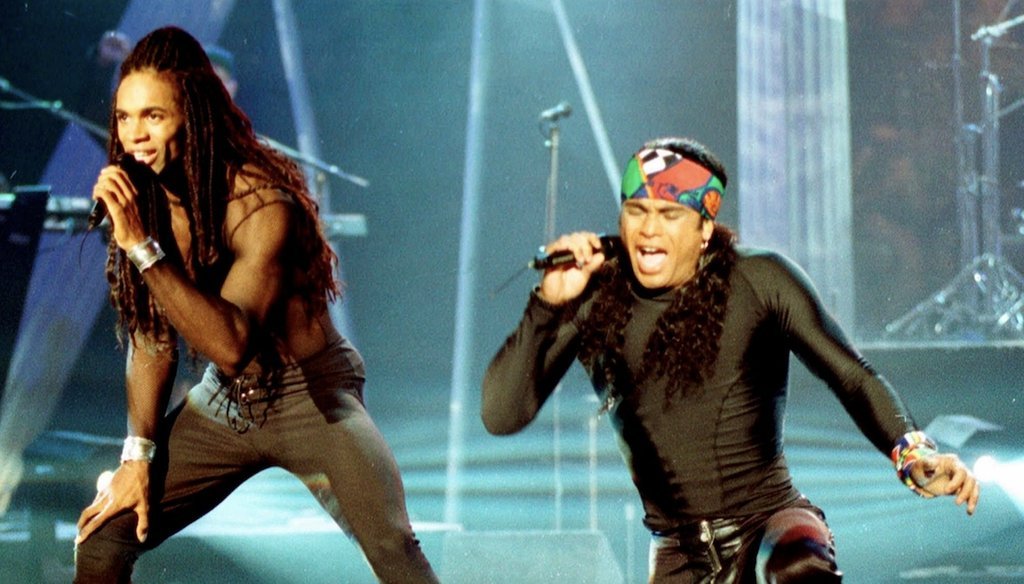
Fab Morvan, the surviving member of pop group Milli Vanilli
-
Rapper Young MC
-
Funk and soul group the Commodores
-
Morris Day and the Time
-
Rapper and singer Flo Rida
-
Rock singer Bret Michaels
By June 1, five of the nine artists had backed out.
McBride posted that she had signed up for “a nonpartisan event that was meant to celebrate ALL 50 states” but later concluded that’s “not what is happening.” Young MC wrote that he hopes to perform in Washington, D.C., “in the near future at an event that is not so politically charged.” The Commodores wrote, “Our music has always been our voice and we choose not to publicly affiliate with any single political party. We support the betterment of all Americans.”
Michaels posted, “Unfortunately, what was presented to us as a celebration of our country has evolved into something much more divisive than what I agreed to be part of.” Day wrote, simply, “It’s a No for Me.”
The other four still appear to be on, although Trump has floated the idea of canceling.
What did Trump say after the cancellations?
On social media, Trump proposed holding a political rally instead.
In a May 30 Truth Social post, Trump wrote, “We should have a giant MAKE AMERICA GREAT AGAIN RALLY, for 250, instead of having overpriced singers, who nobody wants to hear, whose music is boring, and yet who do nothing but complain.”
In another Truth Social post the same day, Trump described himself as “the man who gets much larger audiences than Elvis in his prime, and he does so without a guitar.” (NPR found that claim questionable, as Presley once had an audience of 1 billion people for a televised concert.)
When contacted for comment, the White House referred PolitiFact to Freedom 250, the event’s sponsor. We did not hear back from a Freedom 250 spokesperson.
Who is paying for Freedom 250?
The organization lists a range of government agencies as “participating partners,” along with conservative and religious nonprofit groups, including Americans for Prosperity, America First Policy Institute, Hillsdale College, Moms for Liberty, PragerU and WallBuilders.
The group also lists major corporations as “sponsors,” including Deloitte, ExxonMobil, John Deere, Lockheed Martin, Mastercard, Northrop Grumman, Oracle, Palantir, United Health Group and United Airlines.
In February, The New York Times reported that donors who give $1 million or more to Freedom 250 will receive invitations to a “private Freedom 250 thank you reception” hosted by the president, including a “historic photo opportunity.” Donors of $2.5 million or more were being offered speaking roles at an event in Washington, D.C., on July 4, the Times reported.
The other group, America 250, also lists corporate sponsors, including Amazon, Boeing, Comcast NBCUniversal, FedEx, Northrop Grumman and Palantir.
Have there been concerts on the Mall before?
“A Capitol Fourth,” an annual July 4 concert on the Mall, has aired on PBS for decades. Performers have often been A-listers, such as Ray Charles, Neil Diamond, Aretha Franklin, Reba McEntire, Dolly Parton and Stevie Wonder.
In 1983, then-Interior Secretary James Watt — whose position included jurisdiction over the Mall — banned the Beach Boys from performing, saying they would attract “the wrong element.” Instead, he said Las Vegas-based singer Wayne Newton would provide “patriotic, family-based entertainment.”
But President Ronald Reagan and Vice President George H.W. Bush quickly reversed Watt’s decision. Although it was too late for the Beach Boys to perform that year, they joined for the 1984 event, which included a guest appearance by the Beatles’ Ringo Starr.
[ad_2]
Source link
