
[ad_1]
With its unwinnable war on Iran, the U.S. urgently needs to rethink the illegal and corrupt policy of aggressive war it has pursued since 2001, write Medea Benjamin and Nicolas J. S. Davies
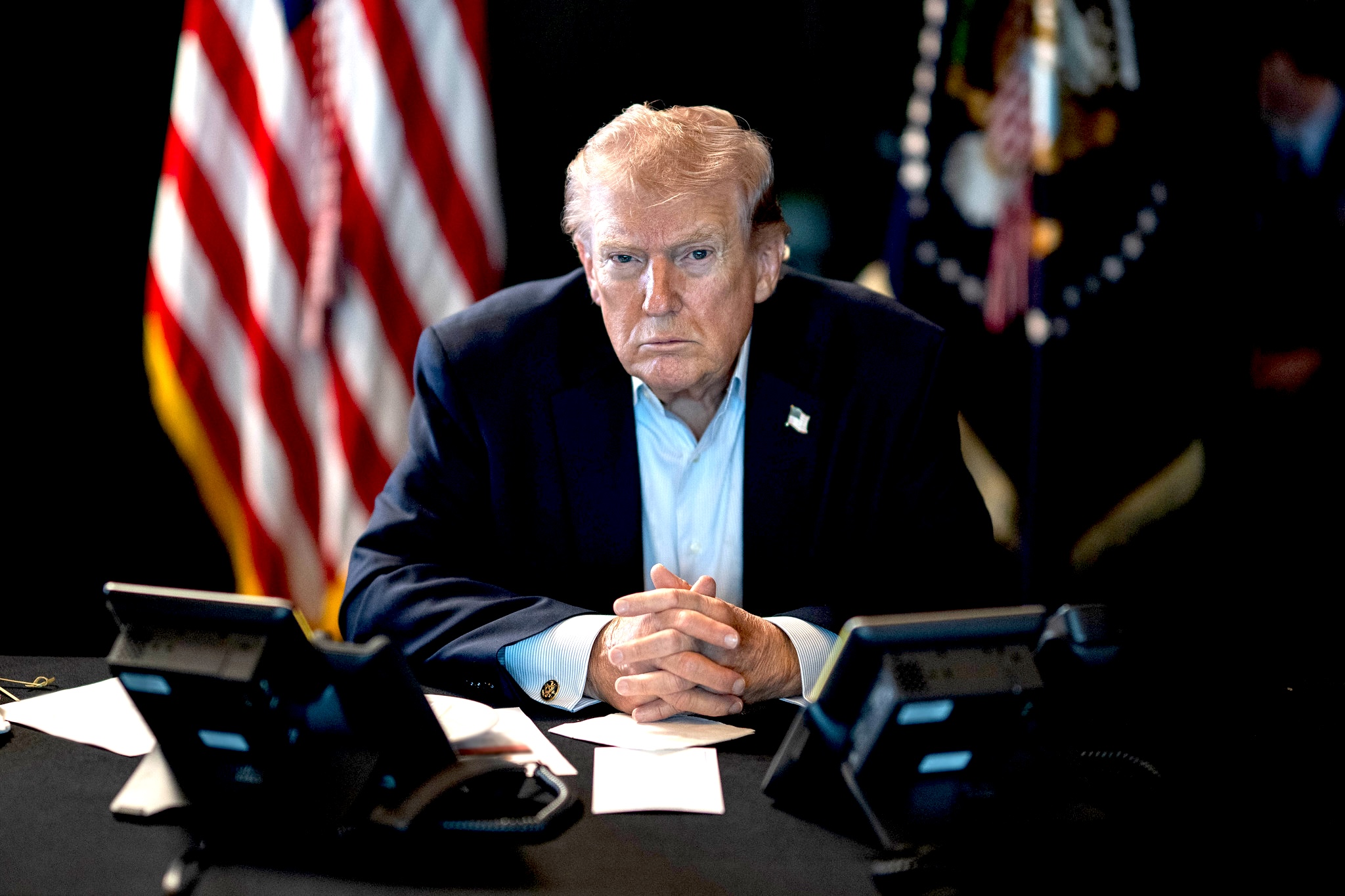
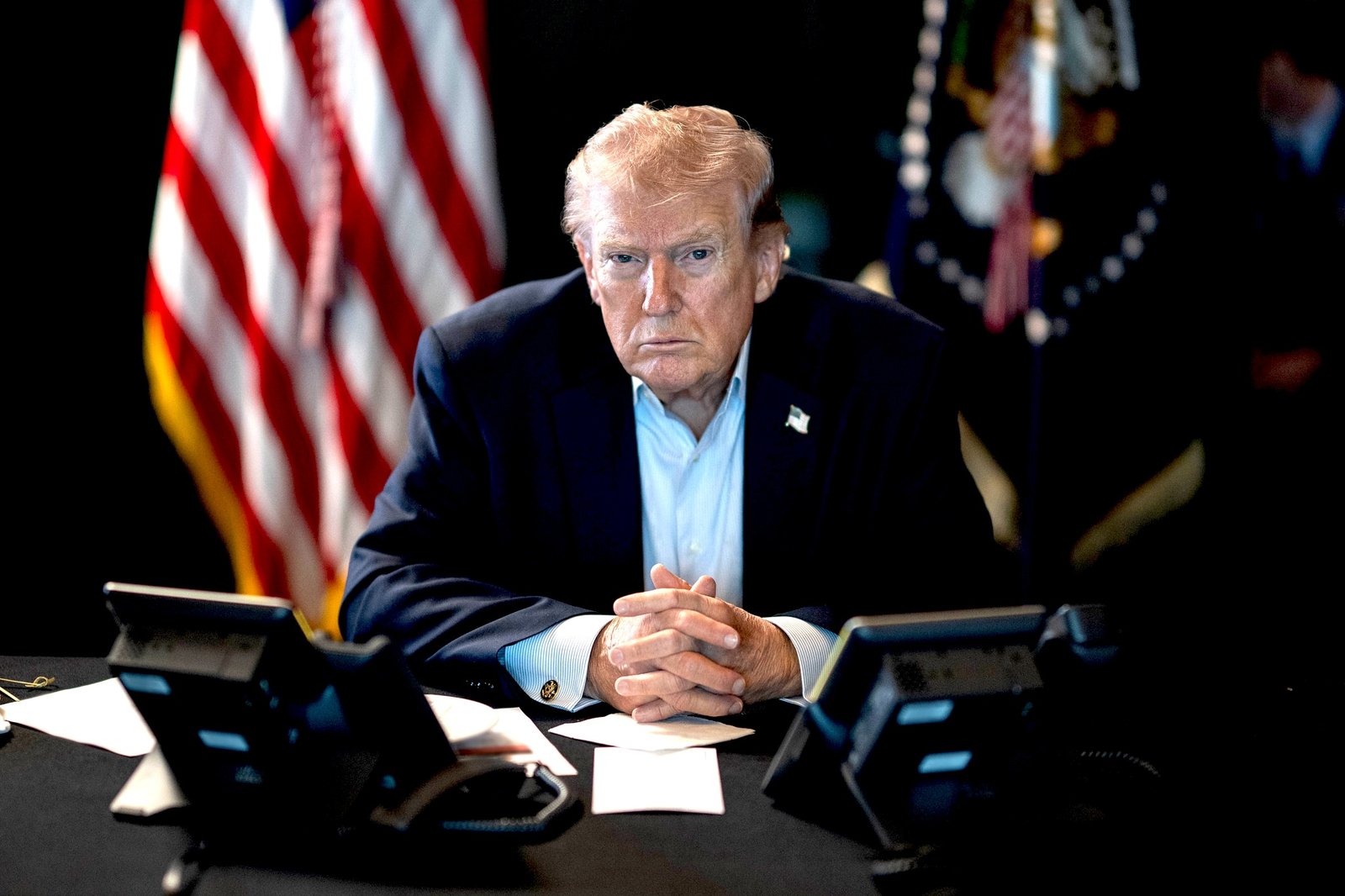
President Donald Trump overseeing the U.S. attack on Iran, at Mar-a-Lago, Palm Beach, Florida, March 1. (White House /Daniel Torok)
By Medea Benjamin and Nicolas J. S. Davies

 According to the Stockholm International Peace Research Institute (SIPRI), the United States spent $21 trillion on its military between 2001 and 2024 (in constant 2024 dollars), equal to the combined military spending of the next 18 countries.
Iran barely made that list at all, spending only 2 percent of what the U.S. did, and SIPRI estimated Iran’s 2025 military budget at only $7.5 billion. So how is Iran holding its own against the multi-trillion-dollar U.S. war machine?
A critical difference between the U.S. war on Iran and previous U.S. and allied bombing campaigns against Yugoslavia, Afghanistan, Iraq, Libya and now Gaza, is that the U.S. and Israel have failed to destroy Iran’s air defense system and cannot fly warplanes over Iran without risking the loss of planes and pilots to enemy fire. Iran has wisely built its critical defense infrastructure underground, with arms factories, weapons stockpiles and launch sites sheltered safely beneath its impenetrable mountainous terrain.
U.S. Secretary of War Pete Hegseth claimed on March 10 that the U.S. had “total air dominance” over Iran, but that is still not true. Instead, U.S. forces are mainly attacking Iran with stand-off weapons from outside Iran’s borders, radically depleting U.S. stockpiles of extraordinarily expensive weapons.
Even though U.S. warplanes avoid entering Iranian airspace, the Congressional Research Service has reported that the U.S. has lost at least four F-15 fighters, an F-35, an A-10, seven KC-135 refueling planes, an E-6 AWACS plane, two MC-130J special operations aircraft, a helicopter, a high-altitude Triton drone and 24 MQ-9 Reaper drones.
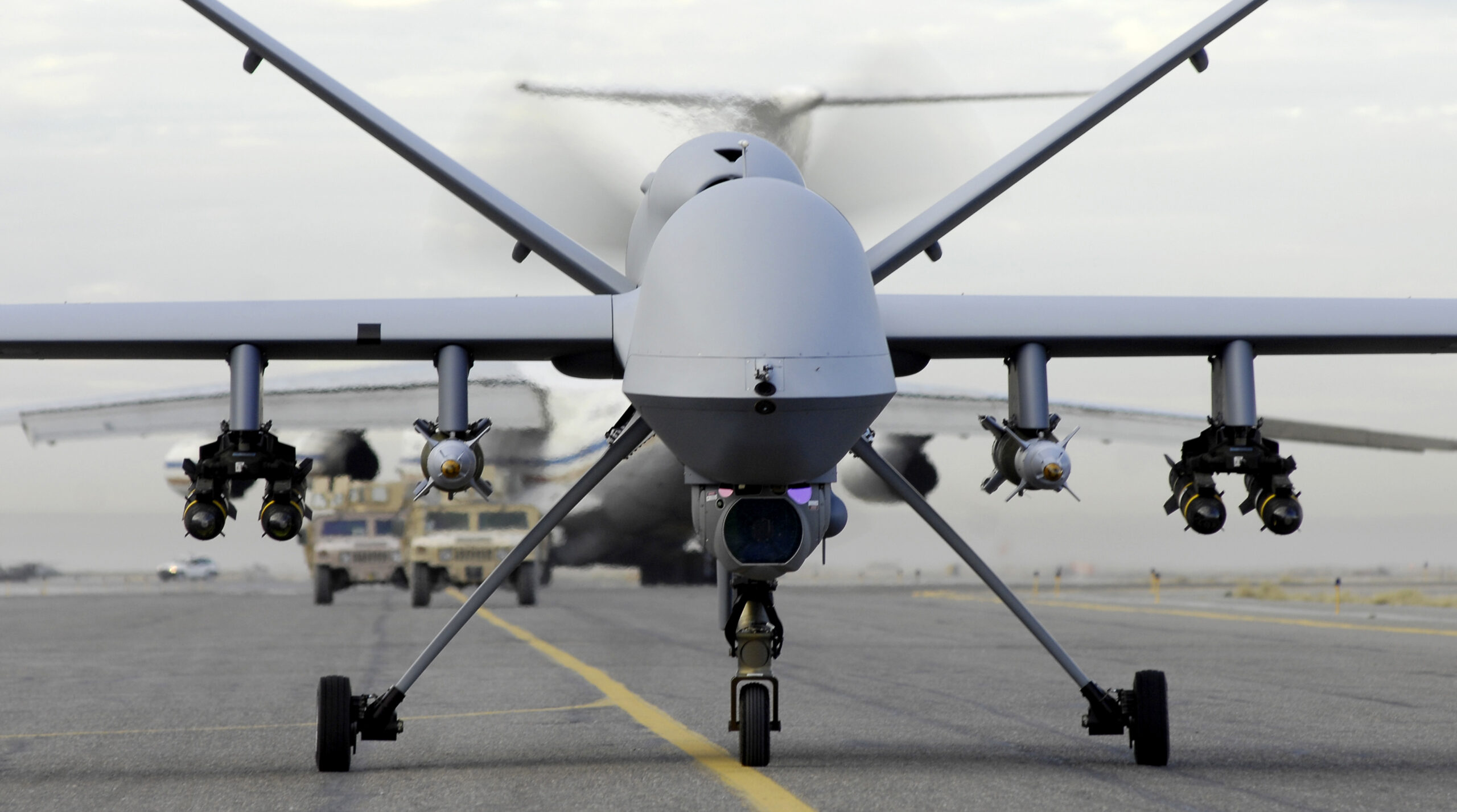
An MQ-9 Reaper unmanned aerial vehicle in Afghanistan, circa 2008. (U.S. Air Force, Brian Ferguson)
By contrast, during the full-scale invasion of Iraq in 2003, U.S. forces lost only one A-10 and six helicopters, after systematically destroying much of Iraq’s air defenses through a low-intensity bombing campaign conducted under cover of the so-called no-fly zones, which the U.S., UK and France unilaterally imposed after the First Gulf War in 1991.
In 2003, the U.S. Armed Forces dropped 13,000 tons of bombs and missiles on Iraq in the first 30 days of the war. But only 800 tons, or 6 percent, of those munitions, were cruise missiles and other stand-off weapons like the ones the U.S. is now relying on against Iran.
The U.S. has already depleted a third of its stand-off and air defense weapons stocks, including JASSM and Tomahawk cruise missiles and SM-2, -3 and -6 anti-aircraft missiles, as well as half its stocks of Patriot and THAAD interceptors and the new Precision Strike Missiles that are replacing the shorter-range ATACMs. These missiles range in price from $700,000 each for JASSMs up to $12 million each for THAAD interceptors, and many will take years to replace.
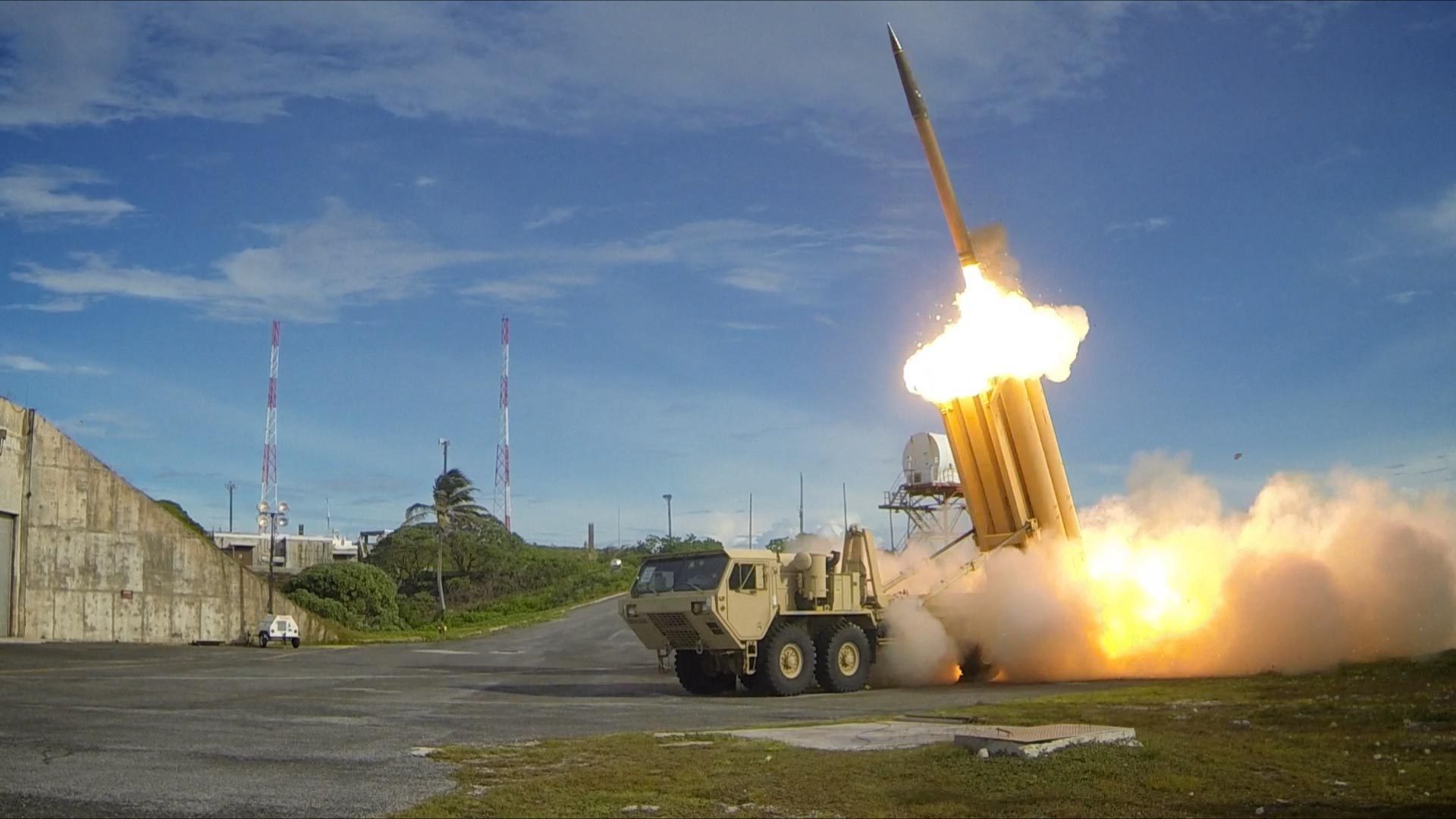
A Terminal High Altitude Area Defense, or THAAD, interceptor during a U.S. Army test launch in 2013. (U.S. Army/Ralph Scott/Wikimedia Commons/Public Domain)
So the U.S. is using multi-million dollar missiles that are irreplaceable in the short term to try, and often fail, to intercept Shahed drones that cost Iran between $20,000 and $50,000 each. This is a stark contrast from Iraq in 2003, when the U.S. weapon of choice was its 500 lb. GBU-12 Paveway II laser-guided bomb, which cost only $22,000, and the 7,000 bombs used to attack Iraq were easily restocked.
To make up for the Navy’s dwindling missile stocks in the war zone, the U.S. is flying B-1 bombers from a British airbase at Fairford in England to fire Tomahawk missiles at Iran. So many planes are now flying from so far away to attack Iran that the U.S. has also had to send dozens more aerial refueling planes to reinforce the 60 it already had stationed in Israel.
The Russians have demonstrated in Ukraine that the capacity to quickly ramp up production of relatively inexpensive artillery shells and drones can be more critical in a war than spending trillions on big-ticket weapons programs. Meanwhile, the corrupt U.S. military-industrial complex has built a gold-plated revolving door between the U.S. arms industry, the Pentagon top brass and a captive, co-opted civilian government. It has produced ever more expensive weapons, but it has lost nearly every war it has fought.
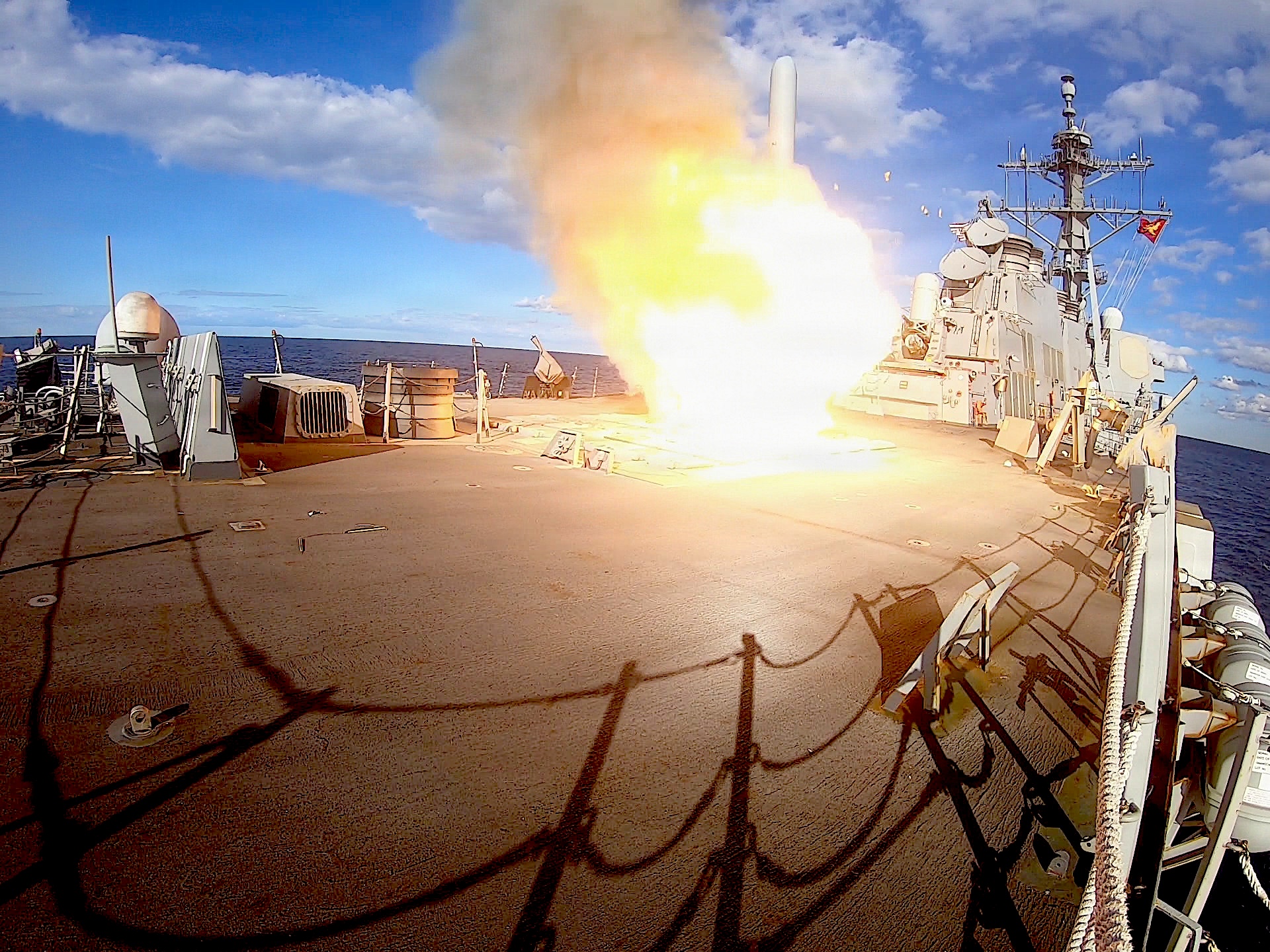
Arleigh Burke-class guided-missile destroyer USS Winston S. Churchill firing a Tomahawk Land Attack Missile (TLAM) during opening attacks on Iran on Feb. 28. (U.S. Navy Photo)
The only wars the U.S. has won since 1945 were three short wars to recover small neocolonial outposts in Grenada, Panama and Kuwait, as the U.S. took advantage of the weakening of the Soviet Union in the 1980s. Otherwise, from Korea in the early 1950s to Iran today, the U.S. armed forces have lost every single war, while inflicting mass destruction on countries and people the U.S. government claimed to be liberating. As the saying goes, “With friends like us, who needs enemies?”
Like many U.S. industries, the post-Cold War U.S. arms industry has become consolidated around a cabal of five firms (Lockheed Martin, Boeing, Raytheon (now RTX), General Dynamics and Northrop Grumman), whose continued growth depends on ever-greater profits from increasingly expensive warships, warplanes and weapons, while endless wars and “threats” serve to justify siphoning more and more of America’s national wealth into their coffers.
The U.S. government and corporate media have told Americans for decades that these extraordinary military expenditures and endless wars are something to be proud of, and many Americans have swallowed this perverted myth of U.S. military prowess. The Pentagon works hard to bolster its public image, spending $2 billion per year on recruitment and retention, and $1.14 billion on advertising contracts in 2023 alone.
But that narrative is beginning to crack. As with many aspects of the U.S. political and economic system, more and more Americans are questioning what they have been taught about the U.S. military, and veterans themselves are often the most outspoken critics.
Writing in Business Insider about the problems facing U.S. military recruiters, Kelsey Baker reported that many veterans of the “Global War on Terror” now discourage their own children from joining the military. Three of the recruiters Baker spoke to said guns had been drawn on them by the parents of teenagers they were targeting for recruitment, and one recruiter recalled an irate parent calling him a “baby killer” and a government slave.

Iraq Veterans Against the War marching in Boston, October 2007. (Jonathan McIntosh/Wikimedie Commons/CC BY 3.0)
In Iran, the United States is caught between escalating a catastrophic, unwinnable war it should never have started and the urgent need to rethink the illegal, corrupt, policy of aggressive war it has pursued since 2001.
The Sept. 11 attacks were carried out by 19 al-Qaeda hijackers — not by the countries that the United States went on to invade and occupy. Yet our leaders responded to those horrific crimes with a multi-trillion-dollar investment in new weapons and imperial military expansion — a decision driven by precisely the “unwarranted influence” of the military-industrial complex that President Dwight Eisenhower warned against in his farewell speech in 1961.
U.S. occupation forces in Afghanistan and Iraq were defeated by lightly-armed resistance forces defending their own countries. Yet America’s leaders ignored their own failures and defeats, continuing to blindly climb the escalation ladder — first confronting Russia through the war in Ukraine and now taking on Iran in its own territory.

Taliban fighters in a captured Humvee after the Fall of Kabul, August 2021. (Voice of America News/ Wikimedia Commons/ Public Domain)
We should note that it was under Democratic administrations that the U.S. backed a coup in Ukraine in 2014 and then rejected a peace agreement between Russia and Ukraine in April 2022, while Trump, a Republican, assassinated Iran’s top military leader in 2020 and launched wars on Iran, in cahoots with Israel, in 2025 and 2026. The U.S.-Israeli genocide in Gaza, like the illegal occupation that spawned it, still enjoys bipartisan support in Congress, but not from the American people its members claim to represent.
Many Americans understood the dangers of the United States’ militarized response to the crimes of Sept. 11, 2001, even before the Pentagon embarked on its spending spree and unleashed mass destruction on country after country.
Chalmers Johnson wrote his prescient and widely-acclaimed book, Blowback, in 1999, explaining how U.S. militarism and imperialism inevitably sow the seeds for cataclysmic events like the 9/11 attacks. He followed it with three more books in his American Empire Project before his death in 2010.
Former Nuremberg prosecutor Ben Ferencz told NPR a week after 9/11,
“It is never a legitimate response to punish people who are not responsible for the wrong done…We must make a distinction between punishing the guilty and punishing others. If you simply retaliate en masse by bombing Afghanistan, let us say, or the Taliban, you will kill many people who don’t approve of what has happened.”
By the time the United States was preparing to invade Iraq in 2003, international outrage was so widespread that it produced the largest global street protests in history, with up to 36 million people protesting in 60 countries.

Protesters in Barcelona, Spain, against U.S. preparation for war on Iraq, Feb. 15, 2003. (APCS2017 /Wikimedia Commons.CC BY-SA 4.0)
But U.S. leaders ignored the world’s rejection of their lies, both at the UN and in the streets, and insisted on pretending that Iraq had chemical, biological and even nuclear weapons, and was somehow responsible for the crimes of September 11th.
The brainwashing of U.S. occupation troops in Iraq was so complete that, even three years into the war, in February 2006, 85 percent of U.S. occupation forces in Iraq told a Zogby poll that their main mission there was to “retaliate for Saddam’s role in the 9/11 attacks.”
The lies, brainwashing, torture, civilian massacres and other war crimes that have corrupted the last 25 years of American military history —together with the outrageous cost — have turned the American people squarely against more new wars.
But incredibly, they have failed to persuade members of Congress to exercise their constitutional responsibility to stop feeding the out-of-control U.S. military-industrial complex with record amounts of money, weapons and false pretexts for war.
Trump has requested a record $1.5 trillion in military spending for FY2027. The House-passed NDAA authorizes $1.15 trillion in discretionary military spending, with additional funding outside the NDAA bringing the administration’s overall military-spending plan to $1.5 trillion. The Senate has so far blocked its version of the NDAA.
The draft NDAA also includes unprecedented provisions to further integrate U.S. and Israeli weapons production and intelligence sharing.
Trump’s frustration over the U.S.-Israeli failure to defeat Iran stems from the same delusion of U.S. military supremacy that infected his predecessors, especially since the end of the Cold War.
But in his 2018 book Losing Military Supremacy: the Myopia of American Strategic Planning, Andrei Martyanov warned that huge U.S. investments in aircraft-carriers and other big-ticket warships and warplanes were rapidly being rendered obsolete by a new generation of Russian and Chinese missiles capable of traveling much faster and farther than the most advanced missiles in the U.S. arsenal.
Now Iranian missiles and drones have fundamentally altered the military balance in the Middle East. They have driven the U.S. military out of its bases in the Persian Gulf and are forcing U.S. aircraft carriers to stay 1,000 miles from the coast of Iran. U.S. Central Command has had to relocate its regional headquarters from Qatar to Jordan, but Iran has attacked it there too.
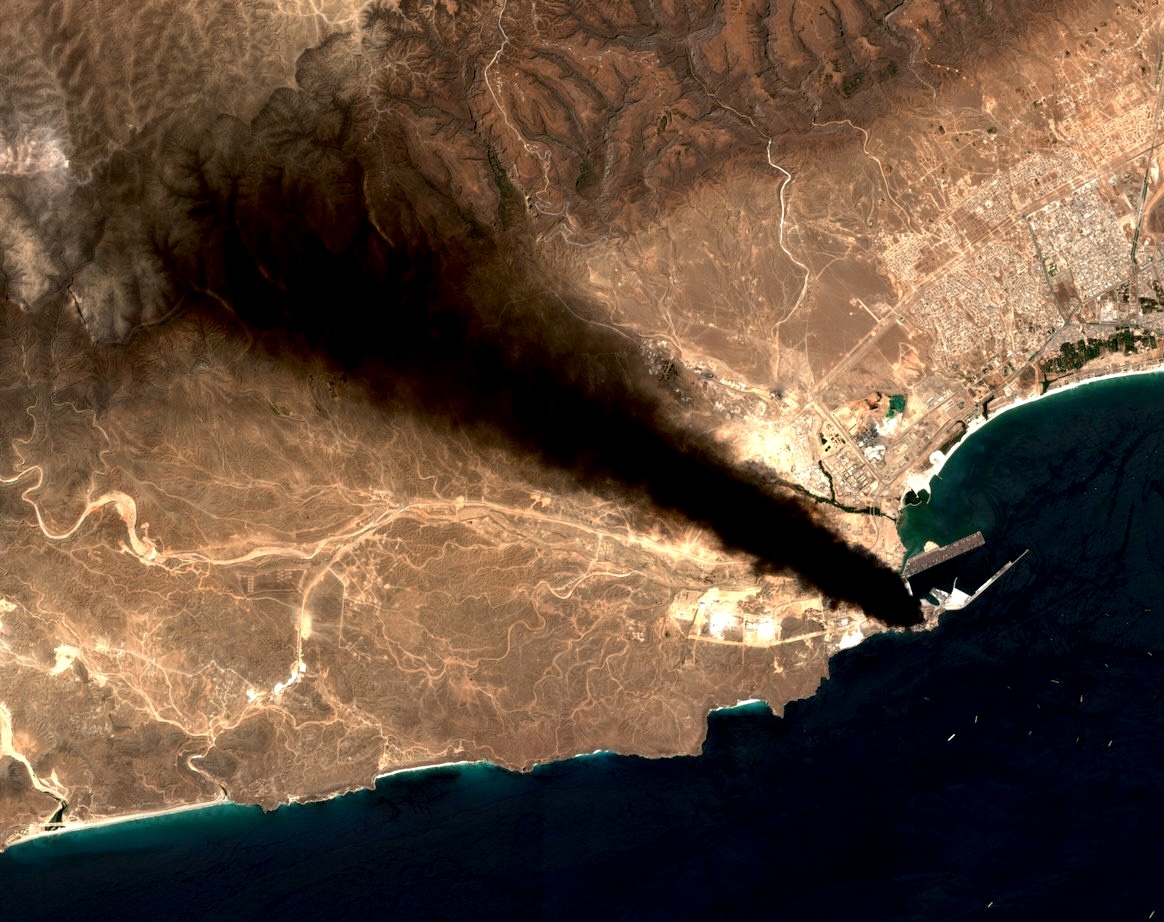
Satellite imagery of black smoke rising from the Port of Salalah on March 13 during Iranian strikes on Oman. (CC BY 4.0 /Wikimedia Commons)
Now the United States is repositioning more of its forces in the Middle East to Israel. This raises the stakes, and increases the risks, of any future escalation in the war on Iran, and it further expands the entangling U.S. military alliance with the genocidal state of Israel, which most Americans now oppose.
On Aug. 8, Iran reiterated six points from the Memorandum of Understanding that Trump already signed on June 17, and insisted that the United States must comply with them before it will reopen the Strait of Hormuz to international shipping.
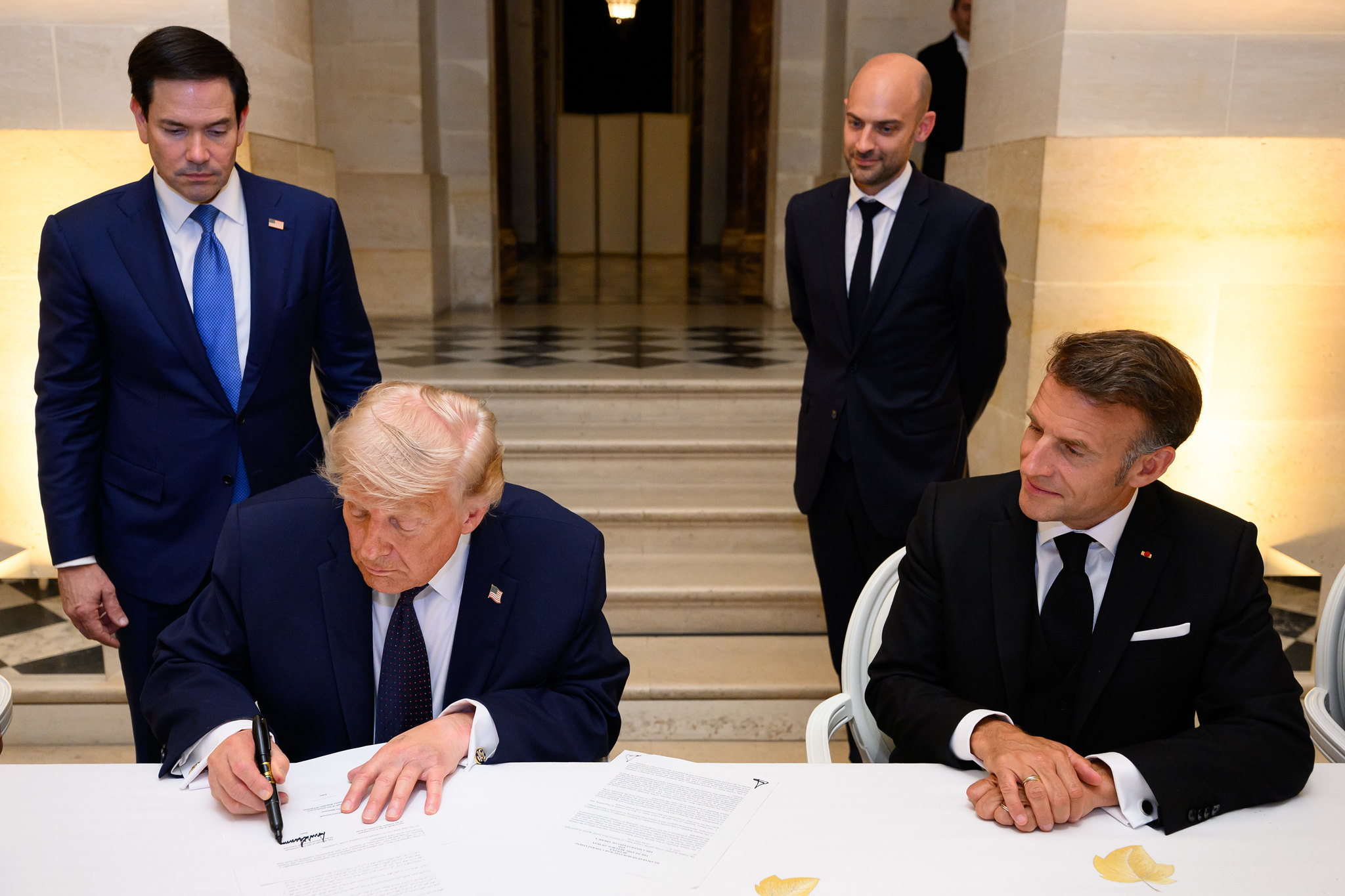
Trump signing the memorandum of understanding with Iran at the Palace of Versailles, France, on June 17. French President Emmanuel Macron on right, U.S. Secretary of State Marco Rubio on left, standing. (White House / Daniel Torok)
Western commentators have described these as tough new conditions, but they are neither new nor tougher than before. They simply make explicit what was already implicit — for example, by specifically mentioning Palestine and Yemen, whereas the original memorandum merely called for ending the war “on all fronts, including Lebanon.” The United States and Israel started this war, and the United States has the power to end it by negotiating in good faith, based on the memorandum it already agreed to.
The American people have sacrificed enormously to pay for this obsolete, overpriced and ineffective war machine. Many have paid with their lives, their limbs or their health.
All of us pay the opportunity cost of our leaders’ warmongering and reckless squandering of our national wealth, leaving us without the basic support systems that our neighbors in other developed countries take for granted, from universal free healthcare and quality public education to living wages and paid vacation time.
The U.S. government’s corrupt priorities leave our most serious problems unaddressed, while undermining global efforts to address them, from the destruction of the climate and the natural world to the ever-present danger of nuclear war.
As this year’s primary election results suggest, most Americans want a society that cares for its people, with a government that addresses our most urgent needs. That must surely include dismantling this failed, corrupt, out-of-control and absurdly expensive war machine.
Medea Benjamin and Nicolas J. S. Davies are the authors of War In Ukraine: Making Sense of a Senseless Conflict, now in a revised, updated second edition.
Medea Benjamin is the cofounder of CODEPINK for Peace, and the author of several books, including Inside Iran: The Real History and Politics of the Islamic Republic of Iran.
Nicolas J. S. Davies is an independent journalist, a researcher for CODEPINK and the author of Blood on Our Hands: The American Invasion and Destruction of Iraq.
The views expressed in this article and may or may not reflect those of Consortium News.
Please Donate to
CN’s Summer
Fund Drive!


[ad_2]
Source link
