
[ad_1]
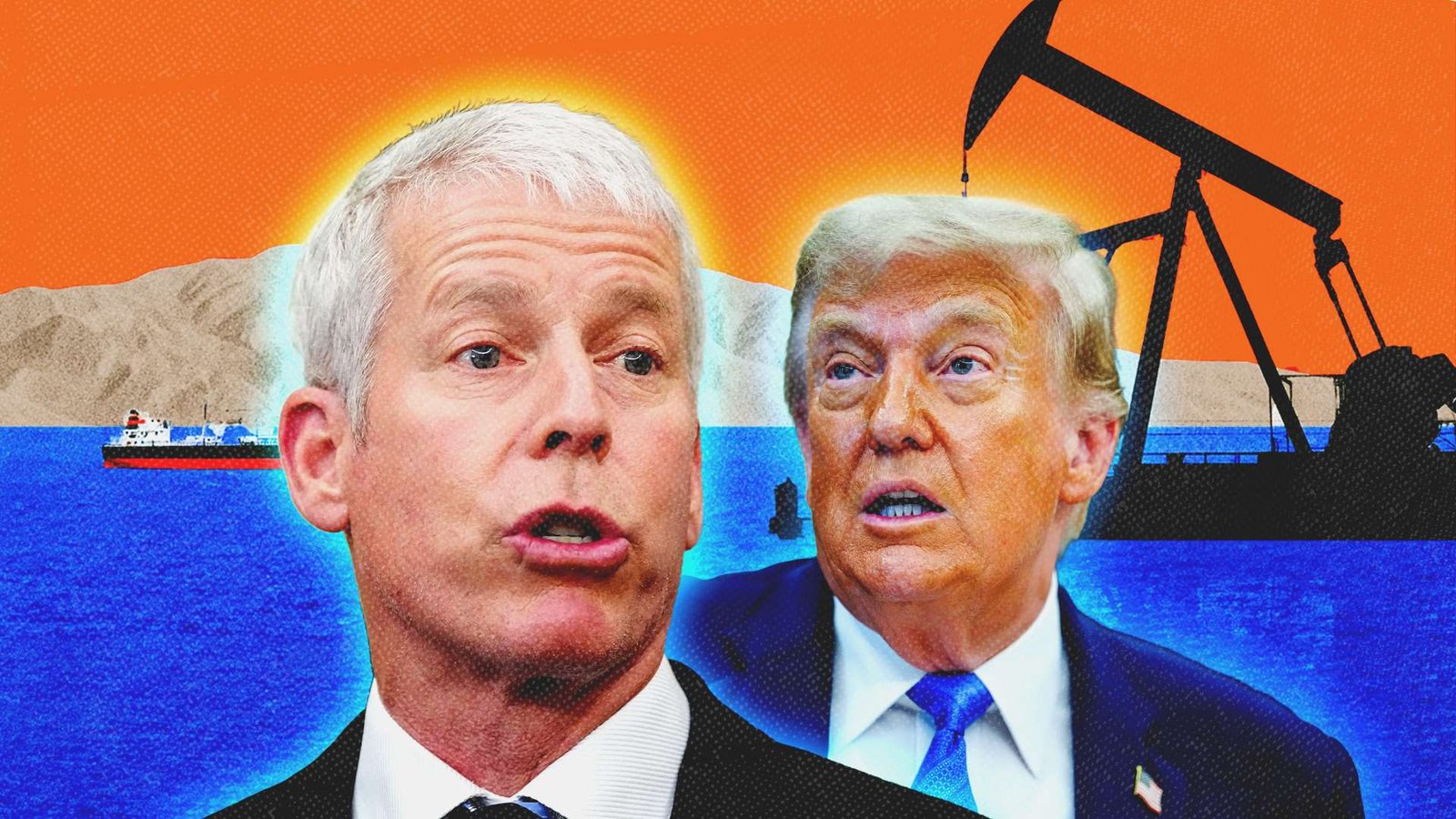
The Trump administration is making an extraordinary claim about the Strait of Hormuz. “On Sunday alone, over 20 million barrels left the Arabian gulf region, which is above the pre-conflict average,” Secretary of Energy Chris Wright wrote on Tuesday on X. While Wright placed the current average at a more modest 15 million barrels per day, the implication was clear: The war with Iran isn’t going to hurt Americans’ pocketbooks any more, and the situation might even be better than before.
Thanks to the coordinated efforts of the U.S. military and our gulf allies, the seven-day average for oil leaving the Strait of Hormuz is currently up to almost 9 million barrels per day.
When combined with the additional 5-7 million barrels per day leaving the region via newly…
— Secretary Chris Wright (@SecretaryWright) August 11, 2026
But the energy industry just isn’t buying it. Commodity Context, a market research service, has tracked 7 million barrels per day coming through the strait by sea for the past week, rather than Wright’s claimed 9 million, and an average of 4 million barrels per day through bypass pipelines, rather than Wright’s claimed 5-7 million barrels per day. Kpler, another market research service, estimated only 5 million barrels per day by sea.
“There is an obvious incentive for the administration to use the most generous possible definition of exports,” says Brett Erickson, managing principal at Obsidian Risk Advisors, who tells Reason that he and his industry contacts could not find a “modicum of evidence” for Wright’s higher estimates.
Actions ultimately speak louder than words. The Department of Energy is still releasing oil from the Strategic Petroleum Reserve; the latest data show that it released 6.1 million barrels in the first week of August alone, putting the department on track to overtake the 17.4 million barrels it released in all of July. The price of Brent crude on the Intercontinental Exchange shot up to nearly $90 per barrel on Tuesday night, up from around $70 before the war and during the summer ceasefire.
President Donald Trump has said that he was pleasantly “surprised” that oil hasn’t (yet) reached highs of $200 per barrel. U.S. efforts have been able to replace some of the oil flows scared away by the fighting or deliberately blocked by Iran. U.S. helicopters and drones guide convoys of oil tankers to an area just outside of Hormuz, under cover of darkness and radio silence, where they swap oil in secretive ship-to-ship transfers. Plus, The Wall Street Journal reports that there was likely more oil stored around the world before the crisis than anyone knew—a cushion that only works once.
“The fundamental problem is that more vessels are leaving the Strait than are going back in. Washington isn’t restoring commercial traffic through Hormuz, it’s slowly emptying the Strait and calling that progress,” Erickson says.
And the fixation on crude oil ticker prices—as a quick and dirty indicator of energy costs—is hiding the full cost of the war. First of all, the price of “paper oil” isn’t necessarily the actual cost for refineries. The Brent price that appears on TV tickers, for example, reflects what speculators will pay for a contract for delivery of oil in a couple of months. Just after the April ceasefire, there was a $38 per barrel gap between the price of Brent futures contracts and the physical, real-time price of crude oil, though they’ve evened out since then.
Second of all, crude oil has to be brought to refineries and processed into usable products. Much of the world’s refining capacity is either bottled up in the Middle East as well or being damaged by the war in Ukraine. The “crack spread,” the difference in price between a barrel of crude oil and a barrel of refined product, is at historic highs. In other words, the scarcity has been passed on to the gas you put in your car, the diesel your grocery store puts in its delivery trucks, and the jet fuel that gets you to your destination. Gas prices are currently averaging about $4 per gallon in America, up from $2.90 right before Trump started the war.
Trump, like many Democrats, tends to blame price increases on the individual greed of oil companies rather than the way the laws of supply and demand work. “The big Oil Companies are not dropping their price at the pump commensurate with the sharply lower prices they are paying for Oil,” he stated in June, threatening an investigation for price gouging. Trump accused Chevron and ExxonMobil by name of “making too much money based on a shortage.” Both companies say that they’re responding to economic conditions.
With the oil companies as with Iranian leaders, Trump is learning that he cannot simply order others to go against their own interests in order to bail him out from a self-made mess. Fibbing his way out of it has paid some dividends. Trump’s constant promises that the war is almost over—most recently a week ago—have repeatedly pushed down the price of oil futures. (The Department of Justice is even investigating whether people have been insider trading on the president’s announcements.) But cars can’t run on paper barrels, and forcing prices lower actually makes it harder for producers to adjust to shortages.
“Washington has no strategic reserves of trust to draw from. Even if the U.S. government is telling the absolute truth about Hormuz today, it has made so many false claims and been contradicted by reality so many times throughout this war that there is simply no reason for anyone to take its word at face value,” Erickson says.
[ad_2]
Source link
