
[ad_1]

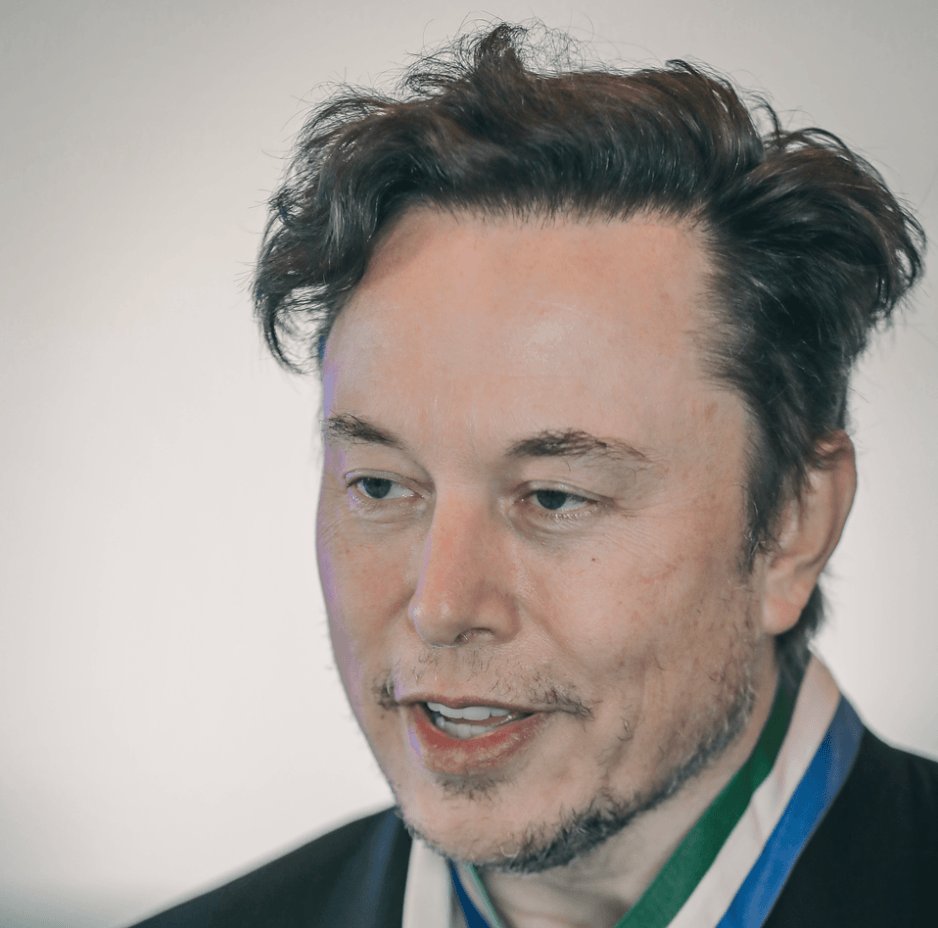
Elon Musk. Photo: Brazil Department of Communications.
Last week’s SpaceX IPO made Elon Musk the world’s first trillionaire, despite the fact that the company has lost tens of billions of dollars since it was founded almost 25 years ago. Shares of the company climbed steadily after markets closed on Friday, pushing its market cap to $2.2 trillion. The public conversation about Musk’s vast wealth often obscures the fact that he is actually a very fancy welfare recipient, having taken billions of dollars from the public coffers by even the most conservative measures.
In reaction to the news, Oxfam America’s Nabil Ahmed said, “Elon Musk’s rise to trillionaire status marks a new pinnacle of oligarchy and a dark day for democracy. But this moment of dramatically concentrated wealth was not inevitable. Musk will be a government-backed trillionaire whose fortune was fueled by an era of regressive public policy choices — decisions rigged by a tiny few to fuel their fortunes, and overwhelmingly supported by political leaders.” Ahmed says that this development is a “trillion-dollar alarm bell” and he calls on governments to “address the inequality emergency.”
In a tweet last year, Jeff Bezos said something true that very few of the ultra-rich have been willing to acknowledge: “We do NOT have free markets today and have not had them for a very long time. In general, corporate subsidies and special interest tax breaks are great examples of where government interferes with free markets.” If one of the richest people in the world is ready to admit this, then maybe we should be too.
CNN’s Abby Phillip gave an entire segment of her show to this question, and not a single guest knew enough about our oligarchical political-economic system to raise the most obvious objection, to recognize that those opposed to the forced redistribution of wealth ought to oppose the world’s first trillionaire. How is conceptual confusion and fundamental misunderstanding of such depth and pervasiveness possible? It is possible in large part because we have allowed capitalism, a historical system of violent theft and systematic advantage for the rich, to pass itself off as a free, competitive market in which we all have the same rights and play by the same rules.
What is remarkable is how quickly the oligarch-defense contingent, which in fact dominates both major American political parties, makes this a debate about the supposed envy of Musk’s critics rather than a structural question about grants of special privilege to a small and shrinking list of powerful corporations and individuals. By accepting the oligarchs’ narrative, allowing them to cover themselves and their deeply authoritarian system of privilege in the liberal language of freedom and individual rights, we have virtually locked ourselves into “decades of pro-billionaire politics that have allowed the ultra-rich to write economic rules in their favor.”
Our political discourse is fundamentally confused about the relationship between the modern state and the economic system. The crisis of “obscene inequality” we see today is not the result of capital corrupting an otherwise neutral state; it is decidedly not a problem of mere bribery or self-dealing. As a historical matter, the modern state created the corporation and the capitalist system as we know them, structuring and institutionalizing the accumulation of wealth in the hands of a few through the theft and enclosure of common resources like land; the creation of state-backed monopolies and arbitrary limits on liability; the outlay of enormous subsidies, grants, loan guarantees, and tax breaks; the brutal enforcement of labor discipline through strike-breaking, vagrancy laws, and mass incarceration; and the establishment of special exemptions from competitive pressure through licensure and legal barriers to entry, among many other arbitrary special favors.
When confronted with the factual record, the whole notion of the state and capital being at odds with one another, the free market vs. government intervention, reveals itself as completely incoherent and ahistorical. In real life, when state power enters and intervenes in the economic sphere, which it does constantly and in fact never departs, it is to help private capital steal, extract, and redistribute wealth upward, to allow money to grow itself through the special powers attached to it by the law instead of through work or the addition of actual value.
But the point is that this presupposition of a formal and existing separation between the two spheres (the state and the economy, the public and the private, etc.) has always been mistaken. The state and capital are deeply fused and integrated as a historical and material matter. They constitute and shape each other, and the supposed economic sphere has no independent existence apart from the decisions of the politically powerful as to who holds the wealth and the decision-making authority within the “economy” or “private sector.” Events that most would correctly regard as deviations from free market principles were constitutive of capitalism at every historical stage.
In the economic system we have today, the capitalist does not hold the gun himself, so the economic exchange appears voluntary, compatible with the liberal, broadly-speaking, ideas that most of us recognize as legitimate: respect for other people, their rights, time and personal property. The state appears neutral within this framework. It is not itself the corporate boss exploiting us, and it seems to merely set the rules. The state and the market economy seem to be legitimate in isolation from one another. But together, these two meta-institutions of the modern age reconstitute the same extractive system that their predecessor political-economy forms ran, only much more efficiently and quietly.
The trick of this system is that it is not, strictly speaking, completely incorrect to see exchanges under capitalist rule as formally voluntary. But what this does is decontextualize the economic sphere from the sphere of state domination that creates and shapes it, that removes options for exit or independence before the game even begins.
If we continue to accept the version of events given to us by our billionaire and now trillionaire overlords, we will stay impotent under their rule. The political conversation should return to historical context and material realities. The questions must be about the relations between people, about what kind of political-economic system yields these conditions of life, regardless of what it is falsely and misleadingly called.
[ad_2]
Source link
