
[ad_1]
By almost any measure, President Donald Trump’s war on Iran has been a catastrophic failure. Thousands of Iranian civilians and 13 American service members have been killed. Iran’s shutdown of the Strait of Hormuz has resulted in the largest oil supply disruption in history. As fuel, food, and fertilizer prices rise, a potential global recession is in the offing. U.S. credibility with allies in Europe, Asia, and the Middle East has been severely damaged.
The Pentagon recently reported the U.S. has spent $25 billion on the war—an undoubtedly conservative figure, as some estimates suggest the price tag is three times higher—while already-strained U.S. munitions stockpiles have been further depleted. Yet, the United States has achieved none of its strategic goals and has admitted that its aim now is to restore the status quo ante in the strait.
But amid all these pointless losses, there is a silver lining for U.S. interests and Middle East security. The United States may have no choice now but to retrench from the region, a decision Washington should have made long ago.
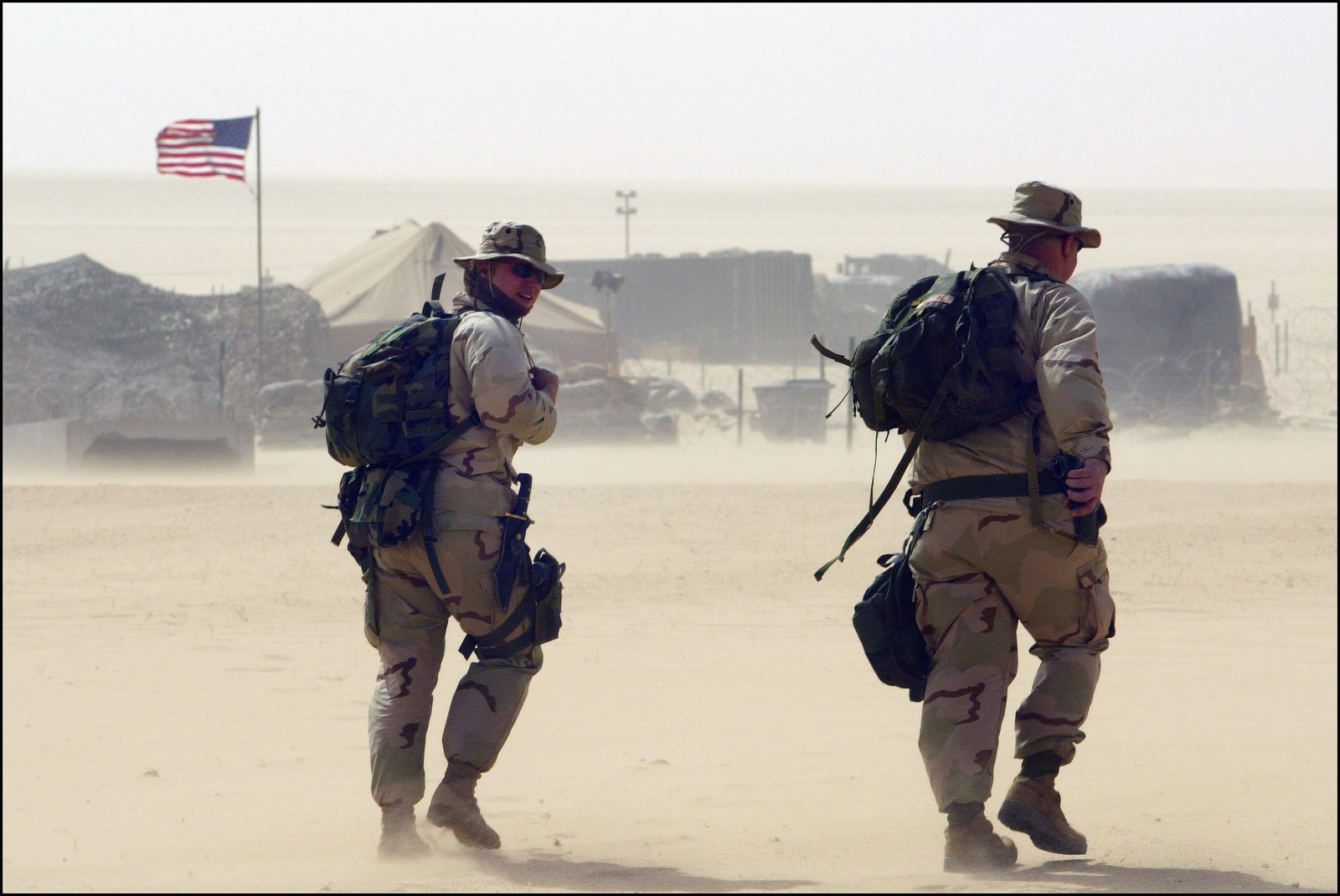
Iran has reportedly inflicted significant damage to over 200 structures or pieces of equipment at U.S. military sites in the region. This includes expensive early-warning radar systems, missile defense systems, satellite dishes, and command-and-control aircraft. In the early days of the war, many U.S. bases in the Middle East were uninhabitable due to Iranian attacks. Some of these outposts were even evacuated before the U.S. launched the war, and they have served little utility in the fight, with most U.S. attacks emanating from long-range platforms.
For states in the region that hosted U.S. bases, the war has served as a wake-up call. The security umbrella they thought they enjoyed has proven illusory. Washington barely consulted its Gulf allies before attacking Iran, and the U.S. focused on protecting Israel as Tehran launched barrages of missiles and drones at Gulf Arab countries. Iran has also made clear to regional states that if they permit U.S. attacks to be launched from their territory, they will be targeted for retaliation. Middle Eastern states might be tempted to reassess their relationships with Washington.
Subscribe Today
Get daily emails in your inbox
That may already be happening. The U.S. was forced to abruptly pause “Project Freedom”—its latest plan to break the logjam in the strait—due to backlash from Saudi Arabia and Kuwait, which briefly suspended U.S. airspace and basing access over the lack of coordination and fears of further Iranian retaliation.
Even before the war, many Arab countries were seeking to diversify their security partnerships. Riyadh, in particular, became wary of its ostensible American defense umbrella following Washington’s muted response to the Houthis’ 2019 drone attacks on Saudi oil facilities and U.S. restrictions on offensive weapons sales over its actions in Yemen. In recent years, Saudi Arabia and the UAE have gradually increased security and defense ties with China, leveraging great power competition to address their capability gaps.
Israel’s unprecedented attack on Hamas officials in Qatar last September reinforced Riyadh’s growing concern about the nature of U.S. protection, leading Saudi Arabia to sign a defense pact with Pakistan shortly afterwards. There are indications that Saudi Arabia, Pakistan, Turkey, and Egypt are cohering into a powerful regional bloc to address shared security concerns.
After the Israeli strikes in Qatar, Trump gave a more formal security guarantee to Doha. But Qatar had already turned to regional balancing, strengthening military ties with Turkey and pursuing broader diversification by developing deeper relationships with France and the United Kingdom.
This is a trend that will undoubtedly accelerate in the wake of the destruction brought by the American-Israeli war on Iran. It’s also a development Washington should encourage, as the countries of the region should shoulder the responsibility for their own security. To help disentangle Washington from the region, the U.S. should also transform its relationship with Israel, no longer providing it with a blank check.
A potential U.S. withdrawal from the region did not have to be accompanied by a humiliating defeat. It could have been a coordinated, strategic decision, made in concert with allies to shift the burden of the region’s security to those with the most stake in it. Still, such an outcome should be pursued after this war concludes, if not now. Trump’s war is an outright failure, but it could inadvertently impel important strategic changes that benefit Americans and advance core U.S. interests.
[ad_2]
Source link
