
[ad_1]
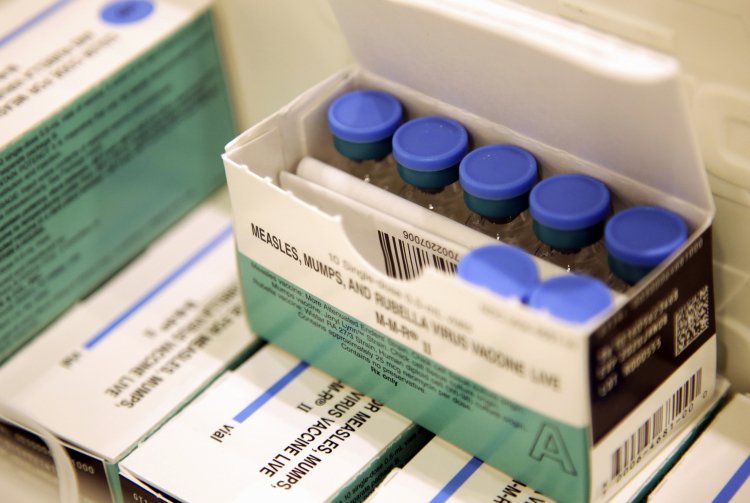
Health officials in South Carolina recently declared the 2026 Spartanburg County measles outbreak over. The outbreak involved nearly 1,000 cases, the largest in the U.S. in more than 30 years. For those who follow that and other 2025-2026 outbreaks, a number of lessons should serve to revise the current narrative around the status of measles in the US measles outbreaks.
First: Large-scale population displacement resulting in relocation of the unvaccinated contributes to outbreaks.
Although public health officials do not routinely record “country of origin” of measles patients, it can be critical information. The Spartanburg outbreak was concentrated in the Eastern Slavic Russian/Ukrainian community, the largest Ukrainian community percentagewise of any metropolitan area in the U.S. From 2010 to 2020 and again in 2022, vaccination rates in Ukraine dropped below 50%. It is not likely that the size of the South Carolina outbreak and migration from Ukraine to the U.S. is a coincidence.
Currently, there are significant measles outbreaks in southern Manitoba, Canada, and in the London borough of Enfield in England, both of which have seen an influx of immigrants from Ukraine. An important event may be the four-year-old war between Russia and Ukraine, which has resulted in substantial numbers of Ukrainian refugees, some of whom almost certainly were not vaccinated before emigrating. Better data collection would permit a more firm conclusion as to the role of that war, as well as the relative contribution of those who were never vaccinated in their native lands versus vaccine-hesitant citizens of the U.S., Canada, and England.
In the U.S., smaller measles outbreaks have occurred among Venezuelan emigres in Chicago and in the Somali community in Minnesota. Like Ukraine, these countries have had extremely low measles vaccination rates at some point during the 21st century. Public health officials and much of the news media in the U.S. are hesitant to acknowledge these obviously high-risk pools of unvaccinated people, who are logical contributors to the spread of this highly contagious virus.
Second: The standard narrative is that the measles outbreaks are a result of the low vaccination rates in kindergartners. This does not correspond with the facts on the ground.
Today, adults over 18 account for 30% of the measles cases in the U.S. and 40% of those in Canada. In the U.S., there are far more measles cases in those ages 20 and older than there are in those under five, a complete reversal in the age demographics of measles from the pre-vaccine era. No one has explained how several recent years of suboptimal U.S. kindergarten vaccination rates – about 92% now, down from 95% in previous years – can cause measles in so many older patients. The U.S. must certainly address the downturn in kindergarten vaccination rates – it is a symptom of vaccine skepticism – but those rates cannot possibly be the cause of measles in older patients who failed to receive vaccination as children many years ago.
Third: The standard narrative also includes the ill-chosen rhetoric of U.S. Department of Health and Human Services Secretary Robert F. Kennedy Jr. as a cause for the measles outbreaks. This is unlikely.
The reasons for the lack of vaccination in some countries whose emigres have come to the U.S. have nothing to do with Robert Kennedy. Ukrainian skepticism about vaccination dates back to when the region was part of the Soviet Union; Ukrainian citizens were suspicious of state institutions and state-sponsored advice. In 2008, a teenager died of an unrelated cause shortly after being vaccinated and Ukraine’s Ministry of Health destroyed 8 million doses of measles vaccine. Ironically, it was local churches that helped bring back trust in vaccines before the 2022 war (and cooperated in ending this year’s Spartanburg outbreak). In Somalia and Venezuela, vaccination has historically been sporadic due to political unrest and unstable health systems.
It defies credulity that most of the unvaccinated adults in the U.S. who contracted measles were aware of Robert Kennedy in their home countries years ago. RFK Jr.’s intemperate comments and ill-conceived skepticism toward aggressive measles vaccination admittedly contribute to vaccine hesitancy for other diseases. But when considering the older measles cohort, blaming him specifically for the measles outbreaks is political grandstanding rather than fact-based analysis.
Fourth: In terms of hospitalizations, this is not your grandfather’s measles. Measles 2026 is far different from measles 1926 or even measles 1976.
Measles in the U.S. today is less severe than in the past, possibly because of the older cohort with better nutrition and immunity. The U.S. Centers for Disease Control and Prevention (CDC) website currently says that 20% of those infected with measles will be hospitalized. In fact, the 2026 figure for measles hospitalizations in the U.S. is 6%; in Canada, 7%. Right now, despite doomsaying press reporting, fewer than one person per day is hospitalized for measles nationally.
The Spartanburg outbreak illustrated the medical community’s failure to follow the current data. Of the nearly 1,000 Spartanburg measles cases, only 2% were reported to require hospitalization. The country’s leading vaccine expert, Paul Offit at the University of Pennsylvania, disparaged the figure, calling it “ludicrous” and claiming there must have been underreporting. Put aside the fact that the Spartanburg hospitalization rate is roughly in line with the single-digit national figures in the U.S. and Canada. Even massive underreporting would not get the Spartanburg figures close to 20% (and mild cases of measles that are not included in the official figures would lower the overall hospitalization rate even more). Dr. Offit, who has done so much for vaccine science and was the hero of a severe 1990 outbreak in Philadelphia, is coaching with an outdated playbook in 2026.
Fifth: In terms of deaths, this again is not your grandfather’s measles. Here too, measles 2026 is less of a threat than measles 1926 or even measles 1976.
Today’s milder form of measles is also demonstrated in the case-fatality (mortality) rates. The commonly cited CDC figure is that between 1 in 300 (0.33%) and 1 in 1,000 (0.1%) of measles patients will die. Since the US outbreak began in 2025, 3 patients out of 4,000 (0.075%) have died. Including 2025-2026 Canadian patients, five patients in 10,000 have died (0.05%), a rate 50-80% below current overestimated CDC figures. Neither country has seen a death in 2026.
With no deaths so far in 2026, my projection is that there will be fewer than 10 deaths in the U.S. from measles this year. Each of those deaths, if they occur, will be tragic for the victims’ loved ones. However, put in perspective, in the U.S. 5-10 people die annually of snakebites, 50 die of insect stings, and 200 die due to lightning strikes. There are several serious short-term and long-term complications of measles, but unlike in the pre-vaccine era, death from measles in 2026 is extremely rare in North America.
Everyone unvaccinated for measles in the U.S. should get vaccinated. It pays to eradicate the disease through vaccination to prevent the now unusual but still potentially serious complications, to avoid the economic and emotional toll of infections, and to avert the potential impact of measles on other countries as Americans travel or relocate. But we must recognize that vaccination and international travel have made measles a different disease in the U.S. than it was previously. One lesson from the COVID pandemic is that failing to update scientific information, employing scare tactics, and denouncing political bogeymen ultimately damages the medical community, the news media, and the American public.
[ad_2]
Source link
