
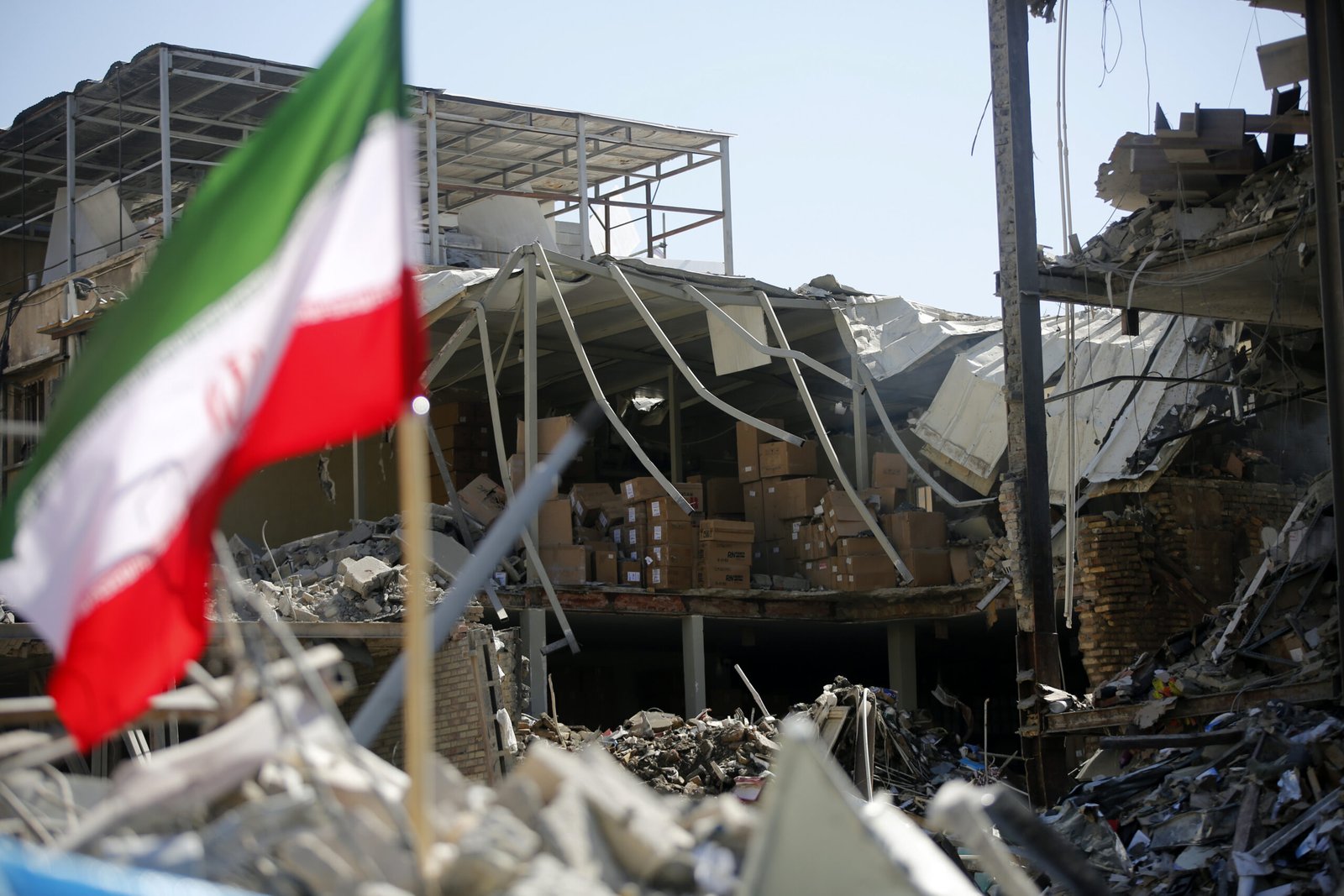
The conflict between the United States and Iran has laid bare a profound failure of political judgment and strategic adaptation in Washington and Tehran alike. Both sides locked themselves into rigid adversarial paradigms and prioritized short-term tactical military successes at the expense of long-term strategy. For the United States in particular, this failure is a symptom of a much larger, more dangerous disease—a stubborn adherence to a militaristic, interventionist grand strategy that refuses to accept the realities of a multipolar world in which its relative financial and military resources are much more limited.
The on-again, off-again conflict, characterized by tit-for-tat retaliatory strikes, is a lose-lose situation for both parties and for the region as a whole, yet we are unlikely to escape this tragic dynamic unless more realist strategic thinking prevails in both Washington and Tehran. Neither side can “win” this war, but they can cut their losses before they incur even higher human, financial, and military costs. The realist school of thought offers a compelling diagnosis of this conflict, and points the way to a mutually beneficial conclusion.
At the strategic level, Washington’s approach to Tehran has been trapped in a tragic cycle best understood through the theoretical lens of Robert Jervis’s “security dilemma.” Aggressive American and Israeli actions to prevent Iran from developing nuclear weapons only made Tehran want to increase its military capabilities, nuclear and otherwise. The operating assumption in Washington was that sustained economic “maximum pressure,” combined with overwhelming military coercion, would inevitably force either Iran’s complete submission or the structural collapse of the regime.
This approach fundamentally misunderstands how states behave under anarchy and existential threat. As Jervis famously articulated, in an anarchic international system, the very means by which one state attempts to increase its own security often inadvertently decreases the security of others. Over the years, American and Israeli coercive actions may have been intended to buttress regional stability by mitigating Iran’s nuclear threat, but they were predictably interpreted by Tehran as a campaign of aggression. It’s hardly surprising that Tehran, in response to a U.S.-Israeli war actually aimed, in part, at collapsing the regime, dug in and fought for its very survival, countering with a doctrine of asymmetric resistance rather than capitulating.
Since late February, when the U.S. launched Operation Epic Fury, heavy-handed military confrontation has consistently failed to achieve structural change within the Iranian regime. Instead, it has compelled Tehran to acquire more disruptive capabilities to escape the effects of American pressure. Rather than recognizing this classic security dilemma and the reality that unyielding coercion was making the region vastly more volatile, the U.S. has doubled down, forcing Tehran to further entrench its doctrine of resistance.
Given this basic misunderstanding of the relationship between U.S. military pressure and Iranian fragility and amenability, it was all too predictable that the Memorandum of Understanding achieved last month quickly collapsed. When disagreements arose about what the MOU required, the Trump administration turned to coercive pressure. The hardliners in Tehran are now holding the Strait of Hormuz hostage and threatening U.S. bases all around the region, thus escalating the conflict horizontally. Tehran has in some ways proven itself to be a savvy actor, but the wrecking of Iran’s economy and infrastructure, mounting casualties, and massive civilian displacement demonstrate the self-defeating nature of its own hardball strategy.
Therefore, both states are pursuing aggressive strategies that reinforce each other in a vicious cycle. As I explored in my book Emergent Strategy and Grand Strategy, when states lock themselves into rigid grand strategic frameworks and fail to embrace emergent adaptation, they court disaster.
Ultimately, the most glaring failure of political judgment was Washington’s inability to match its military means to its political objectives. In other words, the Trump administration ignored Clausewitz’s first and most important warning to leaders contemplating military action: War is an “instrument of policy,” not something autonomous, and leaders should understand what kind of war they are planning to wage and what it is meant to achieve.
The intense U.S. air campaign achieved distinct tactical successes—such as the destruction or degradation of Iran’s nuclear facilities, missile and air defense installations, and their modest Navy—but utterly failed to secure its primary objectives. Those included neutralizing Iran’s nuclear program and, if possible, instigating regime change. Once failure became clear, there were some modest signs of learning on the part of the White House, as when Vice President J.D. Vance pushed successfully for the ceasefire and MOU, but alas this shift was short-lived, and the U.S. military resumed its tactically successful but strategically useless airstrikes.
Hawks are now calling on Trump to take out a critical nuclear facility at Iran’s Pickaxe Mountain. Defense experts assess that the facility is buried 300 to 450 feet beneath solid granite, likely placing it beyond the reach of even bunker-buster bombs. High-end airpower alone cannot permanently dismantle nuclear infrastructure dispersed deep underground. As former UN weapons inspector David Albright bluntly concluded regarding precision munitions, it is “just not possible” to use a bunker-buster to pass through a mountain.
Furthermore, as realists have long understood, external military bombardment rarely precipitates the collapse of entrenched regimes; more often than not, it rallies the populace around the flag. This dynamic aligns precisely with Robert Pape’s seminal book Bombing to Win, which demonstrates that strategic air coercion rarely achieves significant political concessions or sparks popular revolts against authoritarian regimes. Instead, states facing external aerial punishment routinely absorb tactical destruction while adapting their defense posture and hardening domestic political control.
Further U.S. military force is in fact actively counterproductive to creating favorable political change in Iran because the perception of foreign sponsorship delegitimizes opposition movements, as shown in this case by the ascendancy of hardliners to positions of power after the killing of the Supreme Leader Ali Khamenei and other leaders. Airstrikes may destroy hardened facilities and kill commanders, but the neoconservative theory that decapitation strikes will weaken a regime enough for the population to revolt has no historical support.
The growing financial and military costs of this war are proving to be a political loser for the administration on the home front. The American public possesses a sharper strategic instinct than the foreign policy establishment realizes, and they are firmly rejecting this interventionist misadventure. A late June Quinnipiac University poll revealed that 60 percent of voters think the military action against Iran was not worth it, with 62 percent explicitly disapproving of Trump’s handling of the situation. The domestic opposition has only calcified over time; taxpayers recognize that borrowing billions for an unwinnable Middle Eastern conflict is the antithesis of a sound grand strategy. For an administration that campaigned on an America First platform of ending endless wars, this massive expenditure of political capital on a theater of diminishing strategic importance is a self-inflicted domestic political wound.
Moreover, the regional blowback of this conflict further illustrates the folly of the current strategy. The war’s long-term costs for neighboring states may be even greater than those borne by the two nations that launched the war against Iran. Even nearby states that haven’t become targets of Iranian strikes have paid dearly. The war triggered a massive flight of capital from fragile regional partners. Egypt, for example—already an economically vulnerable nation—saw billions in “hot money” leave its economy. Destabilizing vital Arab partners to pursue an unwinnable coercion campaign against Tehran is the antithesis of a sound realist grand strategy.
Subscribe Today
Get daily emails in your inbox
This brings us to the core grand strategic lesson of the U.S.–Iran conflict. Many realists and indeed many Trump administration officials, including the Pentagon’s top policy official, Elbridge Colby, warned before the conflict that getting dragged into a new Middle East war would deplete U.S. resources and focus and distract from the top grand-strategic challenge of containing China’s rise to regional and global hegemony. Every dollar, every missile, and every carrier strike group tied down in this frustrating conflict with Iran is a strategic asset diverted from the real fight. As I argue in detail in my new book No Peer Rivals, an America First realist strategy demands ruthless prioritization in today’s multipolar era, especially given the already unsustainable national debt. The era when the U.S. military could conduct long-term campaigns in the Middle East without giving much ground in the great power competition is over. To better position itself vis-a-vis Russia and especially China, the United States must stop squandering its resources on unwinnable fantasies in the Middle East.
This strategic diversion is not merely theoretical; it is actively degrading America’s material readiness for great-power competition. According to a recent analysis by the Center for Strategic and International Studies (CSIS), the intense bombardment campaign has severely depleted America’s stockpile of precision-guided munitions. The U.S. has reportedly fired over 1,000 Tomahawk missiles at Iran—a staggering expenditure that CSIS estimates will take until late 2030 to fully replenish based on current production capacities. Furthermore, replacing the high-end Patriot and THAAD interceptors expended to counter Iranian drone and missile retaliation could take until the end of the decade, forcing agonizing trade-offs. As CSIS bluntly warned, these depleted inventories have opened a dangerous “window of vulnerability for a potential Western Pacific conflict.” The Pentagon is actively burning through the very specialized munitions required to deter a Chinese invasion of Taiwan in order to police the airspace of the Middle East.
The ironic tragedy of this lose-lose war is that its ending is, or should be, straightforward: the U.S. and Iran would both benefit from returning to the status quo ante, and it would be in their mutual interest to arrive at a negotiated settlement along those lines as soon as possible. Neither stand to benefit from the continued tit-for-tat, nor from escalating the war. Much to the chagrin of realists, however, states sometimes fail to follow the prudent path that best serves their national interests, and they often pay a steep price for it. This war is proving to be yet another lamentable example.
