
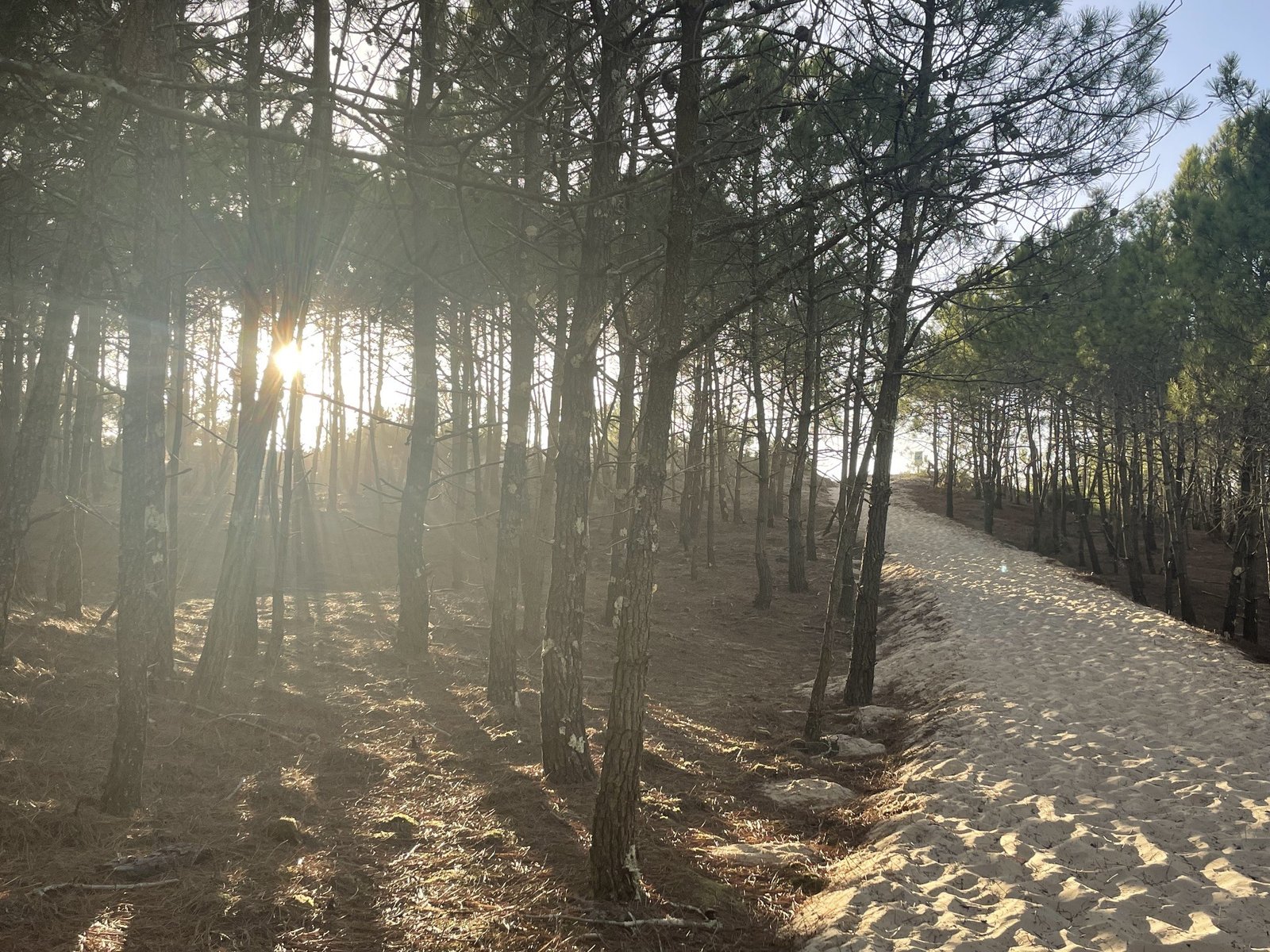
Cap Ferret peninsula, photo by Becky Grant.
If you think of France as a place to see the Eiffel Tower, sip wine, and eat confit de canard or escargot in chic cafés with old zinc bars and woven café chairs, you aren’t entirely wrong. Those moments continue to exist, and tourists can expect to find those same scenes in every wonderful arrondissement; choose your favorite, just like you’d pick your pastry at the pâtisserie… is it a pain au chocolat or a mille-feuille or a delicate flaky croissant? There’s still a petite-bon-coin for every taste.
But if you’re lucky enough to spend time outside of Île de France, you’ll get to know the quaint villages scattered throughout the country. Lying between these fairytale villages are expanses of vineyards and farmland, with bucolic scenes of grazing sheep, cows, and goats supplying the milk for the astounding variety of cheese from small farms, as surprising as discovering aisle after aisle of glistening pink bottles of rosé in a Provençal grocery store, or the sheer number of fresh-caught fish options you’d find in the Basque Country.
It wasn’t long ago that on any given day, a visit to one of these villages one could forget which century they were in when wandering around the market on cobbled squares: rounds and blocks of soft and hard cheeses, wafts of buttery scented baked goods alongside artfully stacked piles heirloom vegetables, jars of golden honey, bouquets of dried herbes, cured meats, and fresh eggs of all sizes and colors. Sadly, now you’re just as likely to stumble upon a table of imported produce and cheap goods from the other side of the globe. More and more farmers are squeezed by strict, unattainable permitting and regulations, and the small farms are disappearing as fast as your collection of wine you meant to keep for a special occasion.
The first time I went to a superstore in France, I was crushed by what felt like a bad copy of Costco: giant boxes of Kellogg’s cereal translated into French were still just overprocessed junk food: Coco Chanel replaced by Cocopuffs; aisle upon aisle of ultra-processed “gouter” for kids. Faster than a snobby Parisian waiter tosses change at a tourist’s table, it dashed my fantasy of French children eating only hunks of fresh baguette with slabs of cultured butter while sipping chocolat chaud. American-style junk food has spread like a disease all over the world. Don’t worry, there are shops selling only local produce, but farmers are abandoning ship. Their fields, once green swaths that not only grew food crops and pastured livestock, but also served as fire breaks, are vanishing. Maritime pine, Scotch broom, and other invasive brush have crept in, and with the hotter temperatures, they’ve quickly become tinder boxes now going up in terrifying, explosive flames. The precious French terroir, so much a part of the very fabric and foundation of the culture, was something I (an American, suburb-raised kid) had only imagined in young dreams of living in an old farmhouse, raising food for my family. It has been swapped for fuel for megafires.
During my time in Cap Ferret, I admired the pine forests from paths leading to the silky blonde sand beaches, passageways to a Renoir scene of beach umbrellas, topless sunbathers, and children frolicking in the waves, modernized only by surfers and kite surfers making the most of endless French summer vacation time. I breathed deep their rich odor, especially strong on the hottest days, before I learned these trees weren’t native at all: planted by Napoléon III, following in his uncle’s footsteps, to keep the dunes from blowing around and transforming the marshlands of yore into giant swaths of forest. Behind the rows and rows of pines lie the endless dunes of les landes, before the dreamy waters of the Atlantic, wild and cold in winter, but inviting the other six months of the year. These same trees have now popped up between houses that once stood on empty lots, shading them in their new wooded settings through the hot summer.
So, what are the French eating now? The same produce as we Americans, imported from South America and Mexico. Though the French government promises to tighten regulations on imports, the big grocery stores are filled with little else: those wee sweet grapes, Nantes carrots, and Rouge d’hiver pumpkins are replaced by the same things we’ve come to expect year-round in the US: peppers and tomatoes, eggplants and tropical fruits, and anything the home cook desires any month of the year.
And just like that, those fantasy ideas about France are going up in flames along with Napoléon’s pines, while the charming houses of southwest France lie in piles of ash and red roof tiles, ready to be replaced by little houses made of ticky-tacky.
