
[ad_1]
One of the most robust findings in economic research is that rent control doesn’t work. A policy often sold as a humane way to make housing more accessible and affordable instead constrains housing supply and makes market housing harder to access and more expensive.
Just about everywhere rent control, sometimes referred to as rent stabilization, has been tried, the same story plays out: Rent controls artificially freeze the price of housing, making many new developments, especially those aimed at more middle-income renters, financially untenable. Developers, in turn, shift their focus to building expensive, higher-margin luxury housing. The result is that there’s not enough housing to meet market demand, and the housing that does get built is priced out of reach for the middle-class. As long as demand increases, rents go up, even for modest dwellings, so new entrants who aren’t rich are increasingly priced out.
This is the exact story that has played out in New York, where rent regulations have reigned for decades, and housing prices have skyrocketed as a result.
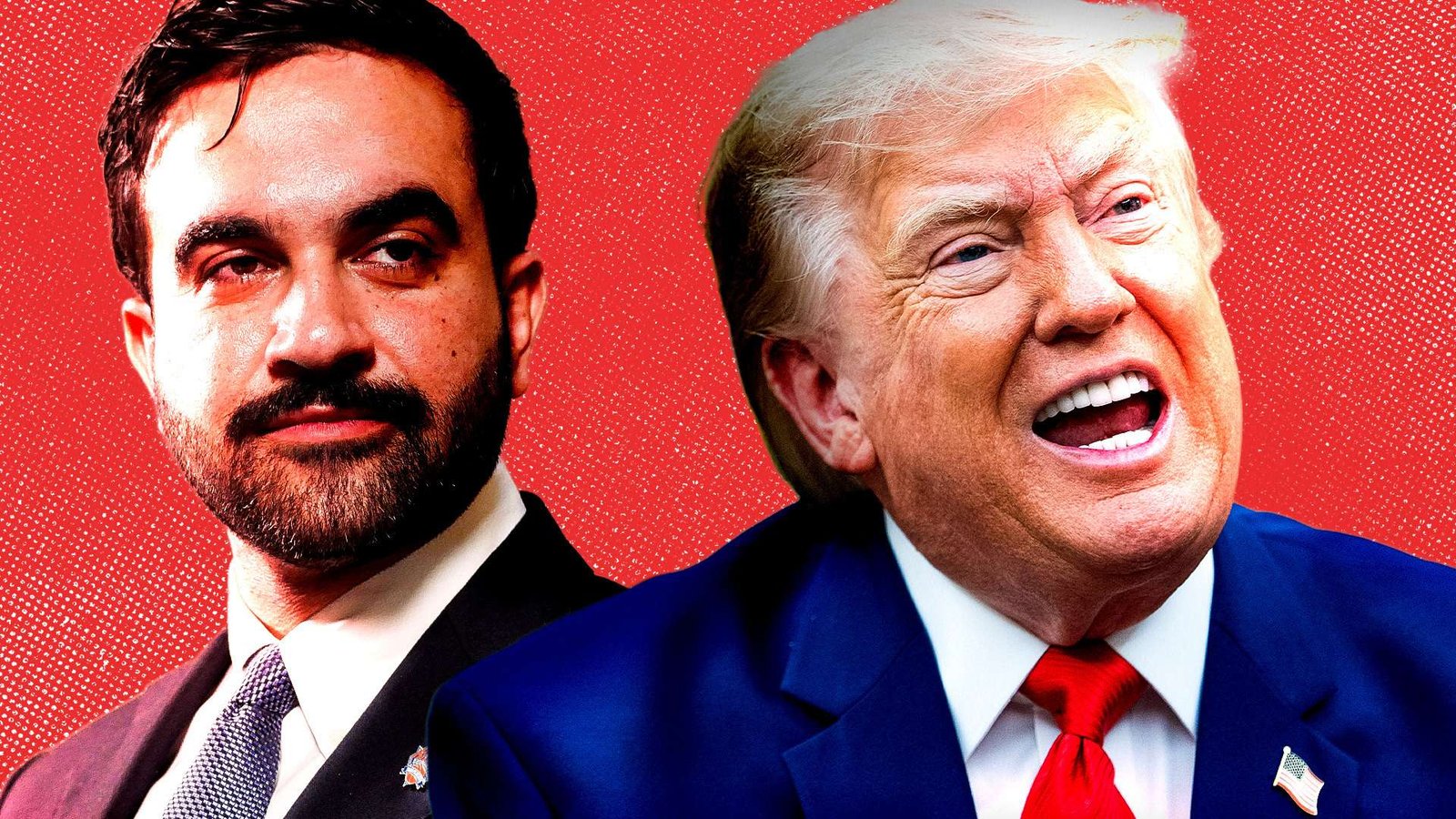
Yet somehow a spate of up-and-coming Democratic Party figures have come to the conclusion that combating high housing costs in New York and elsewhere requires more rent control—not just in the city, but nationwide. New York Mayor Zohran Mamdani campaigned on a rent freeze, which the city’s Rent Guidelines Board approved last month. The policy will affect a million already-rent-stabilized apartments. Mamdani-backed Democratic congressional candidate Darializa Avila Chevalier, who recently won a party primary and who, like Mamdani, is affiliated with the Democratic Socialists of America, supports a federal rent control policy for large landlords.
Never mind the evidence: They, like much of the DSA-adjacent cohort now vying for control and influence in the Democratic Party, seem to think that the problem is rent control, just that there’s not enough of it.
This is a movement in the grips of a new kind of policy nihilism, one in which the practical details of governance and policymaking simply don’t matter. Sometimes this view is even made explicit. The left-leaning consultant who pushed former Democratic senatorial candidate Graham Platner into the spotlight in Maine, “wants his candidates to back Medicare for All and characterize the Israel-Hamas conflict as a genocide, but beyond that, doesn’t believe voters care about detailed proposals,” The Wall Street Journal recently reported.
This lackadaisical attitude toward policy is visible even in that formulation: Medicare for All is a classic fantasy of American leftists, a policy that has essentially no chance of becoming law, and wouldn’t work if it did. The patron saint of today’s Medicare for All debates is Bernie Sanders, the independent socialist senator from Vermont who caucuses with the Democrats and has long represented their left flank. Estimates consistently find that Sanders’ plan would add more than $30 trillion to the national debt over a decade, and possibly more than $100 trillion over a longer time horizon. (Single payer health care systems are so expensive that even Sanders’ home state of Vermont balked.)
Even those sky-high figures are, in some ways, too deferential to Sanders’ so-called plan, which lacks real detail or credible answers to the massive implementation challenges it raises.
Meanwhile, selling Medicare for All to the public has proven a challenge once any discussion of how it would actually work begins: Kamala Harris co-sponsored a version of the Sanders bill while in the Senate. In 2019, when she campaigned for the Democratic presidential nomination, she quickly backtracked after facing questions about how it would eliminate nearly all existing private insurance. Sanders-style Medicare for All isn’t a real proposal; it’s a buzz phrase for a movement that simply doesn’t care about the practicalities of governance.
One would hope that there would be a counter to this flippant policy nihilism in the opposing party. Unfortunately, but unsurprisingly, the GOP under President Donald Trump isn’t exactly a font of seriousness. In a Republican primary debate, Trump himself once praised single-payer healthcare. And while he hasn’t overseen Medicare for All-like levels of federal debt, he has presided over a massive increase in the nation’s fiscal gap, despite repeated promises to close it.
Those promises, however, seem to be predicated on a mix-up: Trump often confuses the budget deficit, the gap between what the federal government spends and collects in tax revenue, with the trade deficit, the gap between the value of exports and imports. As with the DSA-friendly left, Trump, and many of his administration’s supporters, appear blithely unconcerned with the details or the evidence.
Indeed, along with the dysfunctions of rent control, another of the most robust findings in economics is that tariffs fail on the merits. Over the past year, Trump has offered implausibly high numbers for the amount of revenue being generated by tariffs. And even if those numbers were accurate, they wouldn’t come close to closing the budget gap, or funding the new spending he’s suggested could be paid for using those funds.
There’s also the small yet important detail that most of the tariffs Trump imposed during his first year in office were unconstitutional, according to the Supreme Court, which struck down most of his tariffs earlier this year. Yet Trump has persisted, coming up with new, legally dubious justifications for his tariff regime that will inevitably face court challenges as well.
Nor do the policy justifications hold up. Trump has said that tariffs will bring back domestic manufacturing jobs, but they have failed to do so. Trump has also said that tariffs are a response to a trade deficit with a country, yet he recently imposed tariffs on Brazil—a country with which America has a trade surplus. Trump is pursuing a trade policy that economists have repeatedly found doesn’t work to solve problems that don’t exist.
An overriding problem of contemporary American politics, on both the left and the right, is that reasoned argument has no purchase. One can point to all the studies and real-world evidence showing that rent control doesn’t work, and democratic socialists will push for—and enact—more of it anyway. One can demonstrate that tariffs mostly raise prices for consumers while failing to reduce deficits or increase factory employment, and that they are probably illegal as enacted—and Trump will just push forward with tariffs anyway, using justifications that don’t even make sense under his own screwy rationales.
None of these ideas work as policy. But judging by recent elections, they seem to work as politics, a realm where policy nihilism is too often rewarded and even celebrated as virtuous. The challenge for those who oppose such nihilism is to find something that works even better.
[ad_2]
Source link
