
[ad_1]
On the eleventh and twelfth of August, a Boeing business jet registered A6-RJA left Abu Dhabi, crossed the Gulf, and set down briefly in Iran. Flight trackers logged it at Tehran’s Mehrabad and at Payam airfield near Karaj. It stayed roughly an hour each time, then flew home. The aircraft belongs to Royal Jet, a charter line owned by the government of the United Arab Emirates. That much is a matter of record.
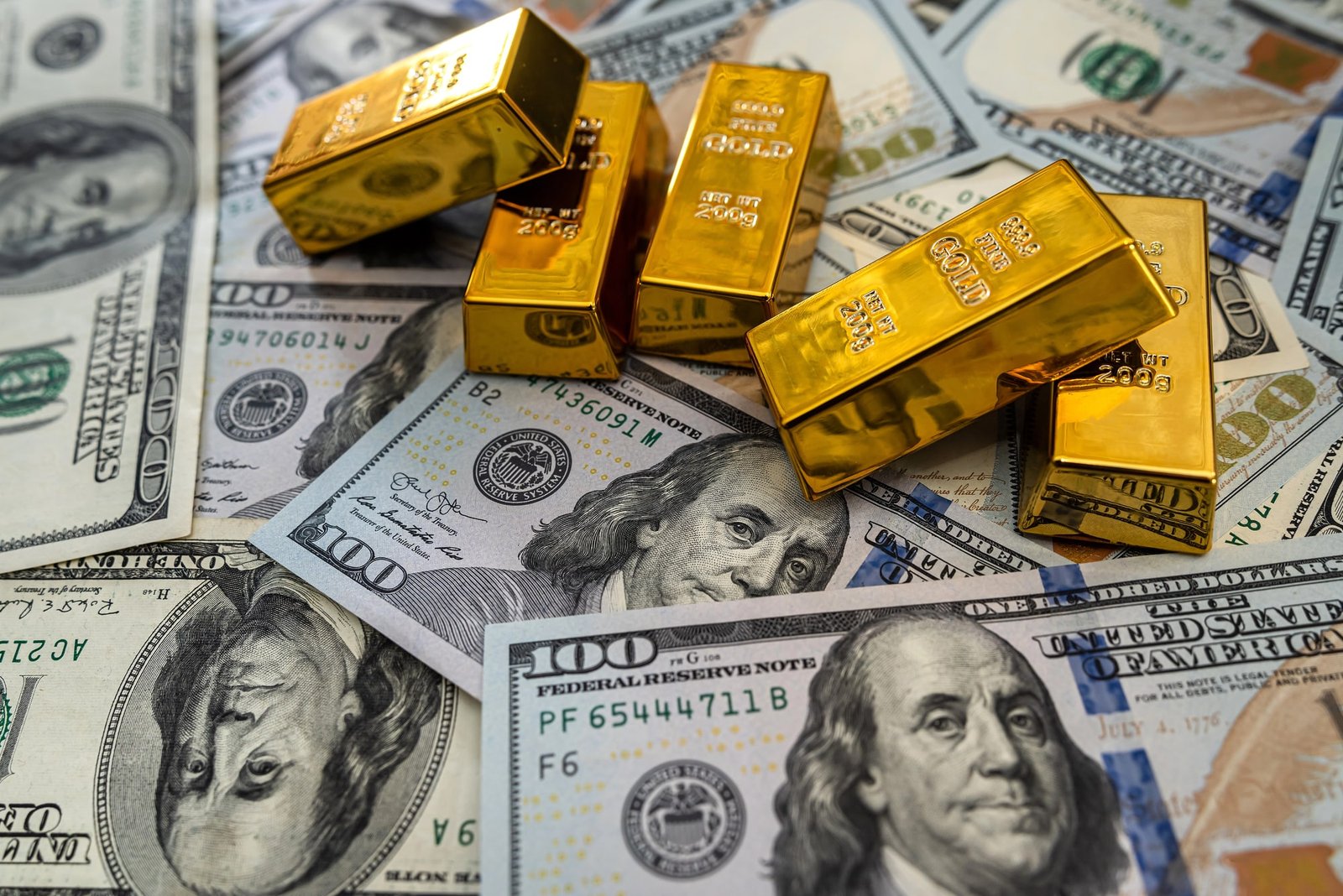
What the plane carried is not. Iranian sources told a single account that the flights moved bullion and cash—some two tons of gold, said to be worth around $283 million, part of a broader release of frozen Emirati-held funds. The purpose, they said, was to buy Iran’s forbearance: money for the promise that the missiles would land somewhere else. Abu Dhabi denies all of it. No funds released, the foreign ministry says, none transferred, none facilitated. Washington denies it too.
The denial is not a refutation. It is the mechanism working as designed. To understand why a wealthy government would fly gold into a rival capital and then swear it never happened, look not at Tehran but at the instrument that made the gold necessary in the first place—the machinery Washington calls economic statecraft and everyone subject to it calls the price of doing business.
Begin with what is better established. In June, Reuters reported—on the word of four sources—that the UAE had agreed to release between ten and twenty billion dollars in frozen Iranian money, with a first tranche of three billion already delivered, in exchange for a halt to Iranian strikes on Emirati soil. One source tied the release directly to safe passage through the Strait of Hormuz. The Emirates issued the same flat denial then that it issues now. And the arrangement, if it exists, is elegant precisely because it lets every party lie in a different direction: Iran can call it reparations, Washington can insist it paid nothing, and Abu Dhabi can buy its own security while framing the whole thing as regional goodwill.
The context of the payment matters, because it was made under fire. The war that the United States and Israel began in late February trained Iranian missiles and drones on Emirati territory, emptied Dubai’s hotels, and drove expatriates to the airport. Then the strikes on the UAE stopped, and Tehran turned its ordnance on Kuwait and Bahrain instead. A government watching its neighbors absorb the blows it had just been spared does not need a briefing to grasp the arithmetic. The projectiles are for sale, and the currency of exemption is cash. Iran, sanctioned into penury, has hit upon a revenue stream more reliable than oil: it auctions off the promise not to attack, and its wealthiest neighbours are buying. What it cannot earn by selling barrels it extracts by withholding violence.
Why the theater? Because none of these governments can admit the facts out loud, and the reason they cannot do so is a body of American law that reaches into banks it does not own, in countries it does not govern, to punish transactions that never touch American soil. The Treasury’s Office of Foreign Assets Control maintains a list, adds names to it, and lets the rest of the planet’s financial system do the enforcing. A bank in Dubai or Frankfurt or Singapore that clears a dollar payment for a blacklisted Iranian entity finds that the payment, for a fraction of a second, passes through a New York correspondent account—and in that instant it falls under American jurisdiction. The penalty for guessing wrong is exclusion from the dollar itself.
The lesson was taught once, unforgettably. In 2014 the French bank BNP Paribas pleaded guilty to processing transactions for Iran, Cuba, and Sudan and paid an $8.9 billion settlement, its dollar-clearing business barred for a year. No French court convicted it. No French statute was broken. A European institution was fined nearly nine billion dollars by a foreign government for conduct that was legal where it occurred. Every treasurer in every bank outside the United States understood the message, and has behaved accordingly ever since.
It was not meant to be this. When the dollar emerged from the last world war as the axis of global settlement, its dominance was a matter of commercial convenience—the currency everyone happened to hold because everyone else held it too. Convenience hardened into infrastructure, and infrastructure, in the hands of a state that noticed what it possessed, hardened into leverage. Somewhere in the long campaign against Iran the tool was fully grasped for what it was: not a medium of exchange but a chokepoint, a single artery through which the planet’s commerce passes and which one government’s hand can close. The genius of the design is that Washington need do almost nothing. It maintains a list and lets the fear of that list conscript every compliance department on earth into unpaid service. The banks police themselves. The empire runs on other people’s caution.
This is the architecture. It is not a defensive wall around American commerce; it is a toll gate across everyone else’s. The dollar’s role as the world’s settlement currency, an accident of postwar circumstance, has been converted into a standing lever of coercion—one that lets Washington regulate the private dealings of foreigners who never consented to be governed by it. Congress did not stumble into this by accident. It built the reach deliberately, statute by statute, extending penalties first to foreign banks handling large transactions for Iranian entities and then to whole sectors of the Iranian economy—energy, shipping, precious metals—so that any institution anywhere trading in them risked being severed from the American financial network. The nexus required is vanishing: a single dollar clearing through a single New York account suffices to pull a foreign firm into the reach of American law.
Others have tried to resist and failed. The European Union, no friend of Tehran, was moved to pass a blocking statute forbidding its own firms from obeying American extraterritorial sanctions, and even granting them the right to recover damages from the enforcement. When a German court applied it—ruling in Bank Melli that Deutsche Telekom had broken European law by cutting off an Iranian bank out of fear of American penalties—the judgment changed nothing in practice. The statute is a paper shield. The toll gate is real. Fear of exclusion from the dollar beats the law written expressly to neutralize that fear, because a European fine is survivable and being cut off from dollar clearing is not. Brussels legislated against the machinery and then watched its own companies obey Washington anyway. That is the behavior of subjects who have priced the cost of disobedience and found it too high.
Which brings us back to the gold. If a government wants to move value to Iran without leaving a fingerprint in the dollar-clearing system, it does not wire the money. It cannot; the wire is the trap. It loads bullion onto a state-owned jet and flies it in—no correspondent bank, no New York, no record OFAC can subpoena. Whether or not this particular plane carried this particular gold, the method is the rational response to the rule. The sanctions regime does not stop the payment. It merely dictates that the payment travel by aircraft instead of by wire, in metal instead of in figures, in darkness instead of in daylight. The state that built the leash has taught its own clients to slip it.
And they are slipping it in more than one direction. Days after the August flights, the foreign ministers of eight governments—Saudi Arabia, Egypt, Jordan, Pakistan, Indonesia, Turkey, Qatar, and the UAE, most of them Washington’s closest friends in the Muslim world—put their names to a single statement declaring that Israel bears responsibility for wrecking the American president’s own Gaza plan. A week before that, Saudi Arabia, Turkey, and Pakistan signed a defense pact of their own. The Washington Post reported the same week that Gulf officials had grown privately frustrated with an administration they no longer trusted to protect them.
These are not unrelated events. They are the same event. A client state pays a rival to be left alone, signs a security guarantee that routes around its patron, and joins a coalition rebuking that patron’s flagship initiative—all in a single fortnight. The common thread is not affection for Iran or hostility to America. It is the discovery, made under fire during a war the Gulf states did not choose, that the security Washington sold them did not arrive when the missiles did, and that the financial system Washington polices is a cage as much as a shield.
The analysts who watch the region have stopped hedging on this. What is underway, they write, is strategic hedging—a deliberate diversification away from exclusive reliance on the United States, toward pragmatic channels with Tehran, deeper ties with Beijing, and defense arrangements the Gulf builds for itself. The monarchies are not defecting to a rival bloc; there is no rival bloc to defect to. They are doing something Washington finds harder to counter: quietly declining to be dependent. A patron can outbid a competitor. It cannot easily answer a client who has decided that the whole arrangement of patronage is a liability—that the guarantees are unreliable, the financial protection is really a set of handcuffs, and the sensible course is to acquire the means of looking after oneself. The Gulf spent a generation avoiding exactly this. The war persuaded it that avoidance was the more expensive path.
There is a temptation to read all this as a failure of American statecraft—the wrong men making the wrong calls, a coalition mismanaged, an ally mishandled. It is simpler and worse than that. The tribute system worked exactly as intended for as long as no one had an alternative. It converted a currency into a leash and a leash into an empire that required no armies, only the threat of exclusion. Nothing about it failed. It did precisely what such instruments always do.
For coercion has a half-life. A power that rules by making disobedience unaffordable teaches its subjects to study the price, and the price falls every year that the alternatives multiply—a rival currency here, a payments channel there, a defense pact that does not run through Washington, a jet that carries metal instead of a wire that carries a record. Each is a small verdict on the same proposition: that the cost of staying inside the system has come to exceed the cost of stepping out of it. The Gulf monarchies are not America’s friends turning fickle. They are prisoners testing the lock, patiently, one payment at a time—and finding, to their quiet satisfaction, that gold still flies.
[ad_2]
Source link
