
[ad_1]
In one of the scariest moments in modern history, we're doing our best at ScheerPost to pierce the fog of lies that conceal it but we need some help to pay our writers and staff. Please consider a tax-deductible donation.
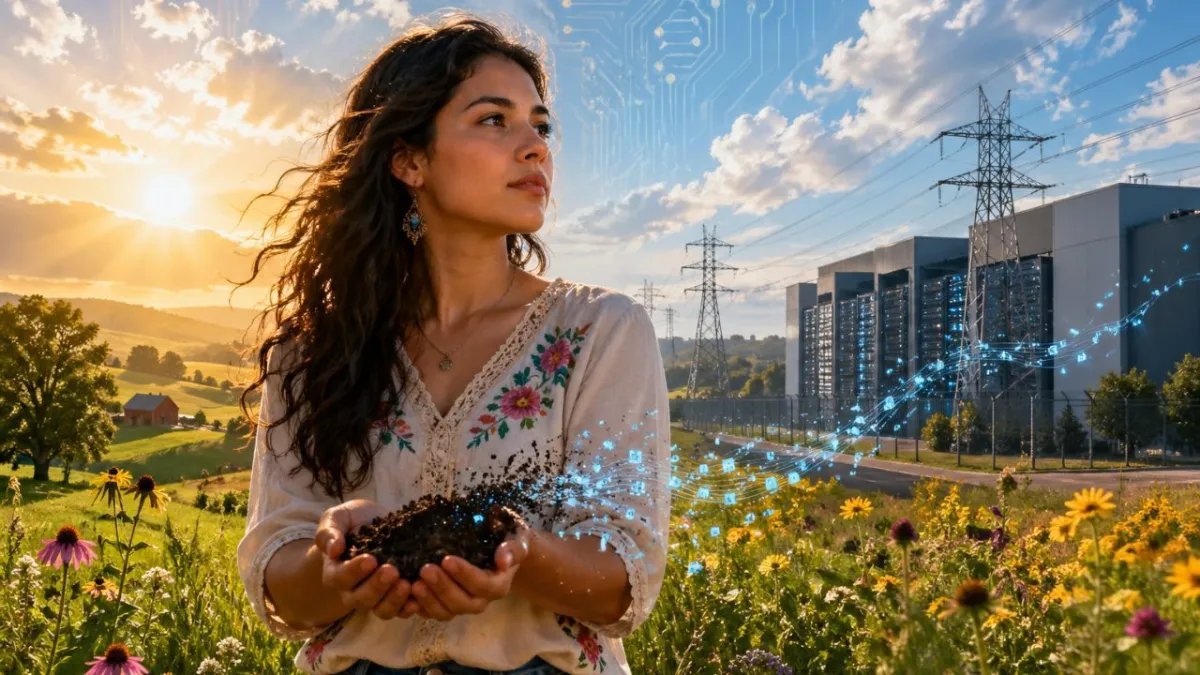
The data centers popping up across the South and Midwest don’t just pollute and raise utility bills — they keep Americans hooked on wars for oil.
Across the country, resistance to data centers is rising even as plans are steadily being made to build new ones.
According to the Pew Research Center, a majority of new data centers — 67 percent — are being built in rural areas. And three-quarters of those are in Midwestern and Southern towns.
The negative effects have not gone unnoticed. A new data center in Southaven, Mississippi, for example, is reportedly terrorizing the community with high levels of noise and air pollution, and residents are now regretting its existence.
But it’s not just the pollution, the depletion of water systems, and the increased energy costs to consumers that should lead communities to resist data centers. When you dig a little deeper, you begin to see how data centers are built on exploitation that goes far beyond small-town USA.
Data centers are both products and producers of wars that kill people and destroy the planet on a global scale. The rapid expansion of these data centers requires raw materials, especially fossil fuels — resources often obtained through violence — and they fuel a technology that is increasingly used to commit war crimes.
Fossil fuels provide almost 60 percent of the power for data centers, especially for “emergency generators.” AI data centers run almost 24/7, so these “emergency” generators are consistently operating.
Control over fossil fuels, of course, is a driving factor behind the U.S. regime change efforts in Iran, Venezuela, and other resource-rich regions. And the extraction of other needed minerals — like silicon, gallium, lithium, and cobalt — requires both the destabilization of the sovereign regions in which they are found and inhumane mining practices, including the use of child labor.
Then there is the question of the moral and ethical use of generative AI. The expansion of data centers comes at a time when AI and LLMs (large language models) are increasingly being used by the Pentagon for militarism domestically and internationally.
The Pentagon recently agreed to massive deals with both Palantir and OpenAI. The employment of AI in military operations has already resulted in war crimes. For instance, Anthropic’s Claude was used in the bombing of the girls’ school in Minab, Iran, which killed around 170 students and teachers. Do towns that pride themselves on family values want to be behind a killing machine capable of murdering young girls?
It’s easy to understand why the announcement of these data centers can seem like good news for areas facing dire economic conditions. Existing low-wage jobs are difficult to survive on. But the evidence suggests data centers create very few local jobs in the towns where they’re built. Should this small number of jobs come at the expense of people and the future of our planet?
The state officials brokering these deals with tech companies could instead work on bringing jobs that design, install, and maintain renewable energy systems to replace fossil fuel reliance. They could sign contracts with companies that manage and protect the beautiful natural ecosystems, habitats, and biodiversity that often surround rural towns.
We need jobs that sustain the heartbeat of the Midwest and the charm and hospitality of the South — not jobs in an industry that terrorizes communities and kills people.
Data centers are not just toxic installations in communities’ backyards — they are a driving force behind wars and instability, and they keep American workers tied to the endless cycle of wars for fossil fuels.
In defense of the planet, our communities, and communities around the world, I hope urban and rural communities alike can unite to stop data center projects — especially across the Midwest and the South, where they have so much beauty and love to protect.
Rural communities’ future is not AI. We should be investing in what makes us great: the people and the land.
Melissa Garriga is the communications and media analysis manager for CODEPINK. She was born and raised in Mississippi, where she continues to live and work. This op-ed was distributed by OtherWords.org.
See Also Militarism, Climate Chaos, and the New Fascism: A Conversation with Abby Martin
Editor’s Note: At a moment when the once vaunted model of responsible journalism is overwhelmingly the play thing of self-serving billionaires and their corporate scribes, alternatives of integrity are desperately needed, and ScheerPost is one of them. Please support our independent journalism by contributing to our online donation platform, Network for Good, or send a check to our new PO Box. We can’t thank you enough, and promise to keep bringing you this kind of vital news.
You can also make a donation to our PayPal or subscribe to our Patreon.
Please share this story and help us grow our network!
[ad_2]
Source link
