
[ad_1]
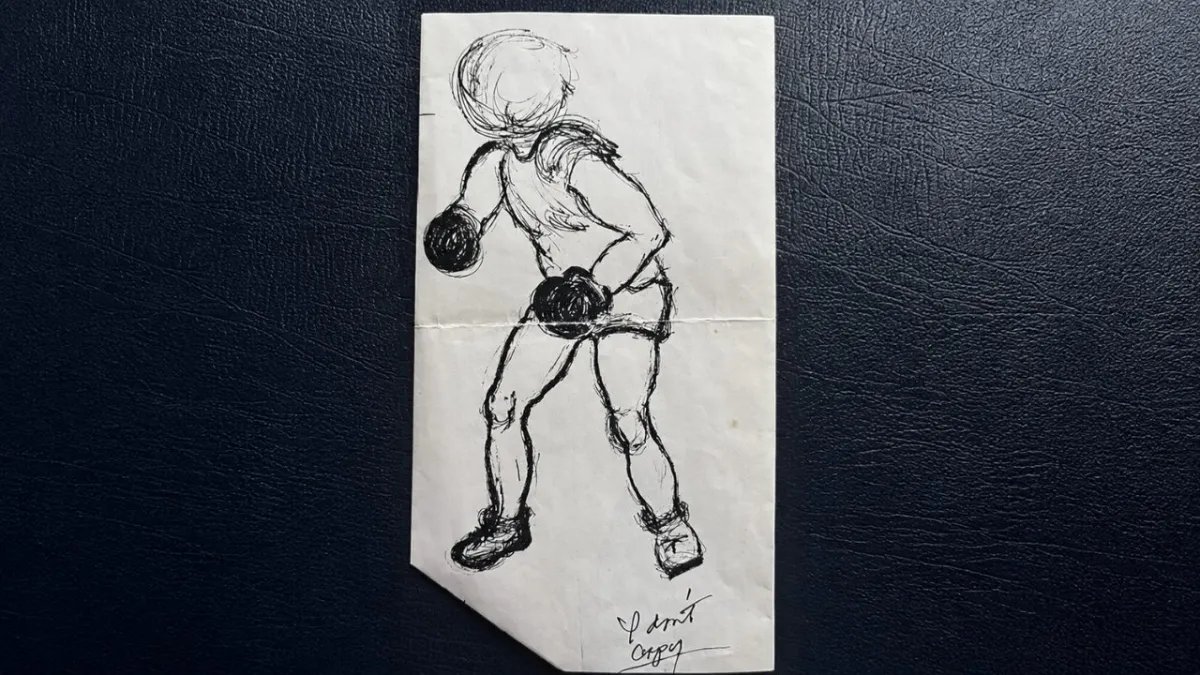
“For my sister Rita, an artist who didn’t imitate and who died on this day long ago, trying.”
It is a commonplace that a steady diet of the mass media can rot the brain and so fill one’s mind with nonsense that a creative thought becomes impossible. The Internet, television, film, and miniseries addictions are widespread and keep electronic minds flashing in and out and everywhere so as to avoid that much maligned word “boredom,” the feared state where real thinking can germinate. Even when crossing a busy street it has become important to look at your cell phone screen and not the traffic. The cars and trucks are too real, and anyway no one dies anymore, they just pass on.
What is rarely acknowledged, however, is that the supposed antidote for such mental pollution – a steady diet of good reading – can itself prevent a thoughtful, personal encounter with life. Reading books, no matter how great they may be, can be as much a flight from self and one’s unique response to existence as other more blatant forms of escapism.
To booklovers, especially those who read but don’t write books, this is of course heretical. And what I am about to propose is even worse; that from time to time it behooves us to abstain from reading books for an extended period of time. To undergo a literary fast, so to speak. To stop ingesting other people’s thoughts, images, and worlds, and to start dwelling exclusively in our own. Contrary to accepted opinion, this is a rare phenomenon; most people think they are independent thinkers.
To dwell in reverie and discover the silent things that have accumulated within us is the first step in learning to speak freely. It is an act of devotion that leads to one’s own response to things.
As any serious writer or any genuine person will tell you, this is no easy task. In the culture of the copy, copying others is the rule. Devotion takes courage and resolve. And “one’s own” responses to things are far more often than not the responses of unknown others, such as mother or father or an untold number of other voices who have taken up residence in our mental hotels. We do indeed, in the metaphorical sense, see through a glass darkly because we so often respond to experience through the filer of another’s lens.
Great writers have always known this. It is why writing is such a lonely and arduous business. As Ernest Hemingway astutely noted, it is very difficult to know what you truly feel, rather than what you are supposed to feel and been taught to feel. It takes concentration, first to realize your own unique response to life, and then, if you are a writer, to put down in words this truth of yours.
For writers, who are often avid readers, the distorting lens is frequently that of other writers whose books they have read. I am no exception. This can be dangerous and highly destructive of the creative process, as so much of our insidious writing attests. It is why some writers – a serious few intent on expressing their own vision of things – abstain from book reading when writing a book. They wish to dwell in their own imaginative worlds, to tell their stories in their own way, and to be free from the subtle but spiritually corrupting influence books can exert.
And I say this without mentioning AI and the copycat nature of so much slop that passes for writing today, and which time after time appears as “A New York Times Bestseller,” as if many books can be the “best.”
All readers are not of course writers in the strict sense of the word; they don’t put stories in print for others to read. They do, however, live out inwardly and outwardly the stories they weave out of experience. Reading is one of those experiences, one far more powerful and lasting than many would suppose. Believe it or not, there are some people who see all of life through literature as there are others who see it through films or television shows. A woman kills herself and they think of Anna Karenina, and by so doing fail to grasp the truth of the real woman. Or when a small town sexual scandal occurs, they view it through the lens of Flaubert or Hawthorne. And how many readers live out, if “only” in fantasy, the macabre nightmares of Stephen King or the romantic fantasies or crime stories of authors who churn out the same book over and over again? I would think one’s own nightmares would suffice.
Obviously I am not arguing that one should not read. I am suggesting that for everyone, readers and writers alike, there is a time for reading and a time to abstain from reading. Each is good and necessary, while neither is sufficient. As with eating, so with reading, a periodic fast cleanses the mind and body. It is astonishing how difficult and disturbing not reading can be for habitual readers. If one doesn’t substitute an added dose of television or movies, one finds that an important escape route out of one’s own life, away from one’s own response to things, is cut off. One is forced back to the center of oneself, to that place where all true life and great art originates: the individual soul contemplating the real world.
Most people know the saying that “Art imitates life.” The witty Oscar Wilde demurred and said no, “Life imitates art.”
But why all this need for imitation? Why not creation?
I believe that Andre Gide in The Immoralist said it beautifully:
If it’s one thing each of them claims not to resemble it’s … himself. Instead he sets up a model, then imitates it; he doesn’t even choose the model – he accepts it ready made. Yet I’m sure there is something more to be read in a man. People dare not – they dare not turn the page. The laws of mimicry – I call them the laws of fear. People are afraid to find themselves alone, and don’t find themselves at all. I hate all the moral agoraphobia – it’s the worst form of cowardice. You can’t create something without being alone. But who’s trying to create here? What seems different is your self: that’s the one rare thing you possess, the one thing that gives each of us his worth; and that’s just what we try to suppress. We imitate. And claim to love life
Edward Curtin: Sociologist, researcher, poet, essayist, journalist, novelist….writer – beyond a cage of categories. His latest book is AT THE LOST AND FOUND: Personal & Political Dispatches of Resistance and Hope (Clarity Press) website: edwarcurtin.com
Editor’s Note: At a moment when the once vaunted model of responsible journalism is overwhelmingly the play thing of self-serving billionaires and their corporate scribes, alternatives of integrity are desperately needed, and ScheerPost is one of them. Please support our independent journalism by contributing to our online donation platform, Network for Good, or send a check to our new PO Box. We can’t thank you enough, and promise to keep bringing you this kind of vital news.
You can also make a donation to our PayPal or subscribe to our Patreon.
Please share this story and help us grow our network!
[ad_2]
Source link
