
[ad_1]
When it comes to TV shows, there are certain themes that have been constantly revisited over the years: friends living together, family dynamics, office antics, school angst, etcetera.
Even the sci-fi concept of the friendly space alien living secretly with an average family in suburbia has been shown a couple of times (My Favorite Martian, Mork & Mindy, Alf).
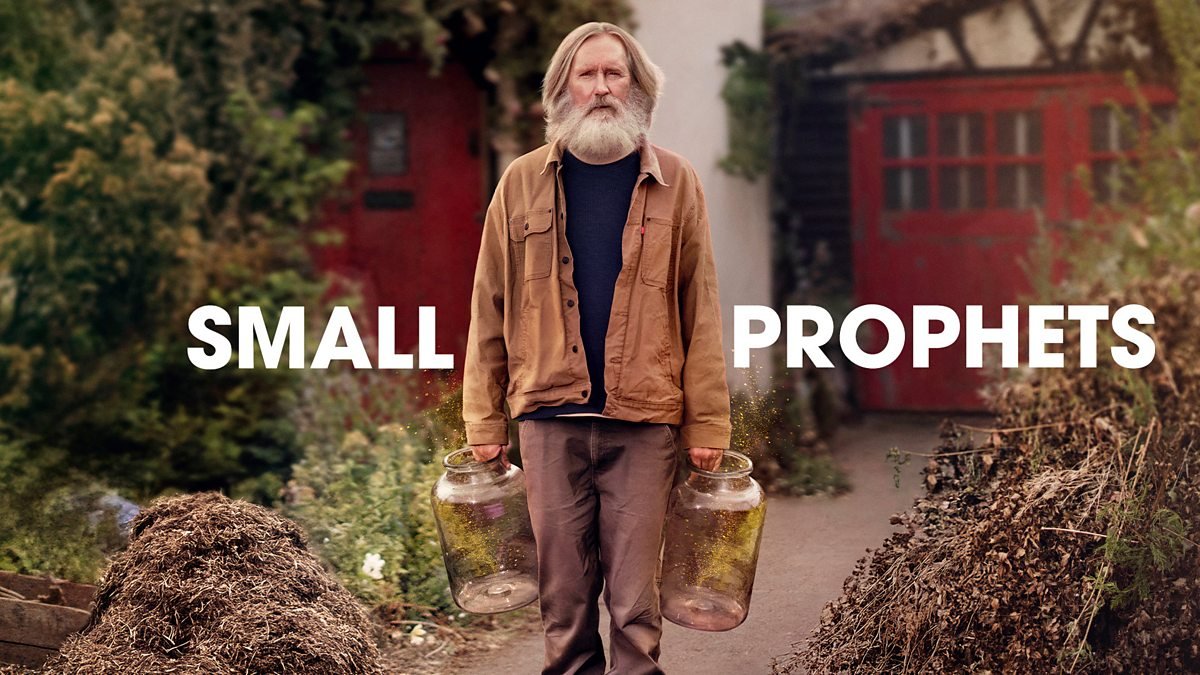
But it’s not every time when you stumble upon a TV show centered around an obscure esoteric topic most people have never really paid any attention to: Alchemy. Which is exactly what Mckenzie Crook accomplished with Small Prophets, the BBC series he wrote, directed and acted in.
(Small Spoilers Ahead)
I’ve been fascinated with the topic of Alchemy ever since I found a dog-eared copy of Morning of the Magicians in my dad’s library, when I was in my early teens. Like everybody else, I naively assumed alchemists were the medieval precursors of modern scientists, who wasted their lives in front of a furnace in their fruitless pursuit of turning lead into gold.
Morning of the Magicians, the ground-breaking countercultural book written by Louis Pauwels and Jacques Bergier in the 60s, tried to set the record straight: alchemists were the preservers of a mystic tradition that is supposed to harken back to ancient Egypt (hence the name, derived from Egypt’s original name, the land of Kem).

Yes, turning base metals into finer ones was a tiny part of the Great Work, as it was referred to in the few cryptic alchemy manuscripts that survived the fires of the Inquisition. But according to Pauwels and Bergier, the real goal of all that incessant burning and distilling of matter for years and years was to transform the essence of the alchemist itself: to turn coarse human nature into something pure and divine.

One of the feats that would supposedly signal that the alchemist was reaching the desired godlike status, was when they would be able to replicate God’s power to create life out of nothing. And this is where the myth of the Homunculus comes into play: according to Swiss polymath Paracelsus (1493-1541) homunculi (plural) were tiny humanoid entities created and grown artificially in order to have them do the alchemist’s bidding.
These arcane concepts were developed before the dawn of modern biology, of course, when the roles of male and female genetic materials into the conception of a new life were not understood. The antiquated theory of Preformationism posited that human sperm already carried within it an ‘animalcule’ or tiny ‘pre-formed’ human, which was further enlarged (up to a point) by the alchemist’s art inside a horse’s womb through a putrefaction process (ew).
This being a show developed for the BBC and not HBO, Mckenzie Crook modified the alchemical lore in order to dispense his audience with any gross (albeit potentially hilarious) onanistic situations, In Small Prophets the main character—Michael Sleep, a melancholic middle-aged man stuck in a dead-end job in a small town in Manchester, played by Pierce Quigley—follows the directions of his elderly father—played by the wonderful Michael Palin, of Monty Python fame—by putting more innocuous seeding precursors (a silver coin, a gold ring, a button, a nib, etc.) inside glass jars filled with rainwater, followed by ritual chanting and later keeping the magical experiment in his shed, safe from direct sunlight… and nosy neighbors (the horse womb was switched to horse manure, because scatological humor will always be preferred over sexual innuendos at the Beeb).

Okay, you’ve got yourself a nice set of home-grown homunculi—now what to do with them? As the name of the series implies, Michael’s purpose to perform this alchemical miracle is because his slightly senile father told him these captive ‘semi-spirits’ could be used to answer any question—about the past, the present, or even the future—and they were always “compelled to tell the truth.”

There are indeed some rather big, personal questions that have been haunting Michael’s life for the last seven years, as the viewer learns as the story progresses. And the answer to those questions could determine whether he remains stuck in his existential quagmire, or can finally move on.
I won’t say more about the story, for I want our readers to enjoy the 6-part series as much as I did (I managed to find a link to all the episodes on YouTube, so if you’re outside the UK hurry up in case they remove it). Small Prophets is in my opinion a smartly written comedy of subdued intrigue populated with relatable characters, whose ordinary lives are upended through a taste of what is commonly known in Latin America as ‘magical realism’ —realistic plot situations in which one or two fantastical elements are introduced, and asked to be taken for granted by the audience.
From a technical standpoint Small Prophets was a breath of fresh air, because the homunculi were created through analog puppetry worthy of a Terry Gilliam film—and as a fan of the movie Arrival, I was rather pleased with how the issue of communicating with the prophets was resolved. But the thing I appreciated the most in this show, aside from the traditional effects and the alchemical references, was the use of synchronicities into the situations imposed on the characters; almost as a way to suggest to the viewer that seemingly unassuming circumstances can sometimes grow into life-altering forces, if we learn to pay attention and surrender ourselves unto them.

Much more could be said about the veiled but potent influence of the homunculus myth in the shaping of many of our modern beliefs—from our current obsession with the creation of artificial intelligence and mechanical androids (especially now that we want to treat them as infalible oracles) to the modern lore concerning abductions and the purported hybridization of humans with alien entities (maybe cow wombs are better than horses’ wombs?)— but perhaps we should leave that for another time.
Small Prophets left the story in a cliffhanger, and they even showed a “To Be Continued” at the very end, so perhaps we will get to see more of Michael Sleep and his gang of eccentric companions, and we will learn if he remains ‘asleep’—or if he’ll achieve the ultimate alchemical goal to become fully ‘awaken’.
Please let us know what you think of the show, and remember—there might be an actual alchemist performing an experiment in your own backyard, right now.
[ad_2]
Source link
