
[ad_1]
The 84 Club
RIP George Rowlett.
For two superstitious reasons, I believe that I shall die at the age of 84.
The first is that 84 is the mean age of my parents at death. Such a mean is only a rough guide to one’s longevity, of course; if it were more exact, the life expectancy of populations could not change, but history demonstrates that it does change. Moreover, if it were anything other than a rough guide, siblings would all die at the same age, which experience again shows is false. Habitués of cemeteries, however, will have noticed that long and short lives tend to run in families.
The second reason for my belief is that it was my age at death given to me by a gypsy (or allegedly gypsy) fortune-teller when I was about 14. Her two other predictions—that I would be educated and that I would travel much—have come true, so why not a third?
Neither of these reasons is a very solid basis for my belief, but which of us bases his beliefs only on the most solid grounds?
An acquaintance of mine died recently at my projected age of disease. I first knew of it through an obituary of him in a respected newspaper. His name was George Rowlett, and he was a painter. I met him only three times, at the gallery that sold his paintings. From the commercial point of view, he was neither a complete failure nor an outstanding success by the standards of billionaires or even of millionaires; but that was not, in any case, how he would have measured success. His measure would have been artistic accomplishment.
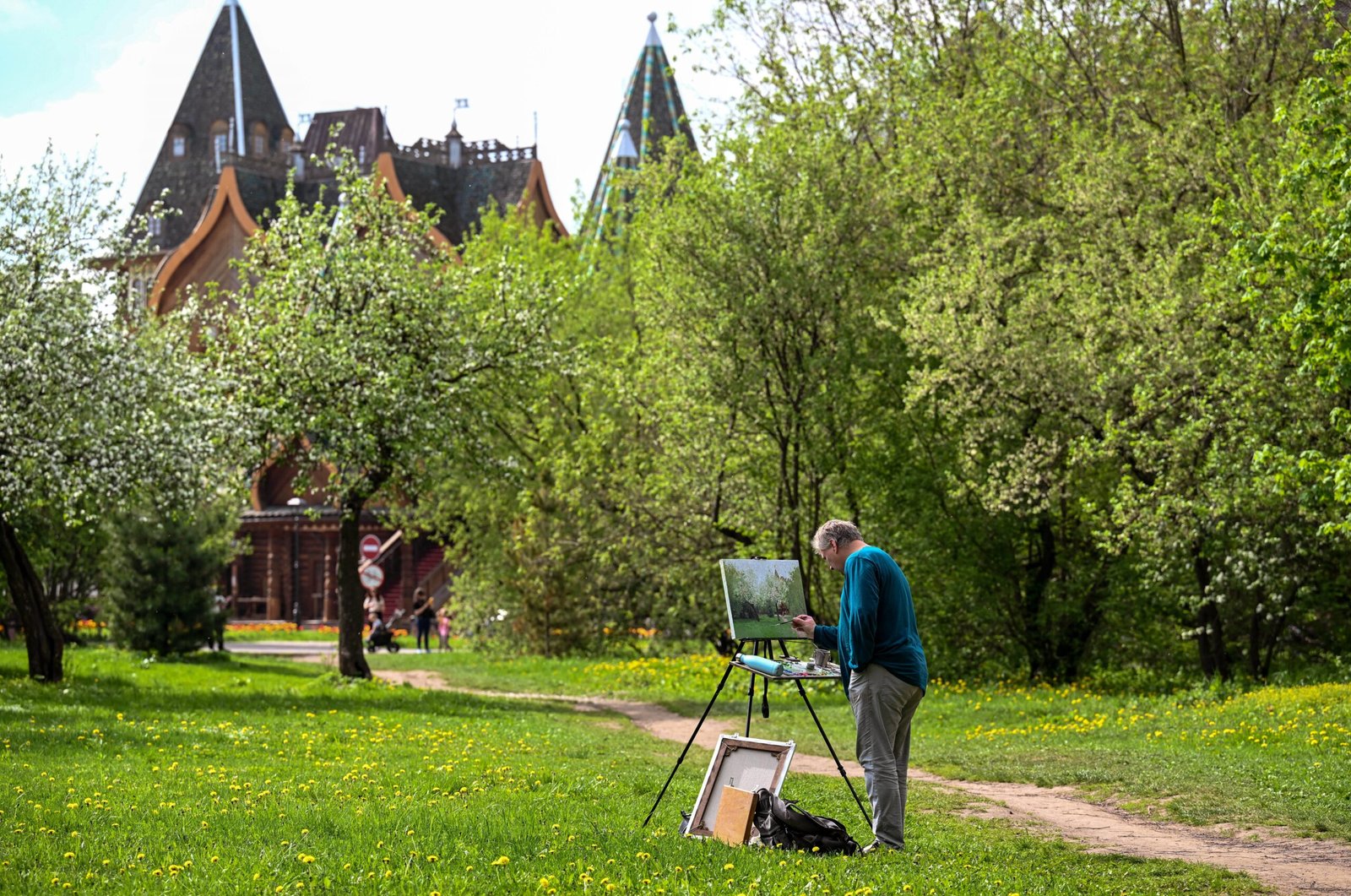
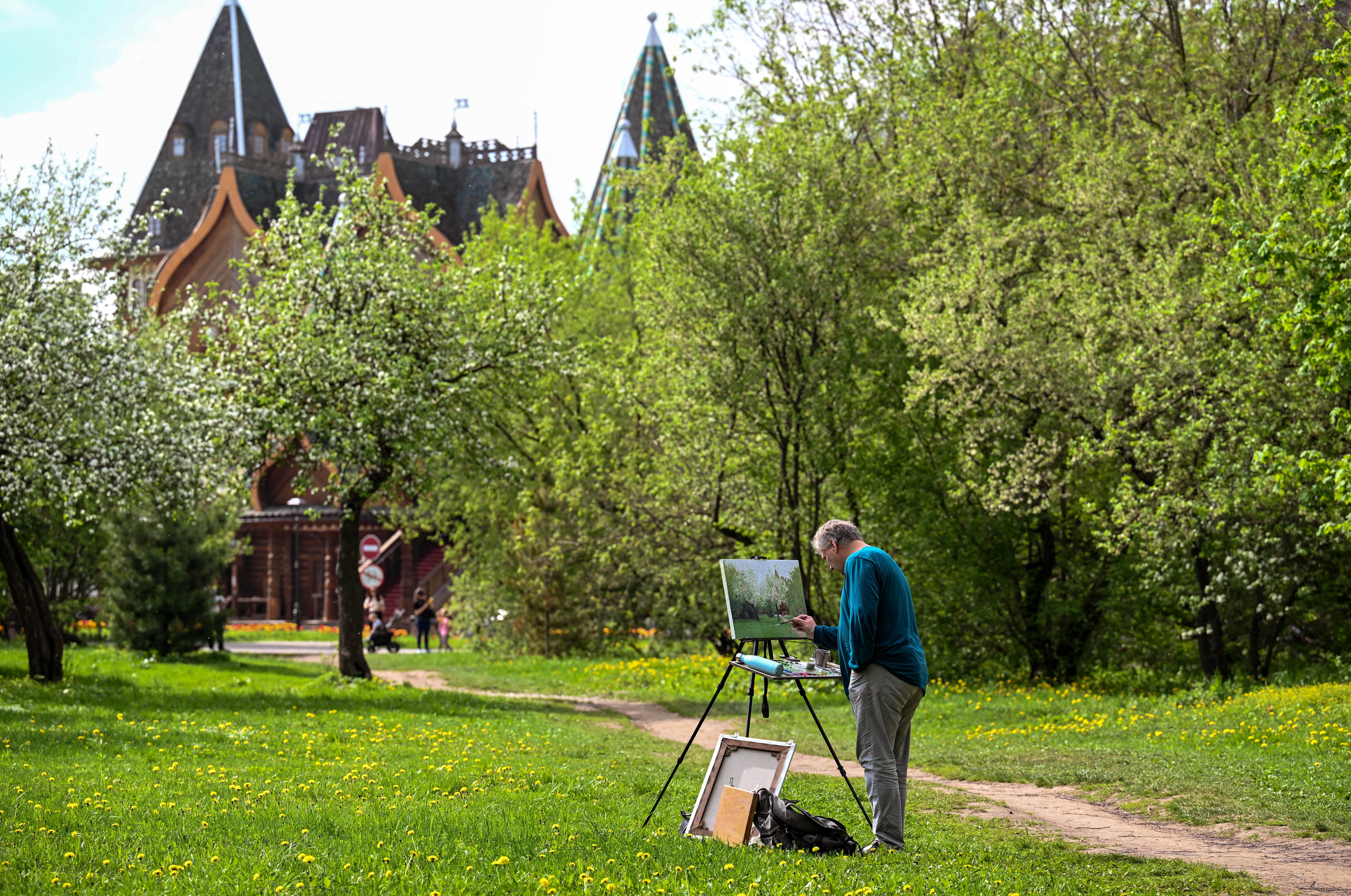
I admired him greatly, for it seemed to me that his artistic integrity, his probity, was absolute. His gallery once made a short video of him going out to paint in the fresh air, and it was obvious that doing so was his passion, his raison d’être. He was moved by some internal compulsion, but to a good end. He was a man who plowed his own furrow, from which he would not be distracted or deviated, and he was not a follower of fashion for reasons extraneous to art itself.
He did not suffer from that neurosis from which so many prominent modern artists suffer, namely the fear of beauty, or (if I may be allowed a grecism) kalophobia. For him, the sky, the sea, the cliffs, the fields, the hedgerows, the trees, the sun, the rain, the spring, the winter, were just as beautiful and as worthy of representation as they had ever been, though, being an artist, he saw and represented them in his own way. He was not original for the sake of distinguishing himself from others, or for the sake of frightening the horses and thereby creating publicity for himself, but simply because he followed his own vision, which he pursued to the end of his life.
The fear of the beautiful is worthy of reflection. Actually, I think it is a fear of revealing what one considers beautiful more than of the beautiful itself. The fact is that individual taste, at least in an individualistic society such as ours, is one of our most distinguishing and revealing characteristics. It makes us vulnerable to the criticism and mockery of others, who in their mockery prove their superior sophistication, one of the things that we value most highly in ourselves. The holier-than-thou has been replaced by the more-sophisticated-than-thou.
A love of flowers is not sophisticated; it is common to everyone. (I only ever met one person who claimed not to like flowers, in fact to hate them, and he was 16 and merely showing off.) Of course, depictions of flowers may be good or bad, aesthetically successful or unsuccessful, but the choice of subject matter is not in itself sophisticated. It is, instead, inherently celebratory.
This is not, of course, to say that art must deal only with what is immediately visually attractive. There can be no a priori demand on art’s subject matter. There is a tendency for modern art critics to say that art must shock, must disturb, must challenge us like a mugger in a subway, but this is absurd, the view of a shallow and debased intellectualism. Art may shock—as I have said, nothing is excluded a priori—but there is hardly an obligation for it to do so.
Oliver Cromwell famously told the portraitist, Peter Lely, to paint him “warts and all.” No doubt this proves how difficult it is to get away from the sin of pride, for by escaping the common vanity of having one’s portrait painted in a flattering way, Cromwell was, no doubt proudly, showing himself to be above all that, with a superior attachment to truth and absence of vanity. He was vain of not being vain.
Now, however, some well-known artists portray people (if they portray them at all) not warts and all, but as all warts, so to speak, as if they were trying to disgust viewers with the human race, as most of us are disgusted by maggots. I think here of Lucien Freud, a brilliantly-gifted artist, whose later, pitiless depictions of nudes as beached whales have a similar effect, at least on me, as Sir Thomas Beecham’s remark about the harpsichord, that it sounds like skeletons copulating on a tin roof. Whenever I listen to the harpsichord, I cannot get it out of my mind. When I see fat people, I undress them in my mind, à la Freud, and am horrified in a way that I was not before. Such is the power of art—for good or bad.
I compare a nude of Lucien Freud with Francisco Lezcano, el Niño de Vallecas, the portrait of a dwarf by Velázquez. No one could say that the subject of the portrait was a paragon of animals, as Hamlet called mankind in general, rather the reverse; but not only is the picture of surpassing beauty, it radiates the humanity of the painter himself, the love of his subject. Without any didacticism, the picture is a moral education: No one who contemplates it will ever look on dwarves disdainfully again.
I make no exaggerated claims for George Rowlett, whose messages on Christmas cards (in his most terrible writing) I was privileged to receive each year. Suffice it to say that he left a legacy of artistic merit and beauty.
The post The 84 Club appeared first on The American Conservative.
[ad_2]
Source link
