
[ad_1]
The former home secretary was told proscribing anti-genocide activists Palestine Action within six months of key Filton hearing could prejudice the case, but she went ahead anyway, reports John McEvoy.

U.K. Home Secretary Yvette Cooper outside the Home Office in London, July 5, 2024. (UK Home Office / Flickr / CC BY 2.0)
By John McEvoy
Declassified UK
 Britain’s former home secretary, Yvette Cooper, was warned that proscribing Palestine Action could prejudice the trial of six activists but went ahead anyway, it can be revealed.
Internal documents seen by Declassified show the Crown Prosecution Service (CPS) advised Cooper not to proscribe Palestine Action as a terrorist organisation within six months of any Filton hearings.
The Filton 24 are pro-Palestine activists accused of breaking into a factory owned by Elbit Systems, Israel’s largest arms firm, in Bristol in August 2024, in protest against Israel’s genocide in Gaza.
The CPS was concerned that proscribing Palestine Action within six months of the hearings would prejudice their right to a fair trial.
Yet Cooper went against this advice and announced the proscription of Palestine Action less than five months before the first of those trials began in November last year.
Last week, The Guardian also revealed that Cooper risked being in contempt of court by justifying the proscription of Palestine Action in a column published under her name in The Observer in August 2025.
In that article, Cooper said the charges against the defendants involved a “terrorism connection” and accused the group of “intimidation, violence, weapons, and serious injuries to individuals.”
Defence lawyers sought to argue in court that Cooper had committed an “abuse of process” by publicly discussing details of the case that were under reporting restrictions.
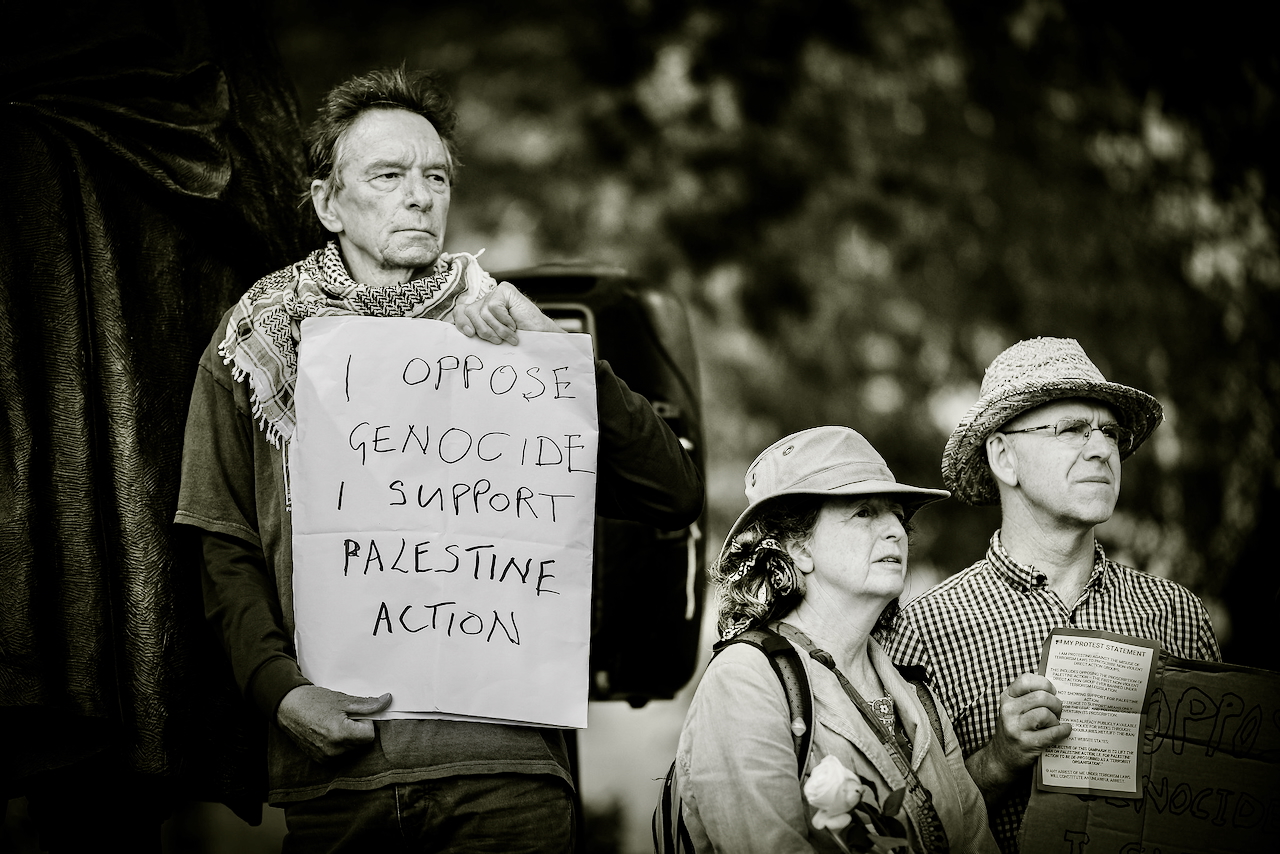
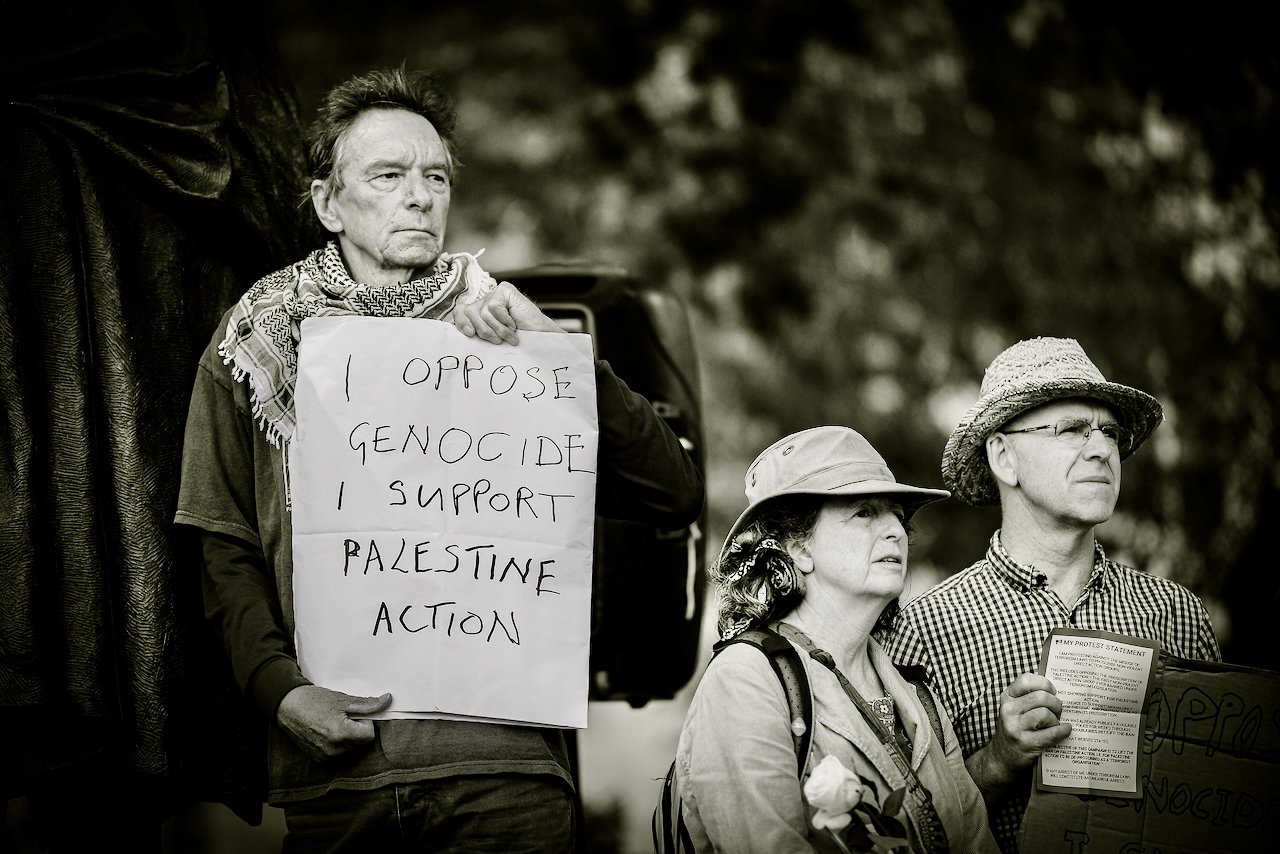
Parliament Square on Sept. 6, 2025 as protesters displayed support for Palestine Action. (Alisdare Hickson / Flickr / CC BY-NC-SA 4.0)
Mr Justice Johnson dismissed that application despite acknowledging that Cooper was “specifically advised that going ahead with the article might prejudice these proceedings.”
Taken together, the revelations suggest Cooper prioritised securing and justifying the proscription of Palestine Action over respecting due process.
The Home Office was approached for comment.
‘Six Months Gap’
The revelation comes in a cache of Home Office emails seen by Declassified.
It has not been possible to report on this information until now due to reporting restrictions, even though it relates directly to the defendants’ right to a fair trial.
On April 3, 2025, around one week after the Proscription Review Group had recommended proscribing Palestine Action, Cooper’s private secretary sent an urgent email to Britain’s head of proscription asking for a list of dates which could impact the timing of proscription.
“The HS [home secretary] has just asked for an update on upcoming dates relating to the proscription of PAG [Palestine Action] – she’s asked for it asap this lunchtime,” the private secretary wrote.
One of the key issues that Cooper wanted information about was “when court cases are expected.”
The head of proscription responded later the same day.
“Key dates as follows,” they wrote. “Main point to highlight is those relating to the Bristol/Elbit systems trials.”
They continued: “CPS have advised 6 months gap between any announcement and start of the trial to minimise risk of prejudice.”
The email highlighted in bold how the first trials of the Filton activists were due to take place in November 2025.
Yet Cooper announced the proscription of Palestine Action on June 23, less than five months before the first Filton trial began.
Terrorism Connection
The jury failed to convict any of the activists in that case but four of them were found guilty of criminal damage in a retrial earlier this month, with one also found guilty of grievous bodily harm without intent.
Those defendants could now be sentenced as terrorists, despite only being tried for criminal offences.
And while Justice Johnson threw out the “abuse of process” application, he would go on to refer defence counsel Rajiv Menon KC for contempt proceedings regarding his closing speech.
In that speech, Menon reminded jurors of their absolute right to acquit, citing the landmark Bushell case of 1670, [in which a jury was found to have been unlawfully imprisoned by a judge for refusing to return the verdict that he demanded.]
The case against Menon was thrown out last week on the basis of lack of jurisdiction.
Campaign group Defend Our Juries said: “The fact that contempt of court proceedings were even brought against a barrister for his closing speech – for the first time in British legal history – should deeply concern everyone who cares about the rule of law.”
John McEvoy is chief reporter for Declassified UK. John is an historian and filmmaker whose work focuses on British foreign policy and Latin America. His PhD was on Britain’s Secret Wars in Colombia between 1948 and 2009, and he is currently working on a documentary about Britain’s role in the rise of Augusto Pinochet.
This article is from Declassified UK.
Views expressed in this article may or may not reflect those of Consortium News.
[ad_2]
Source link
