
[ad_1]
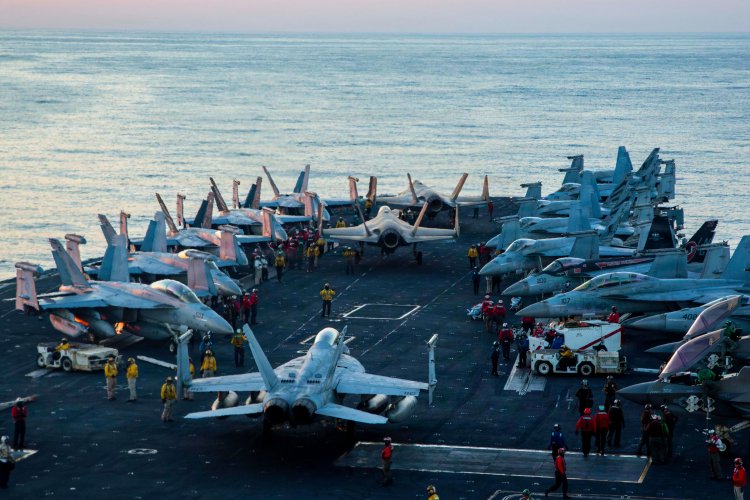
A century ago, aviation pioneer Brig. Gen. Billy Mitchell advocated for the potency of properly-applied air power. In his seminal treatise from 1925, “Winged Defense,” he wrote: “Aircraft do not need to pierce the line of either navies or armies. They can fly straight over them to the heart of a country and gain success in war.”
Striking at the heart of the enemy – a concept now known as strategic interdiction – has been at the forefront of air force planning ever since. Through Mitchell’s dazzling foresight, it has been considered a decisive element of warfare, diligently described on day one of air power courses around the world.
During Operation Epic Fury, Pentagon press briefings were filled with descriptions of the impressive operational and tactical dominance of the United States military. U.S. forces quickly sank the Iranian navy, dismantled Iranian air defenses, and shredded the Iranian air force. They also systematically destroyed Iran’s ballistic missiles and drones and pulverized its military command centers. Yet American military activity never unleashed the power of strategic interdiction.
Strategic interdiction strikes at the heart of a regime. It decimates its source of power and holds at risk the things that it values most. Through exquisite intelligence, keen societal and cultural awareness, and carefully strategic mapping, it targets the centers of gravity that provide the adversary’s foundational elements of strength. Operational demands sometimes require initial strikes at subordinate elements of power projection and defense, but these are often only a means to an end. It’s the heart of a regime that matters most. Anything else suboptimizes the use of force.
Israeli Air Force strikes on the regime created chaos in Iran’s political and military command and control structures and within its decision-making apparatus. Their follow-through against internal security sites further weakened the regime. Meanwhile, U.S. forces were engaged at the operational and tactical levels, striking Iranian military sites while holding back the Israelis from hitting economic targets that would financially strangle Iran’s ability to threaten externally and suppress internally. Though the Israelis didn’t have the mass nor the support to see it through to success, they were engaged in a strategic interdiction campaign while the United States was not.
Approaching President Donald Trump’s April 7 deadline, there was increased hope for such a campaign by the United States. During the course of the war, the Pentagon provided greater emphasis on strikes against military-related industrial capacity. Destroying Iran’s ability to produce combat capability for the long term provided a strategic success that eroded the regime’s ability to stay in power and threaten others. It was a campaign that struck at the heart of Iranian strength.
During this time, President Trump increased his rhetoric as well, threatening strikes on energy supplies, power plants, railways, and bridges. While some of his comments were flamboyant and provocative, they suggested an important truth. Properly mapping out and precisely striking the sources of regime power, strength, and support would hit at the heart of their ability to remain in power. The president was threatening to finally use U.S. military might in its most impactful way through a long-awaited campaign of strategic interdiction.
That campaign never came, and the world watches as the United States, Israel, and Iran enter the eighth week of a two-week ceasefire. Meanwhile, a strategic interdiction campaign remains an impactful option if Iran continues to negotiate in bad faith.
President Trump has stated that any extension of the cease fire would be a good deal or no deal at all. In lieu of a deal that firmly meets U.S. strategic interests, it’s time to end the ceasefire and engage in a strategic interdiction campaign to strike at the heart of the Iranian regime. Carefully selected and precisely targeted regime strongholds, internal security sites, energy facilities, and transportation corridors should top the list of targets. Long awaited military activity against Kharg Island would be particularly potent, hitting at the preeminent source of Iran’s ability to fund itself and its malign interests.
Air power strategists and practitioners have long understood and often seen the success of strategic interdiction. Billy Mitchell wanted his writings about this important concept to still be read “a hundred years hence.” It’s time to use such a long-proven strategy from a century ago to achieve American interests in Iran by finally striking at the heart of the regime.
[ad_2]
Source link
