
[ad_1]
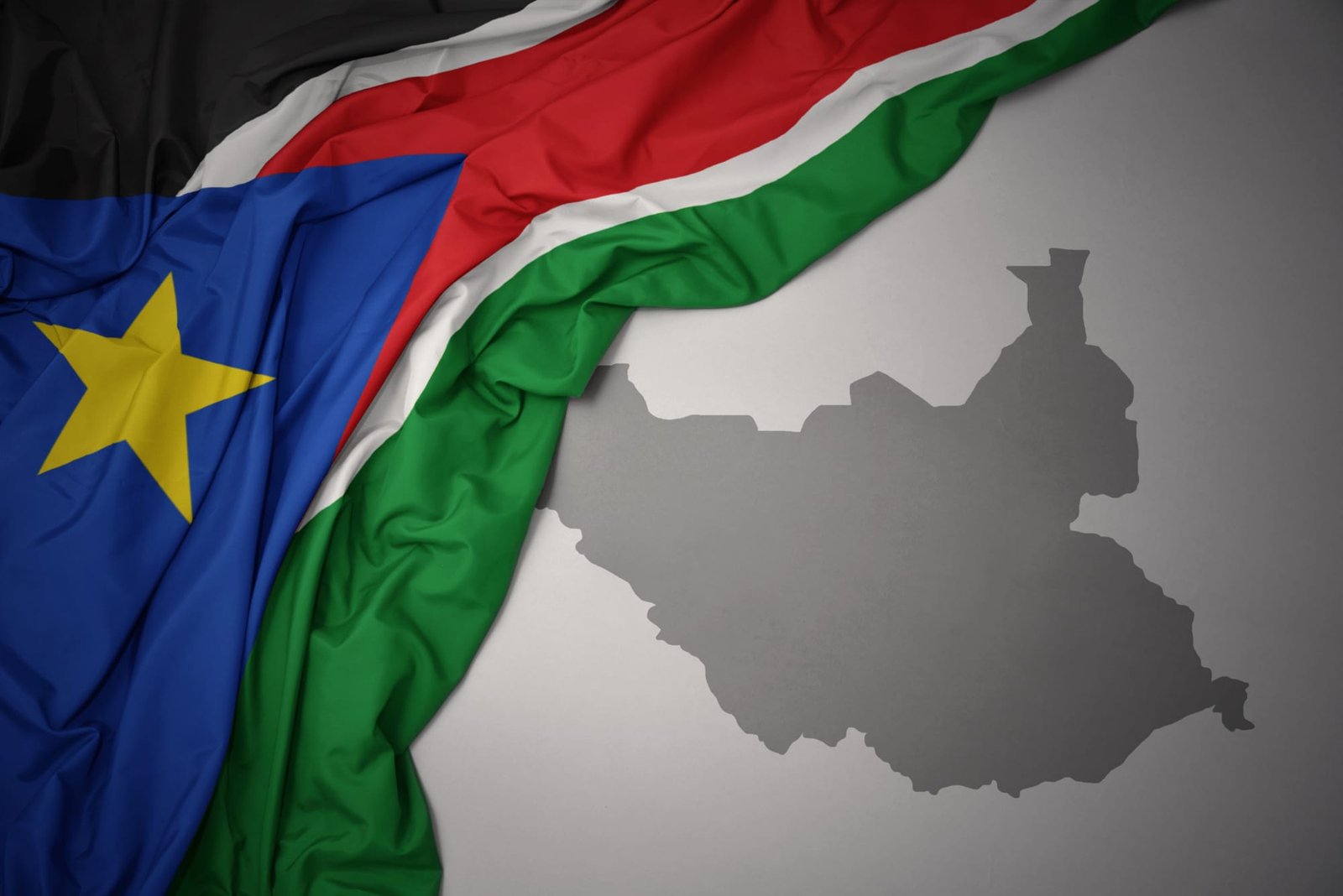
In 2011, the world welcomed its newest country. Fifteen years later, South Sudan is less a symbol of self-determination than a case study in state failure. Its politics remain dominated by factional strongmen, its economy is almost entirely dependent on oil, and the threat of renewed large-scale violence never quite recedes. For most Americans, it barely registers—just another distant tragedy filed away under “Africa.” But South Sudan did not simply emerge from the mists of post-colonial history. It was, in no small part, a project of Washington.
That fact alone should invite scrutiny, especially given the current crisis and familiar pattern: moral urgency, political pressure, decisive intervention, and then, just as quickly, amnesia.
The roots of South Sudan lie in the long and brutal civil wars that wracked Sudan for decades. The conflict was often framed in stark terms: a predominantly Arab and Muslim north ruling over a largely African and Christian or animist south. There was truth in that characterization, but it also lent itself to oversimplification (see: Nigeria). In Washington, the war became a cause célèbre. Evangelical groups, human rights organizations, and bipartisan coalitions pushed aggressively for U.S. action. The southern rebel movement, led by the Sudan People’s Liberation Movement, came to be seen not merely as a faction in a complex civil war, but as the embodiment of a just struggle.
Under President George W. Bush, that sentiment translated into policy. His administration invested significant diplomatic capital in ending the conflict, culminating in the 2005 Comprehensive Peace Agreement. The deal set the stage for a referendum on independence, which passed overwhelmingly in 2011. Along the way, Washington applied sustained pressure on the regime of Omar al-Bashir through sanctions and international isolation. By the time independence arrived, the creation of South Sudan was widely celebrated in U.S. political circles as a triumph of humanitarian engagement.
But midwifing a state is not the same as building a successful one.
From the outset, South Sudan faced structural problems that should have tempered the optimism. Its economy was overwhelmingly dependent on oil exports, leaving it vulnerable to price shocks and disputes over pipeline access through the North (to say nothing of the “Resource Curse”). Its political system revolved around armed movements rather than durable institutions. And its leadership, far from unified, was riven by personal and ethnic rivalries.
These tensions exploded in 2013, when a power struggle between President Salva Kiir, South Sudan’s current and only president, and his former vice president Riek Machar plunged the country into civil war. What followed was not merely a political crisis but a humanitarian catastrophe: tens of thousands killed, millions displaced, and atrocities committed on all sides. Although subsequent peace agreements have reduced large-scale fighting, the underlying dynamics remain largely unchanged. Power is still negotiated through force or the threat of it, and the state remains fragile.
While this might not have been entirely unforeseeable, many of the warning signs were visible well before independence. Predictably, however, the dominant impulse in Washington was not caution but urgency—the need to “do something,” to resolve a moral crisis in a way that could be publicly celebrated. In that sense, South Sudan fits the broader pattern of so-called “Humanitarian Intervention”: the belief that external pressure and diplomatic engineering can reorder political realities in distant societies, often on accelerated timelines, especially in cases of widespread violence.
From a libertarian perspective, the problems here are not difficult to identify. First, there is the knowledge problem. Policymakers thousands of miles away, however well-intentioned, lack the granular understanding necessary to design viable political institutions in deeply divided societies. Second, there is a public choice problem. The incentives facing U.S. officials reward visible action—broker a deal, hold a referendum, declare success—while imposing few costs for long-term failure. The constituencies that pushed hardest for intervention, from advocacy groups to political activists, likewise bear little responsibility when outcomes fall short.
The result is a kind of moral hazard in foreign policy. It becomes possible to champion sweeping changes, like the partition of a sovereign state, without fully reckoning with the consequences. When those consequences arrive, they are someone else’s problem.
To be clear, none of this is to suggest that the status quo ante in Sudan was acceptable, or that southern Sudanese aspirations for independence were illegitimate. The question is not whether independence was desirable in the abstract, but whether the manner in which it was pursued, and the assumptions underlying it, made a stable outcome more or less likely. On that score, Washington’s record is impossible to defend.
Today, the possibility of renewed large-scale conflict or even regime collapse in South Sudan is not remote. Indeed, without the military support of neighboring Uganda, the situation might already have slipped Kiir’s control. The government in Juba is plagued by constant ministerial turnover, with key posts reshuffled or purged as rival factions jockey for advantage. The uneasy power-sharing arrangement between Salva Kiir and Riek Machar, which ended the previous crisis, seems well and truly dead, with Machar arrested and charged with treason. Meanwhile, localized violence flares across the countryside and armed groups test the limits of the state’s capacity, with hundreds of thousands pushed out of their homes. Meanwhile, the country’s oil-dependent economy remains brittle, public finances strained, and basic state capacity minimal.
In short, after more than a decade of independence, the political order is still personalized, militarized, and fundamentally unstable. Famine always looms, and it is estimated that over half the population requires aid just to survive. Yet in the United States, the sense of ownership that once accompanied its creation has largely vanished. The “world’s newest country” has become an afterthought.
It should not be. If anything, South Sudan deserves to be remembered precisely because it is not unique. It is one instance of a recurring dynamic in American foreign policy: the conviction that complex political problems abroad can be solved through decisive external action, followed by a rapid loss of interest once the immediate objective has been achieved.
Washington helped make South Sudan. The least it can do is reckon honestly with what followed: failure. Rather an annual billion simply flows to both Juba and Kampala.
With no clear successor and Kiir nearing eighty, one shudders to think how much worse the situation in South Sudan will become once a battle to fill his seat commences.
[ad_2]
Source link
