
[ad_1]

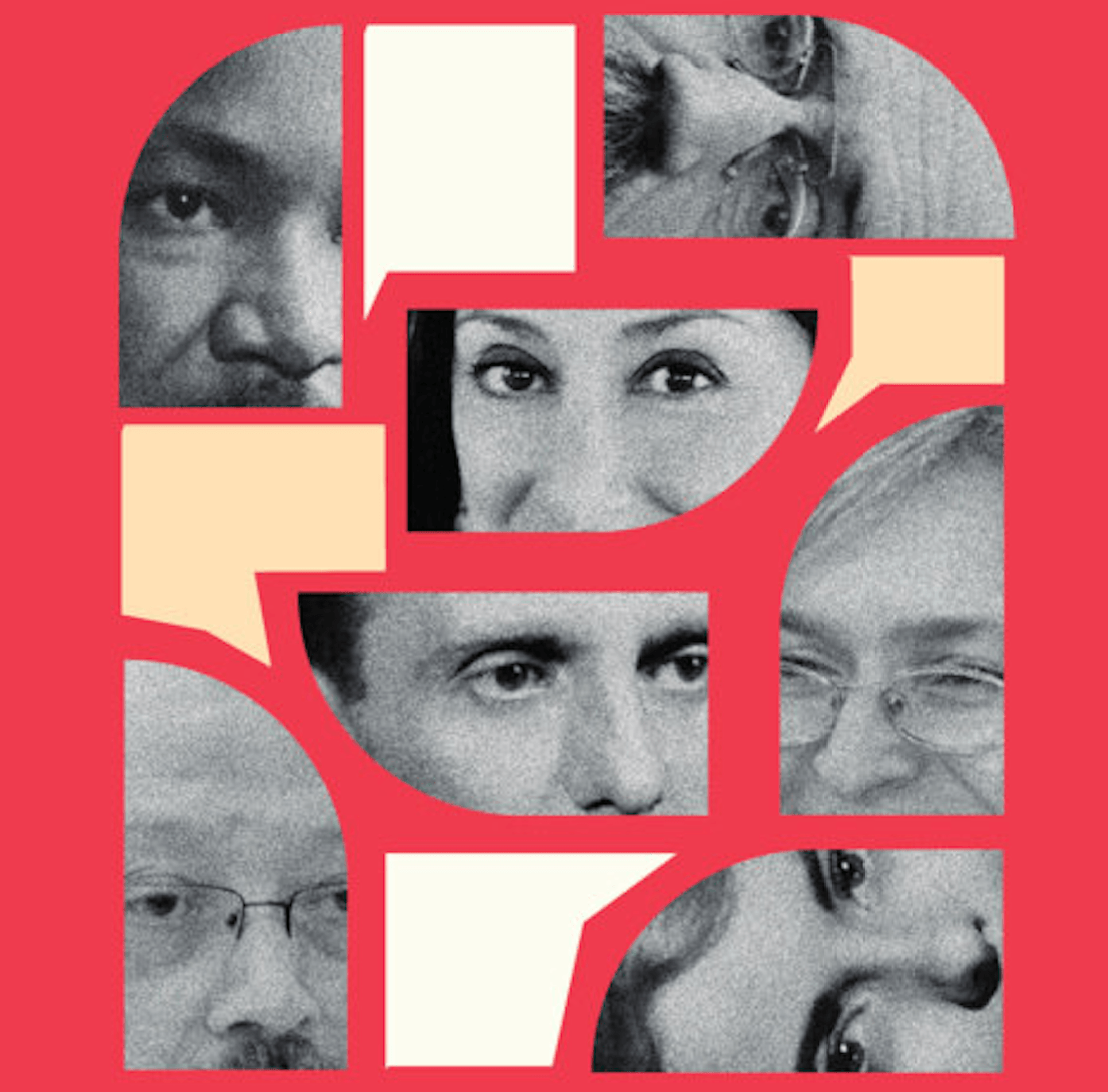
Cover art for the book Shout It Out! 28 Portraits for a Committed World by Roberto Saviano – Fair Use
Roberto Saviano begins his book Shout It Out! 28 Portraits for a Committed World with a quote from writer Ray Bradbury. “The Universe has shouted itself alive.” Saviano quotes from Bradbury’s short story “Long After Midnight.” “We are one of the shouts.” He spends the rest of this text writing about people who did shout out, some in the name of freedom and humanity, others as examples of the dangers of keeping quiet. These vignettes, beautifully translated from the original Italian, share an understanding that freedom is an essential part of the human experience. Essential to that freedom is debate, argument, confrontation and essential to those is language.
Saviano, who wrote a book about the Camorra crime family in Italy titled Gomorrah that was turned into an award-winning film, begins this text with a contemplation on Hypatia, a female astronomer, philosopher and mathematician who lived in the fourth and fifth centuries in Alexandria, which was then part of the Roman Empire. Hypatia was a teacher and taught pagans and those Christians interested in learning. Rumored to have interfered in a dispute between the Roman prefect Orestes and the Bishop of Alexandria Cyril, she was killed by a mob of Christians. Bringing the tale into the current period, Saviano compares the intolerance of the Christians with that of the Taliban. He ends his discussion with a call that is repeated and modified throughout the book: “Shout out…. In this case it’s a call to shout “out when they force you into
the banality of simplification.” In another chapter, it might be a call to insist that denouncing is not slandering your country! Yet another demands that you shout out that you don’t want to be turned into an armed militant of any war.
Saviano’s contemplations include the story of a Chechen girl who was raped by drunken Russian soldiers and the Russian journalist who told her story and that of others brutalized by the Russian military. There’s also a consideration of Edward Snowden and the panopticon of surveillance which he exposed to the world. He describes the murder of the journalist Jamal Khashoggi by Saudi agents in Turkey. While describing the murder and the denials of culpability that followed, Saviano interjects the friendly relationship between the Trump White House and the Saudis, comparing Trump’s joking nature with the man accused of ordering Khashoggi’s murder that he would find out who was responsible to the words and actions of the Italian fascist Mussolini when he promised to get to the bottom of the murder of the socialist Deputy Minister Matteotti. For those who don’t know, Matteotti was arrested, tortured and murdered by Mussolini’s secret police. It seemed Mussolini did not like Matteotti’s public denunciations of Mussolini’s illegal activities and fascist politics.
Saviano believes in the power of language. There’s a section wherein he discusses the clothing politicians and other political figures wear in public. The public figure who uses their dress to express who they are does not trust their message to debate, writes Saviano. The fact of his clothing, be it a tuxedo, a suit or a more relaxed style cannot substitute for debate in the public square. This is even truer of a uniform. The person who wears a uniform when they are not performing the duties the uniform represents, says Saviano, “want(s) to tell you that they are the eternal gendarme,” keeping the good people safe from those the uniformed ruler tells you are the bad people. The uniform is meant to suggest security, but it also suggests brutality and fear for those who reject its intended meaning.
This is a long text, yet it compels the reader to continue, even while they wonder why the author included this or that individual or situation in the profiles he wrote. There are contemplations of the power of graffiti in a police state, the ease with which repression becomes the accepted norm in a society that doesn’t read, whether that’s because books are banned or because the population is too apathetic or uneducated to take the time. An essay about the murder of George Floyd by strangulation leads to a discussion of the use of nerve gases in wartime. After returning to the Minneapolis street where Floyd died, Saviano asks what it felt like to die from COVID-19. After explaining it was like suffocation, he quotes a nurse working in the pandemic—”“We’re not at war!” the nurse told me. “The war metaphor is wrong!” To underline this point, Saviano reminds the reader that the virus attacked humanity, not just people in the US or in China, but the entirety of humanity. Pretending otherwise was playing politics. Looking back, we know how that turned out.
Shout It Out! Is a worthy read, both provocative and evocative. There may be profiles the author included that makes you ask why would someone write about this person. There will be conclusions Saviano makes that the reader might think go too far or not far enough. His politics might not always satisfy you. Yet, the writing is beyond simple description. It is clear as one might expect from a journalist, yet descriptive in a way that creates three-dimensional images, moving and still; images that provide the final color, the precise emotion, the words that complete the story being told, the opinion being presented.
[ad_2]
Source link
