
[ad_1]
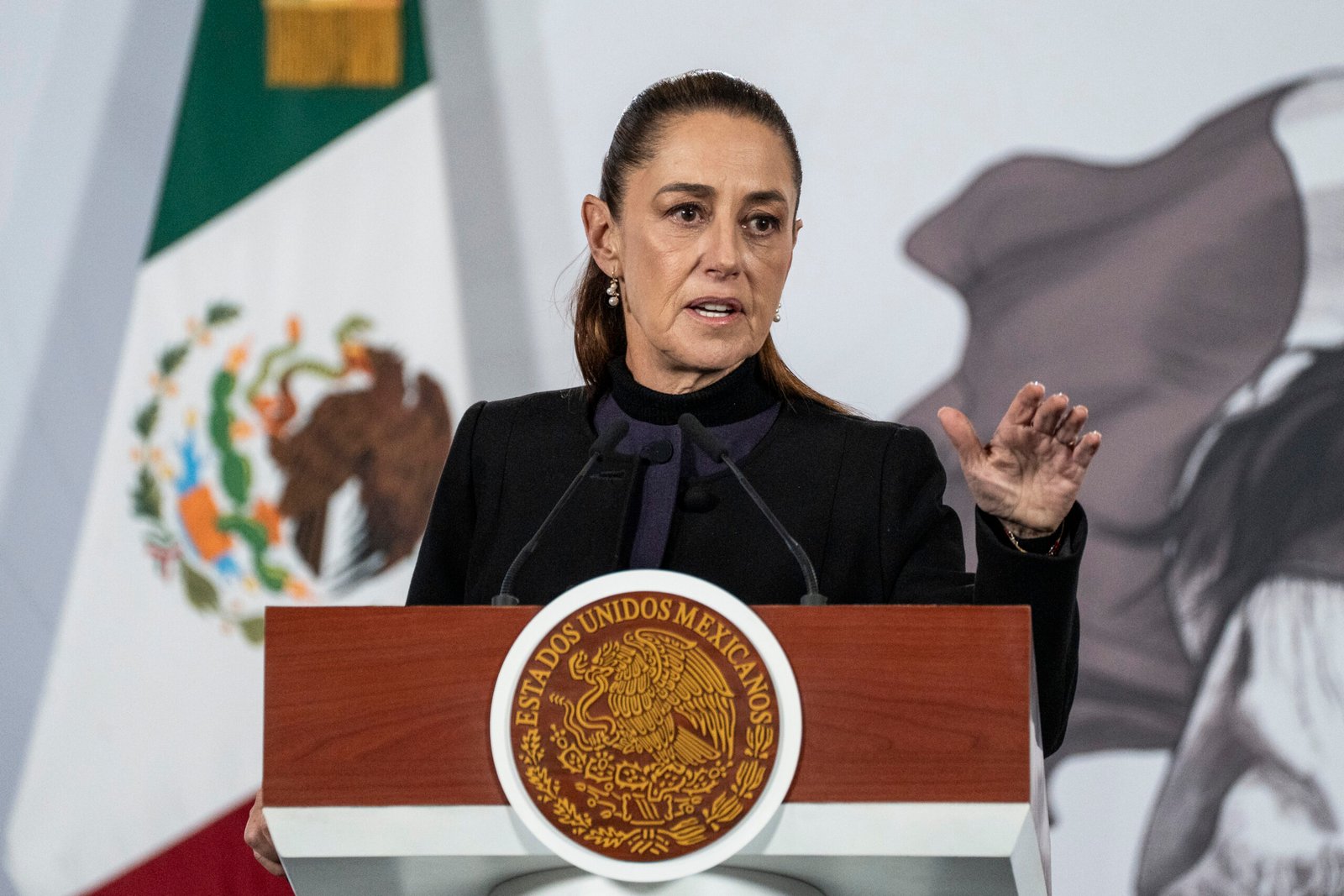
Mexico’s President Claudia Sheinbaum is facing domestic backlash after it was revealed that two CIA agents died in a car crash in northern Mexico during an anti-narcotics operation last month. The agents, who posed as employees of a U.S. embassy, were working with Mexican officials in the state of Chihuahua to crack down on drug production in the region.
Sheinbaum has consistently cooperated with President Donald Trump on immigration, crime, and drug policy, but she has refused to allow American troops or government agencies to carry out operations on Mexican soil, a measure she argues would compromise Mexican sovereignty. For Sheinbaum, that is both a pragmatic position and a political necessity that the White House should take into consideration: Mexicans have a long memory of U.S. interference in their country and are deeply resentful of any impositions from up north. That resentment is starting to heat up now, as both the Mexican public and figures within Morena, Sheinbaum’s party, question whether she knew about or authorized the CIA’s operations in the country.
So far, Sheinbaum has denied any such knowledge. Instead, she has criticized the government of the state of Chihuahua, led by governor Maru Campos, for working with the agency. Chihuahua, notably, is a stronghold of the right-wing opposition National Action Party, which tends to be relatively friendly towards the U.S. Sheinbaum’s strategy has proved effective in diverting some attention; the state’s attorney general, César Jáuregui, resigned over the affair this week after having initially claimed to investigators that the agents were just being given lessons on flying drones.
But trouble still looms for the Mexican president, who must decide how to navigate the Trump administration’s apparent willingness to place CIA boots on the ground in Mexico. Her government sent a diplomatic note to the U.S. ambassador in Mexico City requesting elaboration on the CIA’s presence in the country, a conciliatory move that nevertheless generated a rebuff from the White House. “Some sympathy from Claudia Sheinbaum would be well worth it for the two American lives that were lost given all that the United States is doing,” said White House Press Secretary Karoline Leavitt.
Trump has continually pushed the United States’ southern neighbor to take a more aggressive approach to crime, and Sheinbaum has made major concessions to keep relations cordial. Since she assumed office in October 2024, Mexico has turned out the National Guard to monitor border crossings, extradited dozens of cartel bosses to the U.S. for trial, and started a military campaign against cartel leadership that bagged one of the most feared capos in the country, “El Mencho,” the leader of the Cartel Jalisco Nueva Generación.
This was a sharp deviation from the organized crime policies of her predecessor, Andrés Manuel López Obrador, from whom she inherited leadership of Morena and the country. López Obrador’s “hugs, not bullets” campaign attempted to tackle organized crime by resolving the “root conditions” of poverty, economic inequality, and youth unemployment with job guarantees and welfare programs—an initiative which was essentially a failure. Sheinbaum’s own security policy of cooperating with the U.S. and building up the intelligence and investigative profiles of Mexican law enforcement has had promising early results, with intentional homicides dropping nearly 40 percent since she took office. Indeed, the country’s murder rate reached a decade low in 2025.
But that has not stopped Washington from pressing for more than she is willing to give. The Trump administration, which has spent the past several months carrying out airstrikes on vessels allegedly carrying drugs in the Caribbean and Pacific, has repeatedly floated the prospect of conducting similar operations against cartel targets on Mexican soil—a concession which would be political suicide for Sheinbaum.
So far, Sheinbaum has been adamant that the benefits to Mexico from cooperating with Trump are greater than taking a more confrontational line, as Canada has. That cooperation has built a cordial working relationship between the two leaders that surprised many commentators and spared Mexico much of Trump’s tariffs in 2025. But if the Trump administration is not careful, it may end up pushing Sheinbaum one step too far. If she decides that the political costs of cooperation outweigh the benefits, she has plenty of opportunities to begin taking a more defiant stance.
Subscribe Today
Get daily emails in your inbox
Losing a cooperative Mexico would be a significant blow to American policy priorities in the hemisphere. Regardless of the fantasies some on the right have of American drone strikes or special forces taking out cartels wholesale, only the Mexican government is capable of providing a long-term solution to the crime and drug issues on the southern border. Without effective governance and significant state capacity, destroying cartel assets and personnel in one region simply provides a new market for competing organized crime groups to take over. That much was definitively proven during the disastrous Mexican War on Drugs initiated by Felipe Calderón in 2006.
It would also significantly complicate ongoing efforts to control the southern border: Sheinbaum’s government currently has increased the policing of its own borders and, at the request of the U.S., turned away migrants seeking to pass through the country to reach the U.S. That could easily change, and a hostile Mexican government might even facilitate through-migration (Mexico has innumerable NGOs dedicated to “migrant rights” and “freedom of movement” that provide resources and guidance for precisely that purpose).
Mexico still has significant problems of its own, and its politics are inevitably irritating for any American government, but Sheinbaum has been a productive partner for the Trump administration in nearly all of its major goals in the region. It would be shortsighted to alienate her and lose a valuable contributor to American security in the hemisphere because she cannot grant every request the administration extends.
[ad_2]
Source link
