
[ad_1]
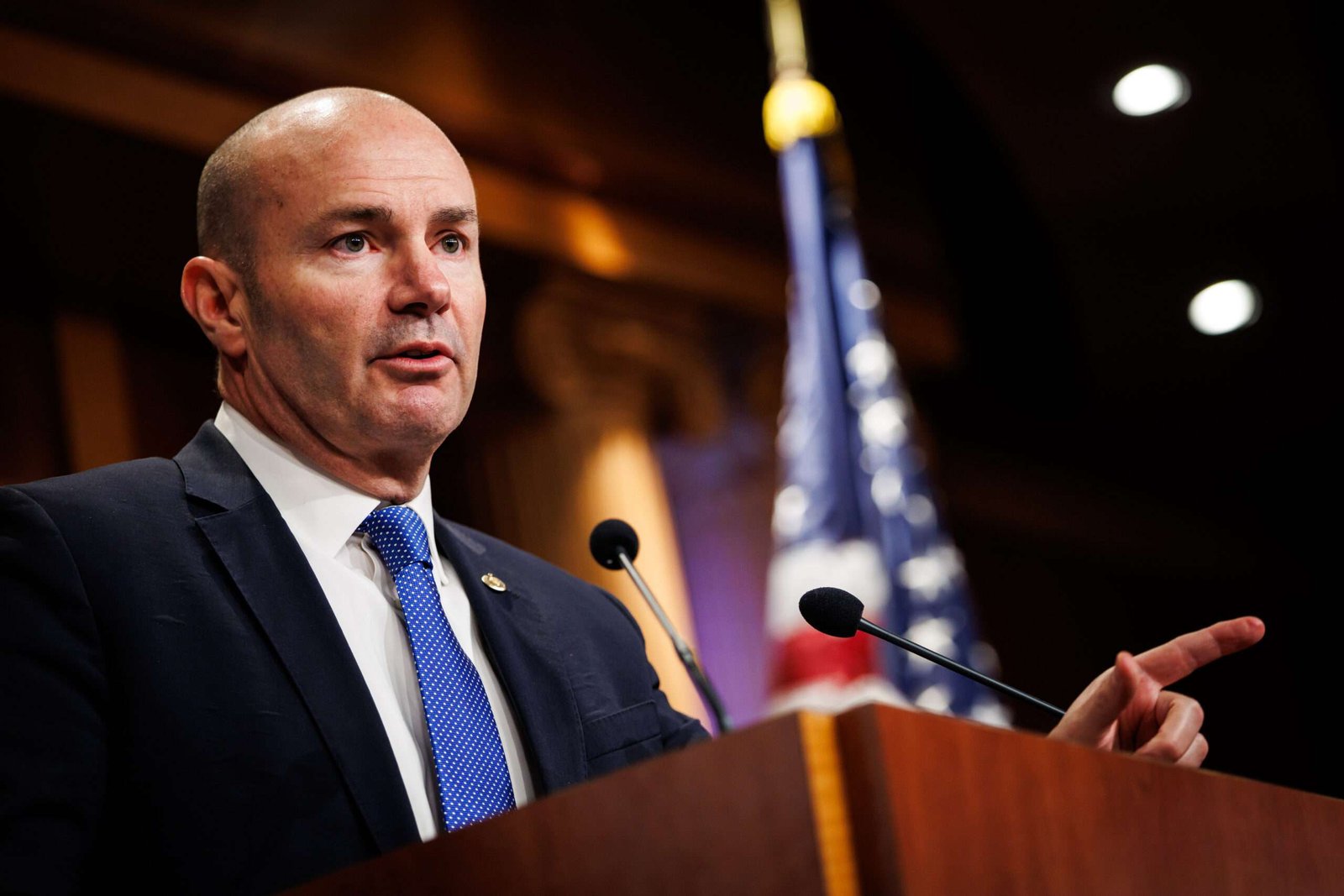
Sen. Mike Lee (R–Utah) wrote in a social media post Wednesday that an employee at a federal prison hung up on him when he called to check on the health of an incarcerated man.
Lee’s experience is a particularly pointed example of an issue that families and criminal justice advocacy groups have complained about for years: It’s next to impossible to get information about inmates’ health from the federal Bureau of Prisons (BOP), and the agency frequently fails to notify families when their incarcerated loved ones are sick or even dying.
This cruelty led lawmakers in Congress to introduce legislation last year that would have required the Justice Department to issue guidance to the BOP for promptly notifying families in such cases.
Lee wrote in the post that he called the prison on behalf of a constituent whose son was incarcerated. The constituent was worried because they hadn’t heard from their son in several days, and he suffered from “multiple, potentially life-threatening health conditions that are going untreated in prison,” Lee wrote.
Medical neglect in state and federal prisons is widespread, despite the Eighth Amendment guaranteeing prisoners access to basic health care.
But when Lee called the prison’s main switchboard, he said a BOP employee scolded him for calling “too fucking late,” and refused to provide any information, beyond claiming that the inmate was alive and receiving appropriate medical care. When Lee persisted in asking for the employee’s name, Lee said the staffer hung up.
“Sadly, this is not the first time I’ve had this experience when talking to people from the U.S. Bureau of Prisons on behalf of constituents with an incarcerated family member suffering from a severe medical condition,” Lee wrote. “And each occasion, I’ve been treated at best with dismissiveness and at worst with contempt and profanity.”
I got a call tonight from a constituent whose son is in federal prison
He explained that he hasn’t heard from his son in several days (which is unusual for him), that his son suffers from multiple, potentially life-threatening health conditions that are going untreated in…
— Mike Lee (@BasedMikeLee) April 15, 2026
In interviews with Reason in 2024, family members described delays in being notified that their incarcerated loved one had been hospitalized, or even died; having their phone calls ignored; not being allowed to see their loved one in their final moments; delays in being sent the body and death certificate; being given inaccurate or incomplete information about the manner of death; or waiting months and years for the BOP to fulfill their public records requests for more information about how their loved one died.
For example, Kesha Jackson’s husband, John Jackson, died at a low-security federal prison in Arkansas in 2019. On that day, Kesha Jackson received a call from John’s sister, who said she needed to call the prison right away; something had happened and staff wouldn’t tell the sister anything.
“I did not get through,” Jackson said in a video produced by FAMM. “The phone just rang and rang.”
“John’s other cellmate, who had gone home, called and said, ‘Kesh, look at the federal inmate locator,'” Jackson recalled, “and they had updated it to say ‘deceased.'” A chaplain would call her several hours later to break the news she’d already learned.
In 2020, the daughters of a woman who died at a federal women’s prison in Alabama told Reason they had been calling for weeks to try and get help for their mother’s deteriorating health, but the prison staffers “were hanging up in our faces.”
“They laughed at her,” one of the daughters said. “They said she was faking. They told us she was too young to be having a heart attack.”
The father of one incarcerated woman told Reason that the BOP never informed him that his daughter had been in a coma for more than a week.
“We were emailing every day, and all of a sudden the emails stopped,” the father wrote. “I didn’t know what was going on for about a week. Ten days later I got a letter from one of the people she was incarcerated with that told me what happened.”
Sens. Jon Ossoff (D–Ga.) and John Kennedy (R–La.) introduced legislation last year—the Family Notification of Death, Injury, or Illness in Custody Act—that would require the Justice Department to issue guidance to the BOP for promptly notifying families of individuals in custody who become seriously ill, suffer life-threatening injuries, or die.
“Too often, the families of those incarcerated never find out about a serious illness, a life-threatening injury, or even the death of a loved one behind bars,” Ossoff said in a press release.
However, the bill failed to go anywhere, and if BOP employees feel free to hang up on U.S. senators, they probably aren’t treating the families of incarcerated people with any more courtesy.
The BOP did not immediately respond to a request for comment.
[ad_2]
Source link
