
[ad_1]
Image by Marcel Scholte.
I am a surgeon in Havana, Cuba. I will not use my name — not because I fear my government, but because I fear yours and what it can do to those I love.
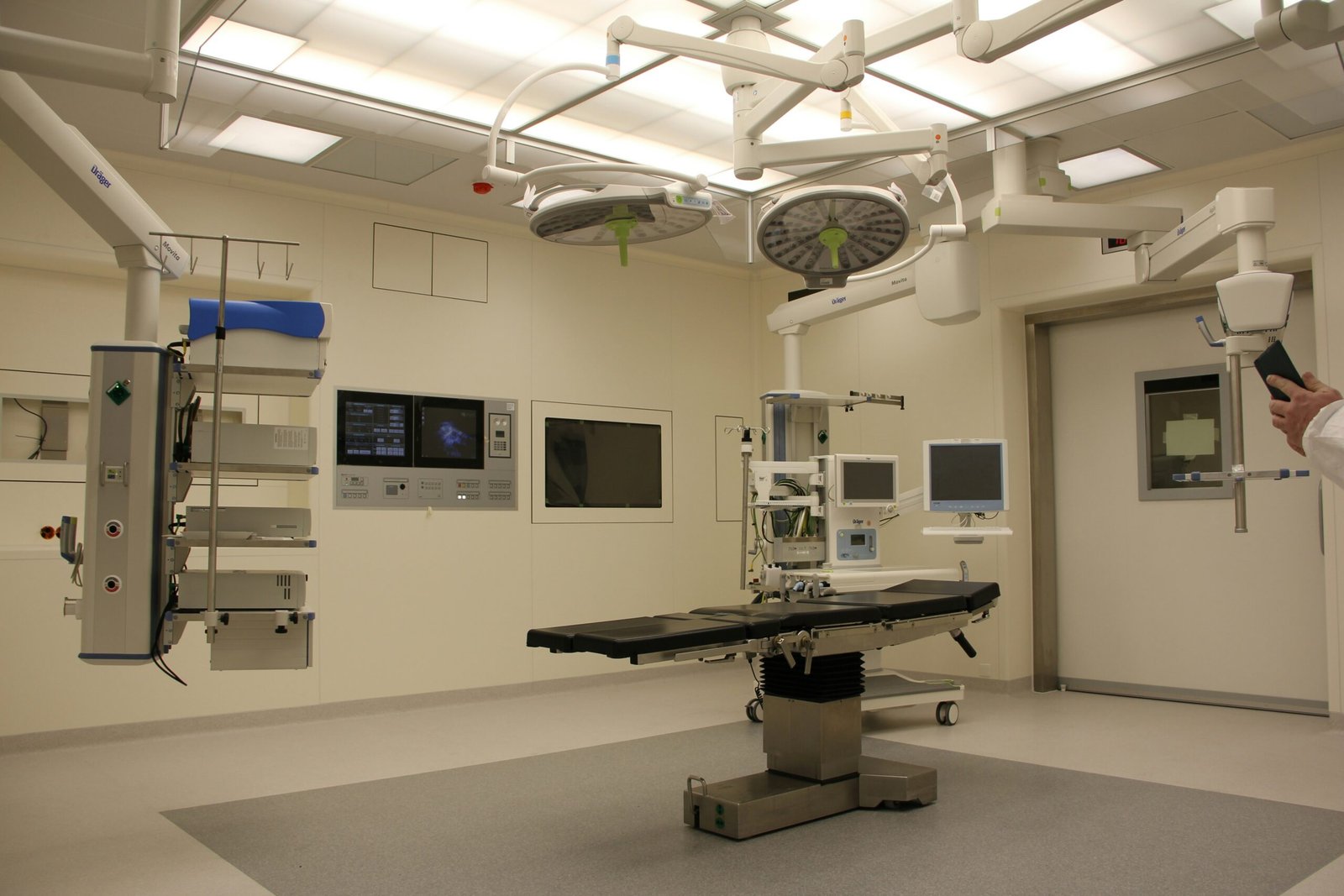
Last month, I operated on an elderly man with a perforated peptic ulcer. The surgery was textbook. I closed his abdomen cleanly, without complication. We had antibiotics available that time. What we did not have was intravenous crystalloid fluid for resuscitation. It’s the most basic of solutions, cheap enough to cost almost nothing, yet essential enough to save almost everything. It exists. It is manufactured in Santiago de Cuba, 500 miles away. It could not reach Havana since there was no petroleum to transport it. By the time it arrived, my patient had died.
I want you to sit with that before we discuss politics.
Now I want to tell you about a two-year-old girl, the daughter of friends of mine. Two weeks ago, she developed severe gastroenteritis — vomiting twenty times a day, rapidly dehydrating. Her parents rushed her to a pediatric hospital in Havana. There was not enough intravenous fluid in the Emergency Room. Pediatric hospitals have historically been the last refuge protected from the worst of our shortages. Even in our hardest years, we have tried to protect the children. That night, only the hospital director was authorizing each bottle of fluid as if it were pure gold. It was not gold, was only salt and water, but they only had a few bottles available.
These are not isolated tragedies. They are the intended outcomes.
Cuba’s infant mortality rate — once lower than that of the United States, a genuine achievement of our public health system — has been climbing from 5 to over 7.1 per 1,000 live births, starting in 2019. Two-thirds of essential medicines are either unavailable or in short supply. Arboviruses such as dengue, oropouche and chikungunya have been surging. According to Cuba’s own statistics office, the country has seen the exodus of more than 1.4 million inhabitants since 2020 — among them thousands of physicians — and recorded its fewest births in 65 years. In 2024-2025 alone, the US blockade cost Cuba $7.5 billion. Over 65 years, its cumulative damages have surpassed more than $170 billion. This is not a crisis of governance. This is manufactured ruin: the deliberate application of maximum economic pressure until a nation breaks, then attributing the wreckage to the nation itself. The wreckage is then cited as justification for a military intervention, and the intervention as the path to coveted resources.
US policy towards Cuba was designed this way. In 1960, US Deputy Assistant Secretary of State Lester Mallory wrote an internal memorandum (now declassified) that explicitly advocated measures to bring about “hunger, desperation and overthrow of government” in Cuba through deliberate economic hardship. This US embargo was established to include all trade with Cuba in 1962. It is considered illegal. Sixty-five years later, that strategy has not been abandoned. It has been refined. The State Sponsor of Terrorism designation locks Cuba out of the international financial system — no transactions, no banking access, foreign companies threatened for doing business with us. Recently, Cuba was declared by the US President as an “extraordinary threat to the US” and an order was issued preventing any country in the world from delivering oil to the island. The January 2026 naval blockade severing our primary fuel supply is the most acute recent expression of the US embargo. It is also illegal.
Against this backdrop, the United States recently announced $6 million in aid for Cuba, delivered through channels explicitly designed to bypass the Cuban government. Cuba loses $20 million to the blockade every single day. Six million is not a gesture of goodwill. It is cynicism rendered in dollars.
When I read about Cuba in the American press and I am struck, every time, by the same omission. The sanctions — which affect 100% of Cubans, every hour of every day — only receive a passing mention, a subordinate clause, a brief acknowledgment quickly balanced by talk of “domestic policy failures.” This is not neutrality. It is a choice that serves power and protects the aggressor.
Here is what the blockade looks like from the inside. Our power grid fails for up to 22 hours a day, even in the capital. Children sit in the dark, unable to do homework. Teachers cannot prepare their lessons. When the power fails and there is no natural gas in the homes, families cook over wood fires outside. And then something happens that I want every American to understand: others come out to join them. Families have begun rotating cooking duties for entire neighborhoods — sharing what they have, making sure everyone eats. That is not a government program. That is a people refusing to let each other go hungry.
Across the island, Cubans are installing solar panels on rooftops, building their energy future with their own hands. They have switched from gas fueled vehicles to electric tricycles for transport and commerce. Some of them are volunteers who dedicate specific days each week to ferry hemodialysis patients to hospitals, free of charge. On the roads, stopping for hitchhikers is a matter of daily life and legal obligation — government functionaries, police officers, doctors, lieutenant colonels of the Cuban military, artists, the elderly, the young, all sharing rides in a country where fuel has become precious. Cars bearing government license plates are required by law to pick up passengers. It is not unusual to see a poet and a factory worker, sharing the backseat of a stranger’s car, heading home. On the occasional Friday night after work, my colleagues and I will scrape together something to eat, find some rum, dominoes, music, and each other — our children running among our legs, dancing before they even know the words to the songs. Not in spite of everything. Because of everything.
I have been a physician for over two decades — dual certified in family medicine and general surgery. I work in a public teaching hospital (all hospitals are public) in downtown Havana managing trauma and surgical emergencies. My salary has tripled over the last 10 years. It is still not enough to live on. My patients and their families call me on my cell phone, sometimes years after their surgery, when a new concern arises, when they are frightened, when they need someone they trust. My medical trainees, increasingly and understandably, want to leave. The blockade is hollowing out the next generation of Cuban medicine from within, pushing Cubans toward the United States and other countries in numbers we did not see under Barack Obama. That was a time when our quality of life was much better, when Cuban Americans were returning to the island to invest and private businesses were flourishing. That reversal is not fate. It is policy.
In my hospital, I teach medical students from the ELAM — the Latin American School of Medicine, which has trained physicians from 122 countries and produced close to 31,000 doctors. It is considered the largest medical school in the world. This is where students from rural and underserved communities across the Global South study medicine free of charge. They arrive from humble backgrounds. My students come from Angola, Mozambique, the Democratic Republic of Congo, Namibia, South Africa, Ghana, Western Sahara, Colombia, Bolivia, Mexico, Venezuela, Timor Leste, Nepal, Nicaragua, Dominica, Vietnam, Palestine and even Germany, Canada, the United States and more. One of the Palestinians is a young man from Tulkarm, in the occupied West Bank. He decided at the age of fourteen, after watching his uncle, a Cuban-trained physician, that he would also one day study medicine in Havana. He traveled from a city under military siege to learn surgery in a country under economic siege. Another medical student, among the finest I have ever trained in surgery, is a young woman returning to the Democratic Republic of Congo. Her country has known continuous war for over thirty years. She trained harder than anyone I have taught because she already knows what awaits her: war wounds and injuries we rarely see in Cuba, and she will face them largely alone. She was one of the best students I have ever trained. She will need to be, her country needs her.
I have also been proudly selected for the intensely competitive (and at times lucrative) Cuban medical missions that have sent more than 605,000 health workers to over 165 countries since 1963. I will be honest with you: some Cuban physicians returning from medical missions abroad earn enough to buy a car, or a house, or to repair a roof – all to give their children a better life. At the time of my first medical mission in 2010, I made over 5 times my Cuban salary. There is no contradiction in that. Service and dignity are not mutually exclusive.
I served in the poor urban neighborhoods of Caracas as part of Cuba’s surgical mission operating alongside Barrio Adentro — the landmark Venezuelan program that brought Cuban doctors to communities where none had practiced before. It was through a similar Cuban surgical brigade that I served in the rural communities of Bolivia. In Caracas, I repaired a hernia for the son of Cuban exiles who had fled the Batista dictatorship. Afterward, his family pressed a silver coin into my hands. It bore the face of José Martí, the poet and revolutionary who led Cuba’s independence from Spain. The coin had been minted for the centennial of Martí’s birth — 1953, the very year this family fled the island. They had carried it out of Cuba with them, kept it as a treasure for decades, and now chose to give it to a Cuban doctor to thank him for keeping solidarity across the Americas alive.
In Yacuiba, Bolivia, I cared for a pregnant woman from a middle-class family, visiting her at home as medicine should be practiced whenever it can be. She was already going to a private clinic. After my first visit, she and her husband decided to transfer her care to me. When her son was born, they named him after me. I performed no heroics. I simply showed up, and stayed, and treated her as a person deserving of full attention.
In Guatemala, a nearly 30-year program sending Cuban doctors to Indigenous communities — many that had never had doctors before — is being dismantled under direct US pressure. Honduras has just expelled its 128 Cuban physicians, ending an ophthalmological program that had performed nearly 7,000 surgeries to end blindness. This follows similar cancellations in Brazil (2018), Ecuador, and Bolivia (both 2019). Washington has threatened to revoke the visas of any government official who continues to employ Cuban doctors. The prime ministers of Barbados, Trinidad and Tobago, and Saint Vincent said they would rather lose their US visas than lose the Cuban doctors keeping their hospitals open. The cancellations occurred despite the protests of the patients themselves. They were seen by a Cuban doctor, or they were not seen at all. Washington made that choice for them.
A 2025 study in The Lancet Global Health found that unilateral coercive measures, such as sanctions, are associated with approximately 564,000 deaths annually worldwide. Children under five account for more than half of these preventable deaths. Among the sanction regimes studied, US sanctions showed the strongest mortality effects. The United Nations General Assembly has voted, every year since 1992, to condemn the US embargo against Cuba. In October 2024, the vote was 187 nations to 2. The United States and Israel stood alone against the world.
Cuba has its own contradictions and failures. We know this. We debate it among ourselves, often fiercely. Proposals for laws are debated in our workplaces, neighborhoods and online before being presented for approval to the National Assembly. We have a lot to improve to have more societal control over the government. Those challenges are ours to reckon with — on our own terms, in our own time. For example, several prominent government officials have been imprisoned for corruption. They are not, however, a pretext for a foreign power to manufacture our collapse, seize our resources, and call it liberation.
People ask why I remain. The answer is not complicated. I am a patriot— not as a label, but as a life. I believe that my obligation does not end at my front door, or at my hospital’s entrance, or at my country’s borders. I believe in a country that belongs to everyone, not to a privileged few. I believe in something larger than any of us: the possibility of a society built not on profit, but on social justice, dignity, and respect for every human being. I believe in a global society where the innate potential, skill, talent, and genius within each of us is allowed to flourish and be freely shared with one another. I believe in the society we are building here, imperfect and besieged and ours. I believe that no foreign politician, who knows nothing of my country, should decide if my child is able to eat. I believe that no foreign power has the right to enter this island, hollow out its people with hunger, and call it freedom. If it came to that — if defense of this homeland required everything — I would give everything. This is not bravado. It is the same conviction that gets me out of bed before dawn, that makes me answer my phone at midnight when a frightened patient calls, or that kept me in a gasoline lineup for 23 hours 2 weeks ago when gas was scarce, but still available.
Cuba is not a failed state waiting to be rescued. Cuba is a people — brilliant, stubborn, generous, and vibrant — who have refused for sixty-five years to become someone else’s market. We are the elderly man who survived my surgery but not the blockade. We are the dehydrated two-year-old with not enough IV fluids. We are the physician and hospital director deciding how to allocate scarce resources, when everyone is deserving. We are the Congolese doctor returning home to heal her war-torn country with the clinical tools given to her by Cuba. We are the Cuban exile who kept a Martí coin in a drawer in Caracas for decades, waiting for a reason to give it away. We are the Bolivian child named after a doctor who simply showed up. We are the strangers sharing a backseat home. We are still here. We are still teaching, still operating, still cooking for each other over wood fires, and still dancing with our children on Friday nights.
[ad_2]
Source link
