
[ad_1]
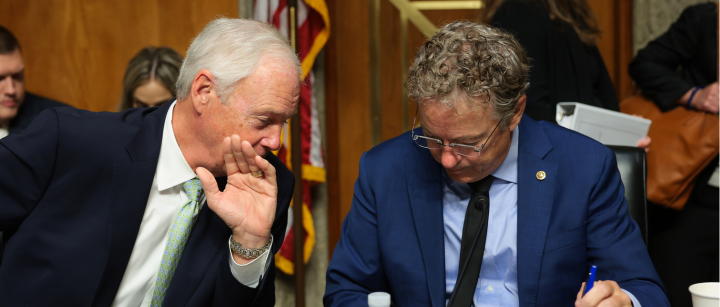
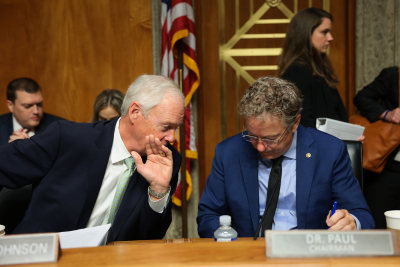
Studies have shown no connection between COVID-19 vaccination during pregnancy and increased risk of miscarriage. Despite this, Republican Sens. Rand Paul and Ron Johnson resurrected a long-debunked claim of an astronomical rate of miscarriage after vaccination while also accusing Dr. Anthony Fauci of deceiving the public about the safety of the shots during pregnancy.

On Aug. 10, the lawmakers released texts from the former director of the National Institute of Allergy and Infectious Diseases’s government-issued cell phone from January 2021.
“Privately over text, Fauci admitted concerns about COVID vaccine side effects ‘associated with miscarriage in the 1st trimester,’ yet told the public there was nothing to worry about,” Paul, of Kentucky, said in an Aug. 11 post on X. “Once again, we expose Fauci’s dishonesty.”
“The safety signals, the red flags, were screaming at these people, and you got Anthony Fauci there lying bold-faced to the American public,” Johnson, a senator from Wisconsin, said in an Aug. 12 Fox News appearance.
“We will never know how many babies were miscarried because of Fauci’s lies,” Johnson said in an X post the following day.
In a video accompanying Paul’s post and in an Aug. 10 press release, the senators juxtaposed a single text from Fauci about a theoretical concern about vaccination and miscarriage — which was not subsequently borne out by data — with a series of public comments from Fauci between Feb. 3, 2021 and Aug. 30, 2021.
The senators’ claims of deception are missing key context, both on what Fauci said and how information on maternal vaccine safety evolved in the months after the COVID-19 vaccines were first authorized, as we will explain.
“By January and February of 2021, we knew that COVID infection during pregnancy increased the risk of pregnancy loss and other pregnancy complications, such as pre-eclampsia,” Victoria Male, an associate professor of reproductive immunology at Imperial College London, told us in an email. “On the other hand, the limited evidence we had about the safety of COVID vaccination in pregnancy was reassuring, and evidence was accumulating rapidly.”
Paul and Johnson also resurfaced a claim that a study found an 82% rate of miscarriages after COVID-19 vaccination — a falsehood that some other Republican politicians amplified. We originally fact-checked this claim, based on an incorrect calculation from vaccine safety monitoring data, in 2021.
Meanwhile, National Institutes of Health Director Dr. Jay Bhattacharya told Martha MacCallum during an Aug. 11 Fox News interview that it is “certainly possible” that COVID-19 vaccines could have led to miscarriages. He also said that the debate about miscarriage and COVID-19 vaccines “rages on in the scientific literature.”
Those claims are unsupported. “The current data continue to show no increased risk of miscarriage (or any other pregnancy complication) associated with COVID-19 vaccination,” Male said.
We asked the NIH for more information on the literature Bhattacharya was referring to, but we did not receive a reply. Paul’s office did not reply to our request for comment.
Johnson’s communications director, Grace Carnathan, did not directly defend the 82% figure. “The question isn’t what the actual percentage of miscarriage risk is — we probably will never know because of grossly inadequate and negligent, if not corrupt, safety surveillance,” she said. “The question should be why federal health officials consistently withheld information on safety signals, thereby depriving the public of fully informed consent.”
Citing the testimony of a gynecologist who has made incorrect claims before, she maintained that “there is controversy over what the data shows” and that “Fauci withheld information from pregnant women that they had the right to know.”
What Fauci’s Early Texts and Interviews Show
Fauci’s January 2021 texts, which shared reassuring information alongside the theoretical concern Paul and Johnson highlighted, were sent the month after the first two COVID-19 vaccines received emergency use authorizations. The Centers for Disease Control and Prevention and medical organizations at the time did not make a recommendation as to whether people should get vaccinated during pregnancy, citing a lack of data.
The posted exchange begins on Jan. 25, 2021, with then-Surgeon General Dr. Vivek Murthy asking Fauci and then-CDC Director Dr. Rochelle Walensky if they are “aware of any data or theoretical reason why vaccinating early vs late in pregnancy would be preferred.”
At first, Fauci replied that there was none. But a bit later that day, he said, “I asked around a bit more and another issue came up that you need to be aware of. Since many people have significant cytokines storm and fever after the 2nd dose, this theoretically could be associated with miscarriage in the 1st trimester.”
High fever is associated with certain poor outcomes in pregnancy, as we will explain below, although it’s not clear it can cause miscarriage. The term cytokine storm isn’t strictly defined, although it generally refers to a level of severe inflammatory response that isn’t seen after COVID-19 vaccination, but can occur with severe COVID-19. Vaccination triggers an immune response that temporarily increases the levels of certain cytokines to coordinate that response, but not to the degree of a cytokine storm.
“In January 2021, when there was very little evidence about the safety of COVID vaccination in pregnancy, it was sensible to be cautious and consider the theoretical possibility that fever associated with vaccination might be harmful in pregnancy,” Male said.
“Subsequent evidence found no increased risk of pregnancy loss, or any other pregnancy problems that might be caused by fever, following vaccination,” she added.
The day after passing along the point about fever, Fauci shared his overall thoughts on COVID-19 vaccination and pregnancy in the text message thread.
“I would say that in any vaccine in which data are lacking in pregnant women one must weigh the potential risks against the benefits,” he said. “COVID-19 can be a serious disease especially in pregnancy. In the vaccine trials, pregnant women were not allowed but following the EUA, a large number (more than 10,000) pregnant women have been vaccinated. No issues have arisen.”
Fauci went on to acknowledge recommendations giving pregnant women a “choice” on whether to get vaccinated while adding that toxicity studies in animals “did not raise any red flags.”
Paul and Johnson portrayed Fauci’s private comments as contrasting with his public ones. But while he did not publicly mention risks of fever during pregnancy in the interviews we reviewed, his contemporaneous statements in fact hewed fairly closely to his Jan. 26 text message.
Fauci accurately shared on several occasions in late January and February that in the data on people vaccinated during pregnancy to date, there were no “red flags” — comments the senators highlighted in their video and press release. He also repeatedly noted that the vaccines had not been tested in clinical trials on pregnant women and described the need to weigh the benefits versus potential risks, given the dangers of COVID-19 during pregnancy.
Male, who was tracking data on pregnancy and COVID-19 vaccination in early 2021, explained that data on the subject grew quickly. Originally, scientists knew that among the few dozen people who got pregnant while participating in the clinical trials, “there was no difference in the rate of miscarriage between the vaccinated and unvaccinated groups,” she said.
As the vaccine rolled out after the original two EUAs in December 2020, U.S. health agencies tracked outcomes. As of Feb. 28, 2021, “35,691 people had been vaccinated during pregnancy and spontaneous reporting to VAERS did not suggest any safety concerns,” Male said, referring to the Vaccine Adverse Event Reporting System.
A day later, a CDC scientist presented data to the CDC’s Advisory Committee on Immunization Practices from multiple vaccine safety monitoring systems, finding that thus far, miscarriage and other pregnancy outcomes did not appear to be elevated.
“So even by the end of February, we were beginning to have good, reassuring data on the safety of COVID vaccination in pregnancy – although of course we got lots more later,” Male said.
Fauci’s Comments Evolved With the Evidence
To give an impression of duplicity, Paul and Johnson misleadingly mixed Fauci’s comments from different time periods, following a pattern of deception Paul has used before. The video Paul posted sandwiched an abbreviated version of Fauci’s more tempered comments from early 2021 between comments from around six months later.
During this interval, the data supporting vaccination during pregnancy had continued to mount. By mid-August 2021, many medical organizations and the CDC had endorsed vaccination for pregnant people.
At the time, the U.S. was experiencing the Delta wave of the pandemic, and data would go on to show that this was a particularly dangerous phase of the pandemic for those who were pregnant and unvaccinated. Such people had higher rates of preterm birth and stillbirth than had been seen previously.
“It’s very, very clear that it is safe in pregnant women,” the video shows Fauci stating on the “Today” show on Aug. 12, the day after the CDC recommended that pregnant people get vaccinated. In that interview, Fauci cites “the extraordinary amount of data now that’s accumulated with pregnant women” demonstrating safety, as well as the harms of COVID-19 to the woman and the fetus.
“It’s pretty clear that pregnant women should get vaccinated,” Fauci said during an interview posted Aug. 30, which was highlighted in both the video and press release.
The Facts on Fever in Pregnancy
Fauci’s January 2021 comment was also in keeping with longstanding general knowledge that fever can be associated with risks during pregnancy — a fact that prominent guidance on COVID-19 vaccination during pregnancy shared at the time.
“The complication of pregnancy that is most closely associated with fever is congenital abnormalities,” or birth defects, Male said. She explained that primarily because of this, the American College of Obstetricians and Gynecologists advises that pregnant people take acetaminophen, or Tylenol, if they have a fever, in consultation with a doctor.
Since the beginning of the vaccine rollout, this recommendation has included pregnant people who get a fever following COVID-19 vaccination. “Pregnant women who experience fever following vaccination should be counseled to take acetaminophen, as fever has been associated with adverse pregnancy outcomes,” December 2020 guidance from ACOG and the CDC both said. Both the CDC and the medical organization continue to recommend treating fever in consultation with a doctor, including after COVID-19 vaccination.
That said, birth defects “are associated specifically with high fevers (higher than would be expected from vaccination) early in the first trimester,” Male said. And indeed, studies have not gone on to show COVID-19 vaccination in the first trimester is associated with an increased risk of birth defects, she added.
Male explained that when it comes to miscarriage, fever itself may not even be what increases the risk. “Some infections that cause fever also increase the risk of miscarriage, but it isn’t clear that the fever (or the cytokines that cause the fever) are causing miscarriage in these cases: it could well be other aspects of the infection,” she said.
Persistent, False Claim of High Miscarriage Rate
Despite data that has failed to show that COVID-19 vaccination increases miscarriage risk, Johnson and Paul in their press release elevated a false claim of an 82% miscarriage rate after COVID-19 vaccination. The senators highlighted a January 2022 letter on the topic from Dr. James A. Thorp, an gynecologist whose erroneous and misleading claims we have written about before.
Sen. Ted Cruz, a Republican from Texas, repeated the false statistic on X on Aug. 12, while referring to an episode of his podcast titled in part, “Bombshell Data: Fauci Covered up that Covid Vaccine Produced 82% Miscarriage Rate.” The post and podcast were subsequently taken down, and Cruz noted a correction on his podcast, although he maintained that the broader point about Fauci was still true.
Rep. Lisa McClain, a Republican from Michigan, falsely claimed on Fox Business on Aug. 11 that “in fact, The New England Journal of Medicine said 82% of women who got the vaccine in their first or second trimester had a miscarriage.” (The next day, the host of the show followed up to “clarify” the segment.)
We first wrote about the 82% claim in July 2021, when it was circulating in multiple online posts. As we explained at the time, the statistic relies on distortion of CDC data in a New England Journal of Medicine study published in April 2021 that summarized early information on COVID-19 vaccination during pregnancy.
The study tracked results for 827 people who got vaccinated during pregnancy between December 2020 and the end of February 2021 and had already completed their pregnancies by the end of March, preliminarily finding that 104 had miscarriages. The false claim of an 82% miscarriage rate comes from dividing the 104 miscarriages by the 127 people in the study who got vaccinated in the first or second trimester — a calculation that the paper did not present.
It’s an improper calculation because most people vaccinated during the first or second trimester would not have yet had time to complete their pregnancies unless their pregnancies ended early.
“It’s like calculating a school’s dropout rate in October by looking only at the students who have already left,” infectious disease specialist Dr. Jake Scott, an infectious disease physician at Stanford Medicine, said in an Aug. 11 X post explaining the claim.
Dr. Eve C. Feinberg, a professor of obstetrics and gynecology at Northwestern University’s Feinberg School of Medicine, told us in July 2021 that the 82% was “pure number manipulation and propaganda” and “a ridiculous claim and simply not observed clinically.”
A subsequent paper was published in September 2021, also based on the CDC data, showing a miscarriage rate of lower than 15%, which the researchers said was not higher than expected during pregnancy. Miscarriage is common, especially early in pregnancy.
A final analysis of CDC pregnancy monitoring data, published in February 2026, found a miscarriage rate of 10.79%. “It looked at the week-by-week risk of miscarriage in 12,097 people vaccinated before they were 20 weeks pregnant, finding that there was no increased risk,” Male said.
Editor’s note: FactCheck.org does not accept advertising. We rely on grants and individual donations from people like you. Please consider a donation. Credit card donations may be made through our “Donate” page. If you prefer to give by check, send to: FactCheck.org, Annenberg Public Policy Center, P.O. Box 58100, Philadelphia, PA 19102.
[ad_2]
Source link
