
[ad_1]
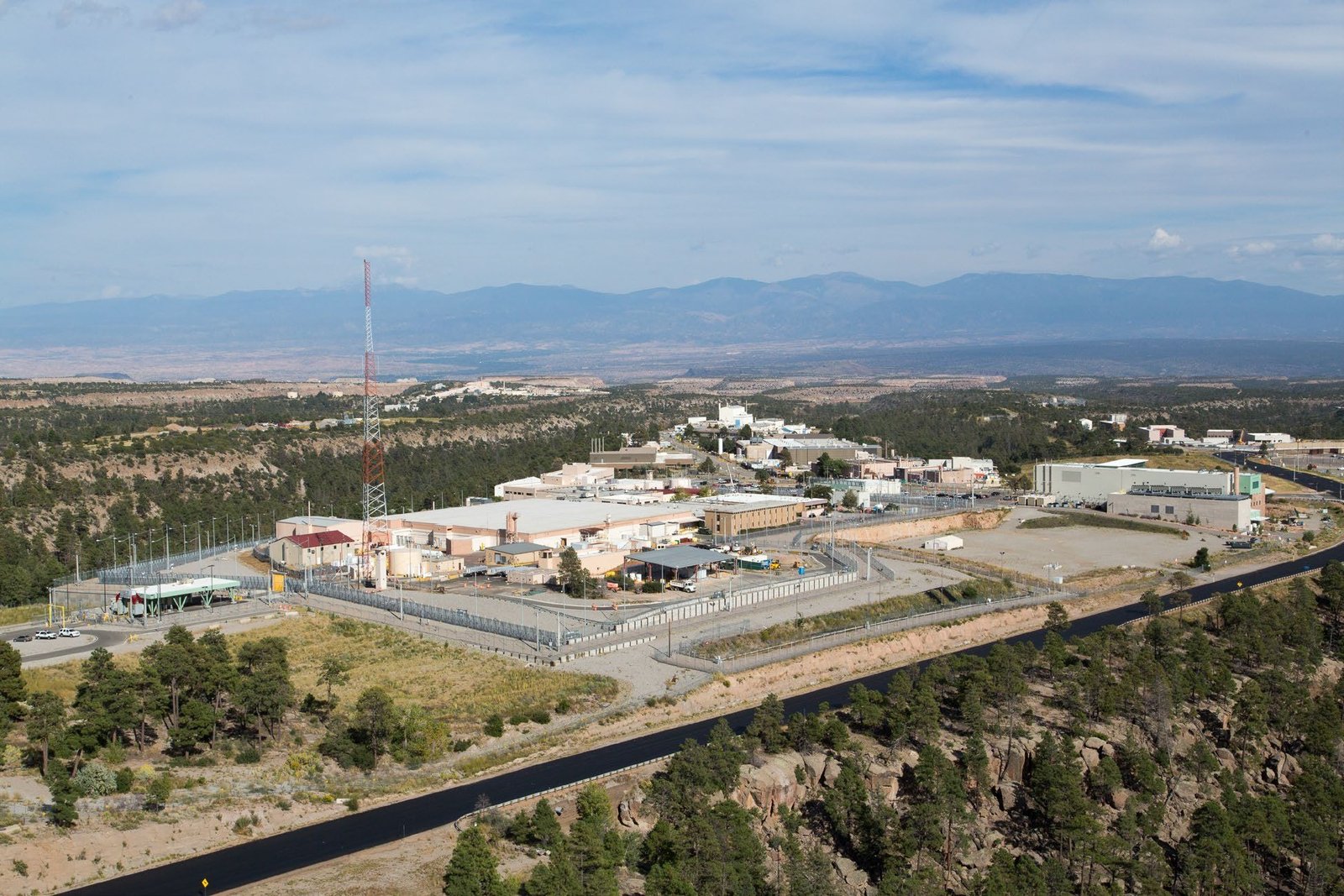
Plutonium facility at Los Alamos Labs. Photo: Department of Energy.
One portion of a gargantuan plan to modernize the entire U.S. nuclear arsenal, costing $1.5 trillion over the next twenty years, has been opened for public scrutiny and comment beginning this week.
Thanks to years-long legal challenges by environmental and community groups in California, New Mexico and South Carolina, the National Nuclear Security Administration, NNSA, was ordered by a federal district court to reveal plans for the manufacture of plutonium “pits” at the Savannah River Site (SRS) in South Carolina and Los Alamos National Laboratory in New Mexico. Citing the National Environmental Protection Act,1969, U.S. District Judge Mary Geiger Lewis, South Carolina, found that NNSA had ignored NEPA statutes, and required the Department of Energy, and its semi-autonomous nuclear weapons bureau, National Nuclear Security Administration, NNSA, to produce a Programmatic Environmental Impact Statement, PEIS, that details the manufacture, transport and waste deposition associated with plutonium pit production in Aiken, S.C. and Los Alamos, N.M.
Plutonium pits are the core of a thermonuclear weapon (hydrogen bomb). Tens of thousands of pits were manufactured during the Cold War. Pit production was concentrated almost entirely at Rocky Flats, Colorado, near Denver. The FBI raided Rocky Flats in 1989, after numerous fires, accidental plutonium releases, and whistleblower reports of dangerous working conditions at the plant. Rockwell International, the general Contractor at Rocky Flats, settled criminal charges of environmental violations for $18. 5 million (less than the bonuses it received from the government) and closed the plant in 1991. Rocky Flats was declared a Superfund site, and after costly remediation was converted into a national wildlife sanctuary. Some of the most polluted sections of Rocky Flats remain radioactive and will be sequestered forever. Communities near Rocky Flats received $375 million in compensation for increased incidents of cancer. The U.S. has manufactured very few plutonium pits since Rocky Flats closed.
Congress mandated renewed production of plutonium pits in 2015 with funding from the Defense Authorization Act. Lawmakers required the manufacture of 30 pits by this year (2026) and 80 pits per year by 2030, an entirely fanciful schedule. During the Cold War, Savannah River Site had produced plutonium but never pits, and Los Alamos National Laboratory (LANL), produces up to ten pits per year for research purposes, but has never produced pits approaching the Congressionally mandated 30 pits per year. Due to frequent accidents and safety violations, LANL has in some years produced zero pits.
NNSA’s Programmatic Environmental Impact Statement describes the intricate sequence for producing new pits for new nuclear weapons. Existing plutonium pits, around 12,000 plutonium pits, are stored at the Pantex facility in Amarillo, TX, and will be driven in specialized semi-trucks across the country on public highways to LANL and SRS. Once secured at these facilities, any oxidized impurities from aging will be removed using hot sulfuric acid and other agents. The pits are then melted, molded into spheres and machined to extremely precise dimensions. Large volumes of transuranic wastes are produced in the pit production process. Tons of transuranic wastes will be transported over public highways to the Waste Isolation Pilot Plant in Carlsbad, N.M. Radioactive waste from SRS will pass through Atlanta and follow I-20 and I-10 to the WIPP facility.
WIPP is the only facility designed to accept and store transuranic waste from nuclear weapons production. However, the New Mexico Environment Department only permitted WIPP to accept “legacy” transuranic waste from LANL, originating from the first Manhattan Project, 1942-45. NMED has not yet agreed to permit increased volumes of waste at WIPP. Plutonium waste could be stored on site at Los Alamos and Savannah River, though this would generate an entirely new set of environmental problems.
Mandated by the Defense Authorization Act of 2015, NNSA is required to produce 30 plutonium pits by this year, and 80 pits per year by 2030. SRS, slated to fabricate 50 pits per year, has never made a plutonium pit. New buildings to house the pit production in South Carolina “repurposed” a defunct mixed oxide plant. The MOX plant was designed to downblend plutonium pits from nuclear weapons decommissioned per the agreement between the U.S. and Russia to reduce their nearly 100 tons of surplus weapons-grade plutonium. While the Russians constructed and operated their MOX plant, the MOX plant at Savannah River experienced massive cost overruns and decades of delays. Putin suspended the agreement in 2016, blaming non-compliance on the part of the U.S.
The abandoned MOX plant at Savannah River 32 years behind schedule and $10 billion over budget, is 70% complete. Its conversion to the Savannah River Plutonium Pit Facility is already years behind schedule and billions of dollars over budget. Scheduled to open this year, it now is slated to make its first pit in 2035. Savannah River Site remains one of the most polluted places in the U.S. and is near the top of the EPA’s hazardous sites.
Robert Oppenheimer selected Los Alamos for the design and construction of the first fission atomic bombs dropped on Hiroshima and Nagasaki. In the decade since, LANL’s research and development of plutonium pits has created thousands of massive transuranic waste dumps on site. Plutonium has leaked into groundwater and has crossed canyons, contaminating native communities like the adjacent San Ildefonso and more distant pueblos. Plutonium is one of the most carcinogenic materials on Earth and has a half-life of 27,000 years.
LANL has never produced 30 pits per year, as mandated by Congress. Between 2007 and 2011, LANL produced 31 pits in total. Selected for its isolation and inaccessibility, LANL has chronic difficulties recruiting and retaining workers. LANL has experienced serious fires and accidents, and has been fined $16 million by the New Mexico Environment Department for neglecting the “legacy” wastes stored on site.
Whether the plutonium pit production, costing tens of billions of dollars, is even necessary, though required by Congressional statute, is contentious. NNSA’s own studies indicate that the thousands of pits stored at Pantex are viable for at least another 100 years. One study by Lawrence Livermore National Laboratory found the pits in the strategic security stockpile would be reliable for 150 years. Other classified studies about the dependability of existing plutonium pits could demonstrate the same result, and should be released.
The new plutonium pits proposed in NNSA’s Environmental Impact Statement are designed for entirely new thermonuclear weapons. The W87-1 warhead will arm the new Sentinel missile system, replacing the aging fleet of Minuteman III intercontinental missiles. The Sentinel program is years behind schedule and hundreds of billions of dollars over budget. Cost estimates for the 50 years of Sentinel deployment are over $300 billion.
Ironically, while the NEPA plutonium pit program is being presented to the public this week, the Eleventh Review of the Non-Proliferation Treaty (NPT) is ongoing at the United Nations in New York. The NPT was first ratified by 192 countries in 1970, including the U.S. The NPT is the only remaining international nuclear treaty. It calls for the right for countries to peacefully develop nuclear power reactors, and stipulates that nuclear-armed states are obligated to reduce and eventually eliminate their nuclear weapons arsenals.
NNSA’s Draft PEIS describes new plutonium pit production to be “consistent with the NPT while maintaining nuclear weapons competencies and capabilities at the weapons laboratories.”(p.1-6). The glaring dichotomy if this determination is refuted by the International Court of Justice, finding in 1996 that signatories to the NPT must adhere to
The legal import of [the NPT Article VI] obligation… goes beyond that of a mere obligation of conduct; the obligation involved here is an obligation to achieve a precise result – nuclear disarmament in all its aspects – by adopting a particular course of conduct, namely, the pursuit of negotiations on the matter in good faith.” [Para. 99]
NNSA violated the NEPA requirements to address the environmental damage of federally funded projects. The public now has an opportunity to submit comments to the NNSA until July. In particular, the plutonium pit fabrication for new nuclear weapons contravenes the Non-Proliferation Treaty despite what the draft PEIS asserts, per the decision by the ICJ.
Submit comment by email to NEPA-SRS@srs.gov
[ad_2]
Source link
