
[ad_1]

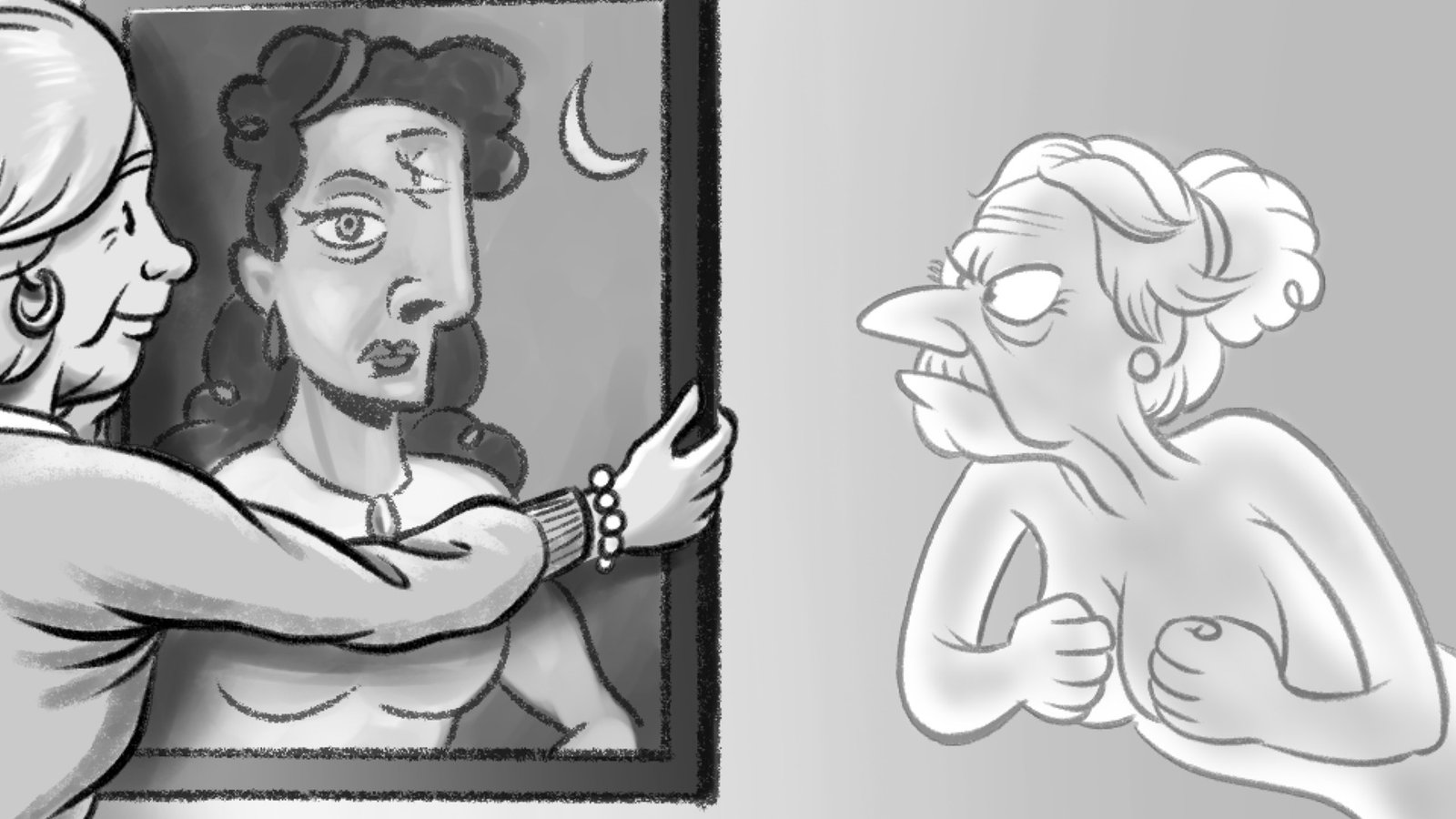
This weekend’s cartoon strip was originally included in the batch of sketches that were inspired by Jesse Bering’s book about Dr. Ian Stevenson (I just couldn’t find any more space to put it in).
The idea behind it was conceived after reading about a poltergeist case Stevenson investigated in the early 1980s, in the retirement community of Kern City, a part of Bakersfield, California:
When the original owner of one of the homes—a fiery, houseproud, “stubborn as hell” type of woman—died suddenly at the age of seventy-four, the house sat empty for years. It was then sold to a civic-minded widow, an executive sort with very different tastes from the previous owner’s garish style. The new occupant began gutting the home for a big makeover, and these renovations didn’t sit well with her invisible housemate. You know how it goes. Windows and doors slammed, cabinets opened and closed, furniture moved, lights turned on and off, and the dog acted strangely. Whenever she hung a particular picture in the living room, she soon found it placed carefully on the floor and propped up against the wall, just as Ian’s pattern analysis would predict. Unlike most poltergeist cases, which are attributed to a resident adolescent, the only (living) subject in the Kern City case was a single older woman who had neither the interest nor inclination for paranormal explanations of what was happening in her house. “She . . . only wanted to know if [we] could help ‘get rid of it, whatever it is,’” wrote the primary investigator. According to the official report in the JSPR, all activity ceased once the former owner’s ghost was gently but firmly told by a sensitive to get lost.
“I was naturally interested, and a little pleased,” wrote Ian, “that the poltergeist included more than several of the features that . . . might characterize a poltergeist with a discarnate (dead) agent.”
That last paragraph refers to the notion that nowadays, thanks to the work of two other parapsychologists (Joseph Gaither Pratt and William Roll) the general consensus in the field is that poltergeist phenomena is not the result of disgruntled spirits showing their discontent through telekinetic tantrums. That psychic energy might actually be unconsciously discharged by a teenager living in the household, who is going through the natural growing pains of adolescence.
But in the Kern case, however, there were no angsty teens to blame. Of course, the two ideas are not mutually exclusive; it has been suggested by parapsychologist Barry Taff—who investigated the famous Doris Bither case, which was the basis for the horror movie The Entity— that perhaps discarnate entities may be able to ‘channel’ the psychic energy of living humans as if they were ‘bio-batteries’—this is the same principle medium seances supposedly operate, and why parapsychologists suggest you get better results with a group people, instead of just one or a couple of individuals performing the seance.
Whatever the case, poltergeists remain one of my favorite paranormal phenomena—and yes, I blame Spielberg for it!
[ad_2]
Source link
