
[ad_1]
In one of the scariest moments in modern history, we're doing our best at ScheerPost to pierce the fog of lies that conceal it but we need some help to pay our writers and staff. Please consider a tax-deductible donation.
Gabrielle Principe, College of Charleston
Hollywood loves a superpower. Not all involve capes or cosmic rays. Some are cognitive: characters who can remember everything. In movies and on TV, viewers repeatedly encounter those with extraordinary minds who glance once at a page, a room or a face – and later recreate every detail with surgical precision.
You see it everywhere: “Suits,” “Sherlock” and “The Girl with the Dragon Tattoo.” Even in children’s literature there’s fifth grader Cam Jansen, who activates her photolike memory by saying “Click!”
Most recently, it appeared in the television series “The Pitt,” set in a hospital emergency department. When the digital patient board suddenly went offline, medical student Joy Kwon saved the day by effortlessly reciting from memory every lost detail – names, rooms, doctors, conditions, vitals. It’s a gripping moment. The stakes are high, recall is perfect, and the implication is clear: Some people have minds that function like high-resolution cameras.
The idea of photographic memory is simple and powerful: Experience is captured objectively, stored completely and retrieved perfectly. See it once, keep it forever.
There’s just one problem. There’s no scientific evidence it exists.
Your memory doesn’t record, it reconstructs
As a memory researcher, I understand that belief in photographic memory is common and the idea is compelling. But it is simply wrong.
Human memory does not work like a recording device. It’s a reconstructive process even among those with the most extraordinary skills. When you recall an event, memory doesn’t just hand you your experiences the same way every time. It’s never a matter of simply accessing, retrieving and playing back a static record of a stored slice of the past.

janiecbros/iStock via Getty Images Plus
Rather, you reconstruct the past by piecing together the remnants of experience available to you in the moment of recollection. It’s a process shaped by a range of factors, including the search cues you use; your present knowledge, attitudes and goals; and your current state of mind or mood.
Because each of these factors is dynamic and changing, you’ll remember the past differently today – if ever so slightly – from how you remembered it yesterday, and differently from how you’ll remember it tomorrow. What you remember is not only incomplete but also inexact.
A closer look at extraordinary memory
Some people, such as memory competition champions, do have extraordinary memories. They can memorize thousands of digits or entire decks of cards in minutes. Their feats are real, but they don’t come from a memory that takes mental snapshots.
Instead, these people rely on strategies – mental frameworks built through thousands of hours of deliberate practice to scaffold their memory in specific domains. Without these strategies and in other aspects of life, their recall looks pretty much like everyone else’s. Experts’ performance reflects better methods, not different machinery.
In the scientific literature, the ability that comes closest to photographic memory is eidetic imagery: a form of visual mental imagery in which people claim they can briefly continue to “see” pictures they carefully studied and that are then removed from view.
This ability is rare, is seen mostly in children, and usually disappears by adolescence. Even at its peak, however, it falls short of the Hollywood ideal. Eidetic images fade quickly and are not perfectly accurate. They can include distortions and even details that were not seen.
It’s exactly what you’d expect from a reconstructive memory system – and exactly what you would not expect from a literal recording.
Forgetting is a feature and not a flaw
The myth about photographic memories feeds into the idea that your memory has failed if you can’t remember – that if your memory worked right, it would operate like a camera. When you can’t retrieve information or you lose it entirely, it can feel like something has gone wrong.
In reality, forgetting is functional. Without it, we’d never get by.
For instance, people use their memories of the past to forecast the future. Perfect memory would be a liability. Forgetting washes out the details of specific episodes and retains the gist so you can apply past experiences to novel situations, not just those that exactly match what happened before.
Forgetting also guards your emotional health. The dulling of memories for negative events, like say an embarrassing episode, makes it easier for you to move on than if you reexperienced all the details in full force every time the event came to mind.
Forgetting protects your sense of self as well. Memories of your past form the foundation of your identity. To help maintain a stable self-concept, people selectively modify or even forget those memories that challenge their views of themselves.

Slavica/iStock via Getty Images Plus
The rare individuals who come closest to having near-perfect memory often reveal the downsides. People with highly superior autobiographical memory can remember nearly every day of their lives in vivid detail. If you ask one of these people to recall what they did on Nov. 24, 1999, they likely can tell you.
Their extraordinary ability seems to come from a habitual, even compulsive, reflection on their past and a focus on anchoring memories to dates. However, this skill is limited to autobiographical events, and they are prone to various kinds of memory distortions and errors just like everyone else.
While this ability might sound like an advantage, many people with highly superior autobiographical memory describe it as exhausting. They struggle to move past negative experiences because their memories make them seem as sharp as ever.
Accurate – and empowering – view of memory
Beliefs about “perfect memory” shape how people judge students, eyewitnesses, patients and even themselves. They influence legal decisions, educational practices and unrealistic expectations about what human minds can – and should – do.
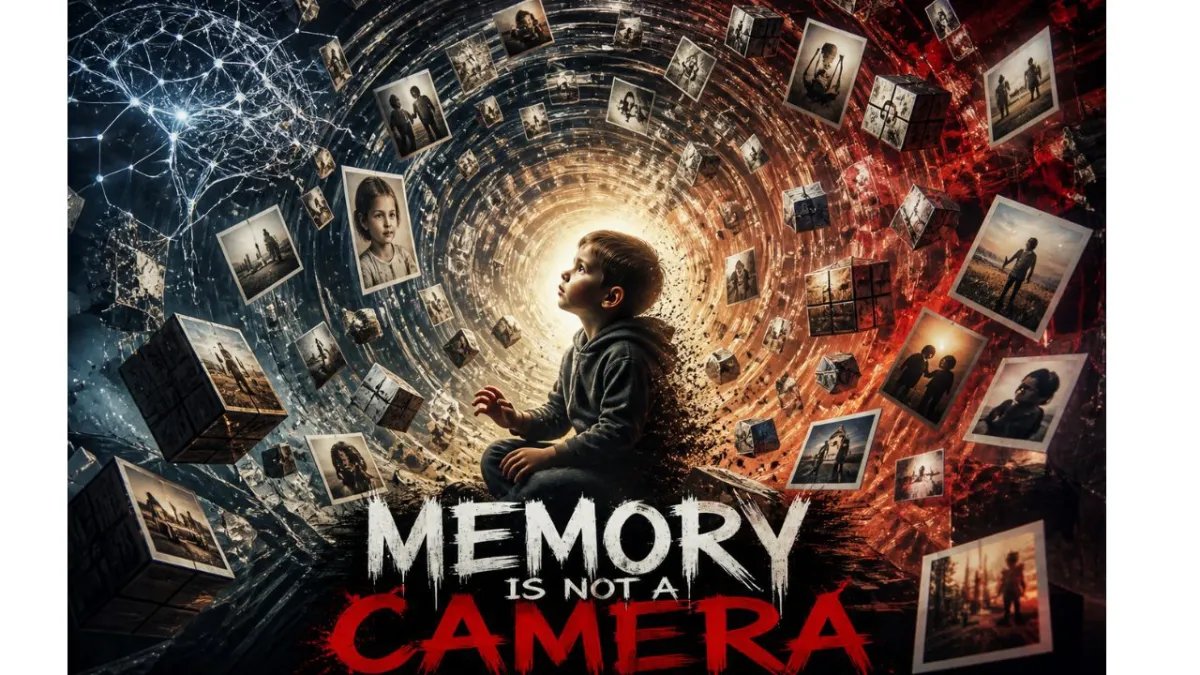
Letting go of the camera metaphor could be a step toward better understanding how memory works. The brain is not a roll of film, it’s a storyteller – one that edits, interprets and reshapes the past in light of the present.
And that’s not a limitation. It’s a superpower.
Gabrielle Principe, Professor of Psychology, College of Charleston
This article is republished from The Conversation under a Creative Commons license. Read the original article.
[ad_2]
Source link
