
[ad_1]
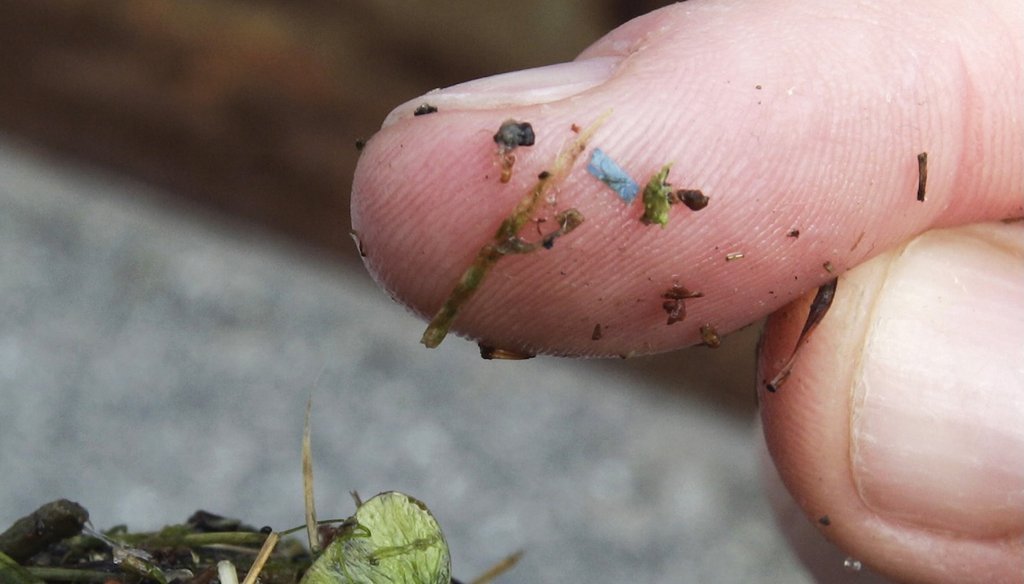
Microplastics can be so small that they’re invisible to the naked eye, but these tiny fragments loom large in today’s public health landscape.
They are virtually everywhere: Microplastics can be inhaled in the air or consumed as you eat or drink. Early research has reported alarming health trends associated with microplastics, but the health effects are still largely unknown.
Federal environment and health officials say they want to know more, including which kinds of particles are most toxic and how to measure their effects in people.
“We do not yet understand how these particles interact with the immune system, the endocrine system or the neurological system,” Health and Human Services Secretary Robert F. Kennedy Jr. said at an April 2 press conference. “And we do not have validated methods to remove them safely.”
The administration said it wants to find solutions, including learning how to measure and map them as they move through the body. Here are some things we do know:
Plastics don’t break down — they break up
Over time, plastics break into smaller and smaller fragments called microplastics, 5 millimeters long at most.
That’s about as long as a No. 2 pencil’s eraser width.
Many microplastics were once part of larger plastic products that were used, bent or heated up. Others, such as particles used in cosmetics, detergent pods and paints, were small to begin with.
At their smallest and least visually detectable, scientists measure them in micrometers, or microns. For reference, a 1 millimeter pencil tip would be 1,000 micrometers. They can be smaller than the average cell’s nucleus, which is 5 micrometers in diameter.
Some are smaller than the coronavirus that causes COVID-19, which is about 0.1 micrometers in diameter.
When microplastics measure less than 1 micrometer, the scientific community calls them “nanoplastics.”

Volunteers collect trash and plastic waste during a park cleanup on Nov. 15, 2023, at Anacostia Park in Washington. (AP)
The smallest microplastics can be inhaled or consumed with food and drink
Microplastics are pervasive in water, foods and drinks.
Megan Wolff, executive director of the Physician and Scientist Network Addressing Plastics and Health, said they’ve become a part of the water cycle.
“They evaporate in water and they wind up in clouds, in snow, in rain,” she said. “They’re everywhere.”
Particles can be inhaled, whether they’re dust, pollen or microplastic. If you breathe in microplastic particles of that size, the body has ways to get rid of them — you’ll cough them out, Wolff said.
But when they’re virus-sized or smoke particle-sized, they can pass from the lungs and into the bloodstream, Wolff said.
The same is true of the microplastics people eat or drink: If they’re large enough, the body will pass them. But research shows that the tiniest microplastic particles can pass through the gut and into the bloodstream, Wolff said.
Researchers have found microplastic in human livers, kidneys, lungs, brains and placentas. Some research shows that the extremely small nanoplastics can pass through the human blood-brain barrier.
“Basically, they’ve been found wherever they have been looked for,” said Dr. Philip Landrigan, a pediatrician and researcher who studies how hazardous environmental exposures harm human health.
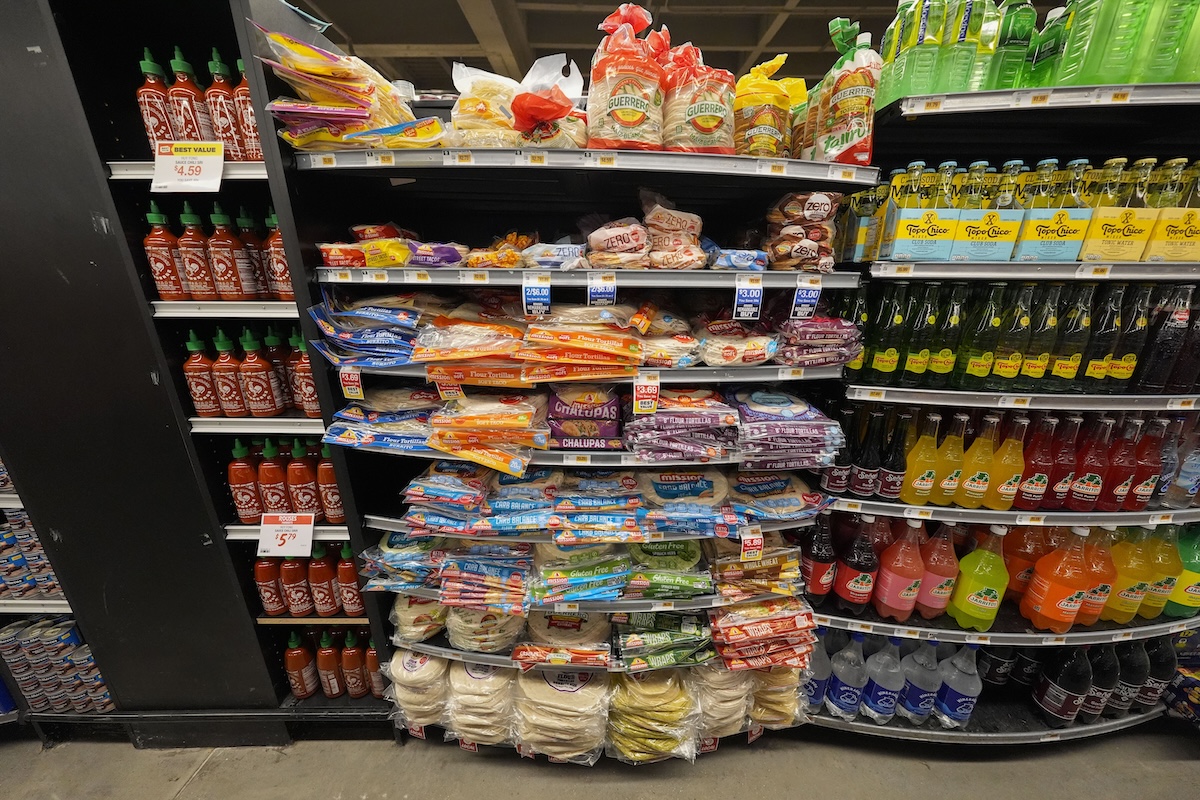
Tortillas in plastic packaging are seen near glass and plastic bottles at a grocery store in New Orleans, April 17, 2024. People are increasingly breathing, eating and drinking tiny particles of plastic. (AP)
The tricky art of measuring microplastics
Researchers debate the best ways to measure microplastics levels in humans, plants, food and other objects and living things, Landrigan said.
A Stanford University working group identified seven methods costing $10 to $600 per sample, each with its own limitations and best uses.
Optical microscopes are inexpensive and good for directly visualizing microplastics’ sizes and colors in food, soil and plants. But they won’t work for particles smaller than 1 micrometer, or tell you what the particles are made of.
A process called gas chromatography-mass spectrometry provides information on a sample’s chemical composition, and it is good at detecting trace organic compounds. But it costs about $150 to $400 per sample and the sample is ultimately destroyed, preventing scientists from verifying the results through replication or running additional tests.
Experts analyzing microplastics in tissues and bodily fluids often use a two-pronged approach: a microscope reveals particles’ size, shape and distribution and a high-intensity laser beam vaporizes them so that scientists can then analyze the vapors, Landrigan said.
However microplastics are measured, analysis can be tricky. That’s because researchers have to decide how to mitigate sample contamination in laboratories where equipment such as gloves, pipettes and petri dishes are typically made of plastic.
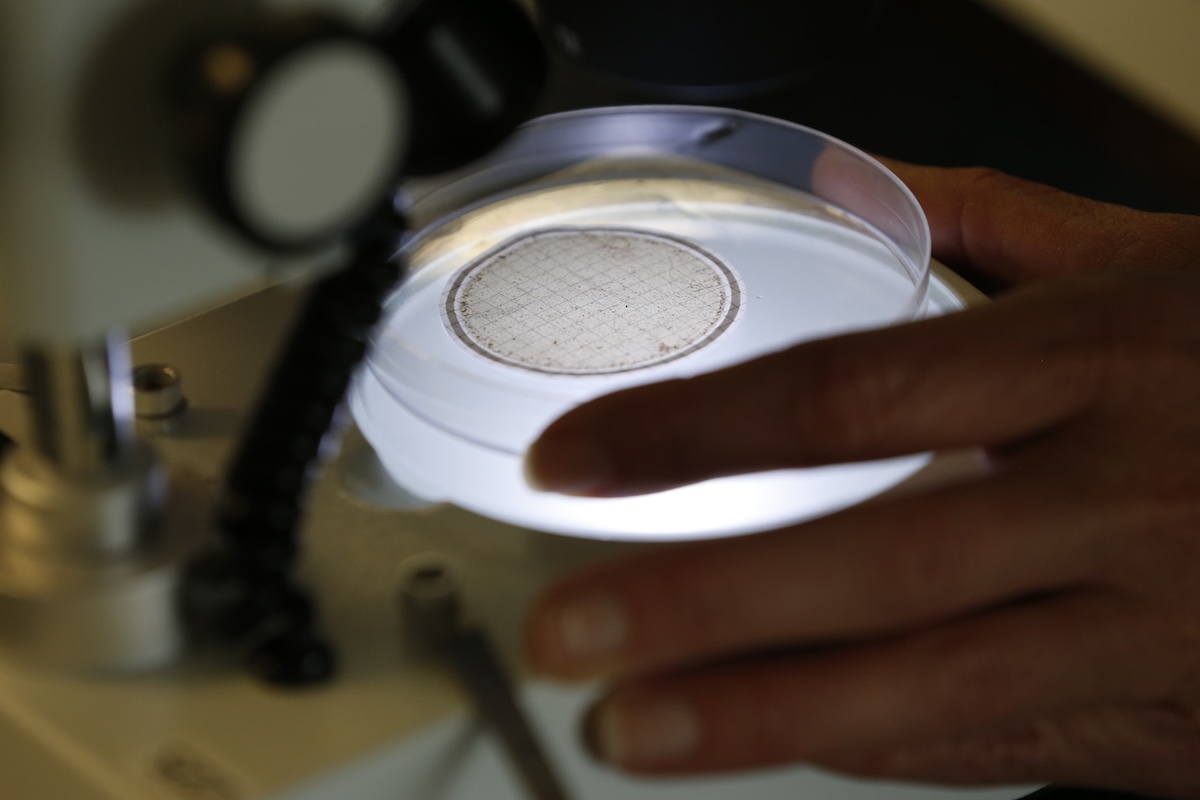
A researcher at Marinelab in Key Largo, Fla., examines a filter with material drained from a water sample under a microscope to check for the presence of microplastics and nanoplastics on Feb. 7, 2017. (AP)
How do microplastics affect human health? Research is ongoing
Early research has identified some concerning trends:
-
A 2025 Nature Medicine study found increasing concentrations of microplastics in the liver and brain tissue of people who died in 2024 compared with people who died in 2016. The study also found more microplastics in the brains of people with dementia diagnoses.
-
A 2024 New England Journal of Medicine study found that people who had microplastics in their carotid artery plaque had a higher risk of heart attack, stroke or death following a surgical procedure to remove plaque than those whose plaque lacked microplastics.
But scientists and doctors cannot say exactly how microplastics in the human body affect human health.
In animal studies, researchers observed changes in behavior and health issues after feeding microplastics to mice and zebra fish, Wolff said.
Researchers cannot study the effects on the human body by feeding people plastic. Plastic is also so prevalent in everyday life that it’s impossible to run randomized controlled trials involving people who aren’t exposed to plastic.
For these reasons, research on microplastics and human health often finds associations between high levels of microplastics in the body and health concerns, rather than causal proof, or looks at epidemiological data on increasing rates of cancers or chronic diseases.
There are over 16,000 chemicals in plastic products, and Wolff said researchers know more about the effects those chemicals have on human health because many of those chemicals are known to be toxic to humans.
“When you put those elements into tissue, you get negative effects,” she said.
Experts say scientists need to conduct more research to understand its effects or harm to human health.
For now, reduce microplastics exposure by cutting down on the plastics you use. Avoid drinking from plastic water bottles, eating with plastic cutlery or out of plastic containers — especially if you’re using a microwave.
“In general the plastics that people really want to avoid are the single use plastics: bags, straws, knives, forks and spoons,” Landrigan said. “And don’t feel guilty about the fact that you can’t completely eliminate plastic from your life. It’s not possible.”
PolitiFact Researcher Caryn Baird contributed to this report.
RELATED: Generally recognized as safe? The FDA may reconsider corn syrup, other processed food ingredients
RELATED: Is gel nail polish safe? Answers on UV lights and ‘banned’ chemicals
[ad_2]
Source link
