
[ad_1]
Great Britain is facing a free speech crisis, with more than 12,000 people arrested for online speech crimes in 2023 alone. Unfortunately, fewer and fewer British politicians are willing to defend free speech as a principle.
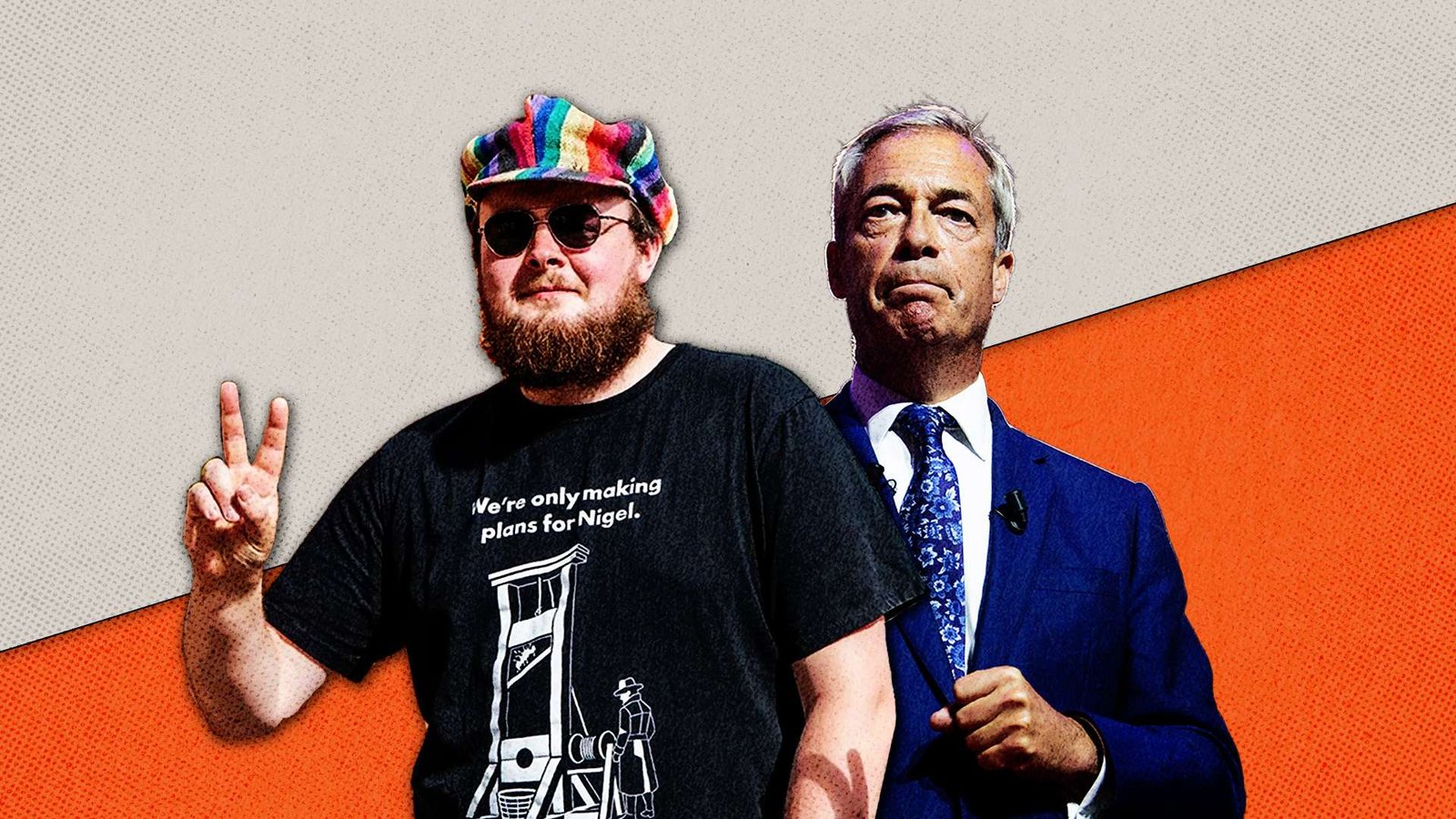
Earlier this week, Reform U.K., led by Nigel Farage (an ally of U.S. President Donald Trump), reported Green Party leader Zack Polanski to the police for an Instagram post of a man wearing a T-shirt of a guillotine alongside text that says “We’re only making plans for Nigel.”
Polanski had accepted the collaboration post, which contained several pictures from a Green Party event, meaning it went out to his 713,000 followers on his Instagram account, but he did not create the post himself. Nevertheless, Farage reposted the screenshot on X, writing, “If I was to post anything as inciteful then I would expect to be arrested, and so should Polanski.” The Metropolitan Police later said it was “conducting enquiries into the matter.”
“Once this image was brought to [Zack’s] attention he immediately unshared the post. He unequivocally does not support this type of dangerous message,” a Green Party spokesperson told the BBC.
Emotions are understandably high following the brutal murder of Reform U.K. spokesperson Ann Widdecombe—an unequivocal defender of free speech—earlier this month. Police have described her killing as a targeted attack, and counterterrorism officers are investigating whether it was politically motivated. Still, Reform’s crackdown on the post is surprising, considering the party’s history of defending speech.
This includes defending Lucy Connolly, a 41-year-old mother who was jailed in 2024 for over a year over a single tweet. In the wake of the Southport murders, in which three young girls were tragically killed, Connolly called for “Mass deportation now. Set fire to all the fucking hotels full of the bastards for all I care. While you’re at it, take the treacherous government and politicians with them….If that makes me racist, so be it.” She deleted the post after it was up for less than four hours.
Reform U.K. and Farage have repeatedly defended Connolly as a victim of excessive punishment and a symbol of Britain’s free speech crisis. Farage prioritized the case when visiting the U.S. to testify on free speech last year, describing it as a “symbol of [then–Prime Minister] Keir Starmer’s authoritarian, broken, two-tier Britain.” The party even had Connolly appear on stage at its conference, introducing her as “Britain’s favorite political prisoner.”
Similarly, when armed police officers arrested comedian Graham Linehan at London’s Heathrow Airport for a social media post making fun of trans people, Farage was quick to defend him. “If a trans-identified male is in a female-only space, he is committing a violent, abusive act,” Linehan wrote in one of the posts that prompted the arrest. “Make a scene, call the cops and if all else fails, punch him in the balls.”
Farage may be right that, had he shared the T-shirt post himself, he would have faced a harsher response from authorities. Britain may well suffer from “two-tier” policing, but unequal enforcement of bad laws does not justify using those laws to get the police to investigate a post. It was distasteful and reflected the growing normalization of political violence, and absolutely deserves condemnation, not criminal investigation.
“I empathise with those shouting for action,” Claire Fox, a member of the House of Lords and director of the Academy of Ideas, tells Reason. “I get it. Call the police. Give those leftist identitarian activists a taste of their own medicine. If speech and violence are conflated in woke-land, we can play that game too. But what a disaster for free speech.”
“If it’s wrong for the state to criminalise our speech, it’s equally wrong to criminalise [theirs], even in the name of fair treatment and retribution,” she adds. “All this does is institutionalise a censorious climate and [consolidate] government power to shut us all up. If we endorse the erosion of difference between speech (however obnoxious, offensive or aggressive in tone/content) and violent action, we give authority to those in charge to sanitise all democratic debate and to police out righteous anger.”
This now appears to be happening in Britain, and will inevitably result in this supposedly “free” country becoming even less free and more restrictive of speech.
[ad_2]
Source link
