
[ad_1]
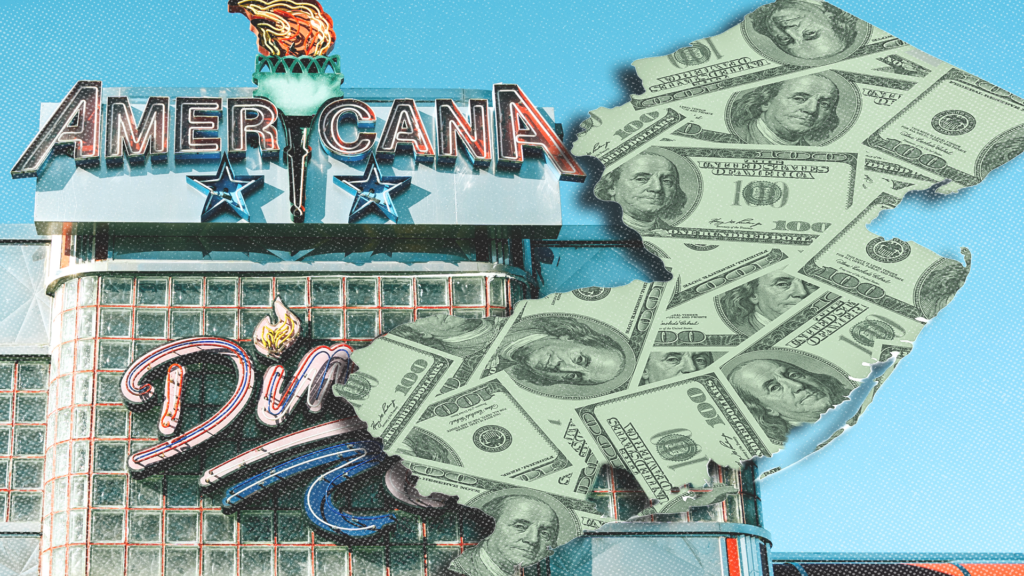
It’s hard not to love a diner. Spacious red booths, coffee served in white ceramic mugs, and breakfast available at any hour have made these institutions a quintessentially American experience. Although these establishments dot the country, perhaps no state is more associated with the iconic diner than New Jersey, which declares itself the “diner capital of the world.”
But New Jersey’s diners are apparently in trouble. As many as 100 have shuttered in the past decade, according to Amanda Stone, the vice president of public affairs for the New Jersey Restaurant & Hospitality Association. The closures appear to be due to a combination of factors: continued aftershocks from the COVID-19 pandemic, rising food prices from tariffs and inflation, and changing consumer preferences.
In the face of these concerns, New Jersey is trying to save the humble diner by pursuing a dubious policy. Democratic state lawmakers have recently introduced the SODA POP Act, which among other things, provides up to a $25,000 tax credit for eligible diners and exempts them from having to charge state sales tax (of around 7 percent) on prepared foods.
But not just any dining establishment can qualify. These tax carveouts are reserved only for those diners that are family-owned and have been in continuous operation for at least 25 years. It’s also a surprisingly difficult task to legislatively define what, precisely, constitutes a “diner.”
The SODA POP Act classifies diners as eating establishments where customers sit at booths, counters, or tables, and which serve “a wide variety of menu offerings, including but not limited to, hamburgers, salads, sandwiches, soups, breakfast items, entrees, pastries, pies, and beverages.” But a diner cannot include a “cafe, delicatessen, tavern, bar, sandwich shop, or other food establishment.”
Given these limitations, an estimated 500 establishments in New Jersey would qualify for this targeted tax relief. But while diner enthusiasts—and I very much count myself among this demographic—have ample reason to want to save this venerable American institution, the SODA POP Act misses the mark.
For starters, it’s unclear why a family-owned diner that opened 23 years ago, and which has become a local staple, is any less deserving of tax relief than one that’s been in operation for 25 years. The bill also arbitrarily champions the diner over other beloved New Jersey eating establishments, such as the go-to bagel shop or the neighborhood pizzeria.
But more generally, the SODA POP Act is bad tax policy, pushing targeted carveouts over fundamental reforms to the New Jersey tax code. And the Garden State is badly in need of real tax reform.
It currently ranks 49th out of 50 on the Tax Foundation’s 2026 State Tax Competitiveness Index. It has the highest graduated corporate tax rate, the third-highest effective rate for property taxes, and some of the highest individual income taxes in the country. Partly as a result of these abysmal numbers, New Jersey ranked as the fifth-worst state in the country for small businesses in WalletHub’s 2026 report.
Put another way, New Jersey’s diners face a New Jersey problem as much as they face a diner problem.
“The Soda Pop Act would be a Band-Aid over a fundamentally flawed, infected wound of a fiscal system,” says Adam Hoffer, the director of excise tax policy at the Tax Foundation. “If New Jersey legislators really want to help small businesses in the state, they need to consider foundational reforms to their tax system.”
State reform alone, however, is not a silver bullet. Food service establishments do face issues that are unique to their business model. The Trump administration’s tariffs, for instance, are increasing food prices by raising the cost of tinplate steel—which is used to make cans for many foods, such as tomatoes, fruits and vegetables, and soups.
These enhanced costs inevitably hurt restaurants, either raising menu prices (and thereby pushing more customers away) or requiring businesses to absorb the costs. Lawmakers interested in helping American restaurants—whether it be the diner, the neighborhood sports bar, or the local deli—would be wise to rethink our country’s current tariff policies.
Ironically, despite their rhetoric about saving diners, Democratic lawmakers in New Jersey have also pushed policies that pose an even greater potential threat to these establishments. Just last year, the legislature considered a bill to eliminate the state’s tipped-wage credit for restaurant workers.
The tip credit, which allows restaurants to pay servers a lower hourly minimum wage if their tips make up the difference, is a longtime feature of the restaurant industry, which historically operates on thin profit margins. It is currently being targeted by the progressive left—including in nearby New York City—as part of an effort to apply a traditional minimum wage to restaurant workers. This policy would cause a whole host of damaging consequences to New Jersey restaurants, but it could particularly hurt diners, many of which operate on a 24/7 schedule that requires around-the-clock staffing.
It’s true that the iconic diners of New Jersey are suffering. But getting to the root of the policy problems, rather than handing out targeted carveouts, is the best way to help these institutions. Diners—and New Jerseyans—deserve more than a Band-Aid fix.
[ad_2]
Source link
