
[ad_1]
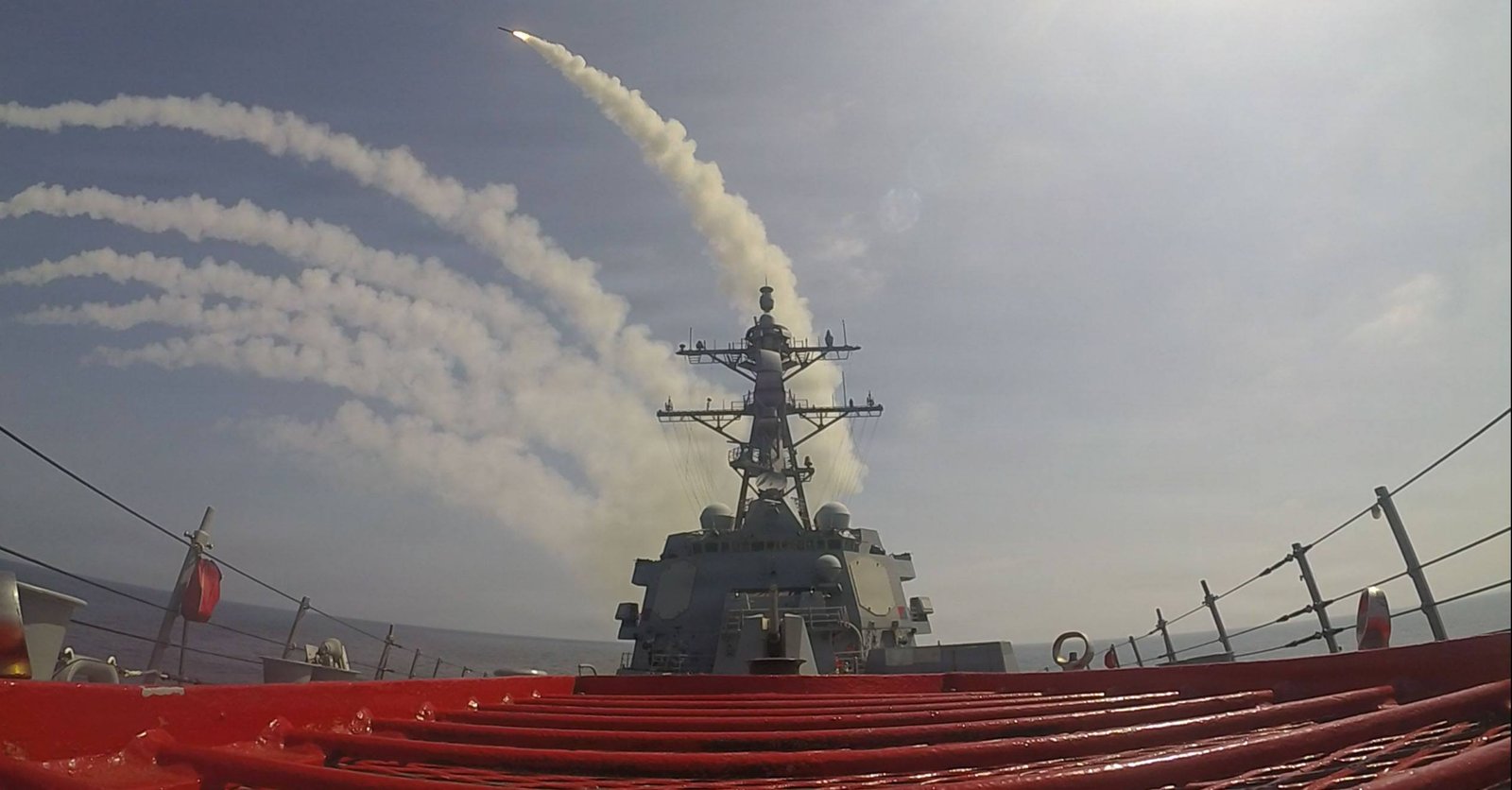
Arleigh Burke-class guided-missile destroyer USS Frank E. Petersen Jr. (DDG 121) fires a Tomahawk Land Attack Missile during operations in support of Operation Epic Fury, Feb. 28, 2026. Photo: U.S. Navy.
Before he became one of the great diplomats of the twentieth century, Henry Kissinger wrote his dissertation about the Austrian statesman Klemens von Metternich. Kissinger closely studied how European diplomats like Metternich constructed a new regional order after the defeat of Napoleon. Metternich was an early expert in the art of herding cats, with the felines being powerful European leaders.
Drawing on those insights during his stint as national security advisor under Richard Nixon, Kissinger famously orchestrated the U.S. détente with China and a raft of arms control treaties with the Soviet Union. He also introduced “shuttle diplomacy” in his successful efforts to reduce animosities in the Middle East. He shared a Nobel Peace Prize for his part in the negotiations to end the Vietnam War.
Kissinger was no peacenik. He was involved in any number of military interventions and morally indefensible actions, such as destabilizing Chile under socialist Salvador Allende and supporting Pakistan in its genocidal campaign against Bengalis. In the case of the Vietnam War, he was a key architect of the secret bombing campaign in Cambodia and Laos, an involvement that calls into question the legitimacy of his Nobel Peace Prize. He was both a master diplomat and a war criminal.
The United States has long operated in these two registers: deploying overwhelming military force and using its diplomatic skills to broker peace deals. The two strategies have often gone hand in hand, as they did with Kissinger.
But what was once a matter of some sophistication—if often wrapped in secret violence—has now simply become heavy-handed and transparently brutal. The Trump administration has touted a series of peace deals that, at least in their sheer quantity, rival the successes of Henry Kissinger. Examined more carefully, however, those deals are either premature, non-existent, or largely a function of showmanship. The “peace deal” in Gaza, for instance, was hastily assembled and poorly thought-through; it’s no wonder that it hasn’t gotten to its second stage.
At the same time, Trump and company have embarked on a series of military campaigns that have culminated in the current Operation Epic Fury against Iran. Here, too, Trump toggles back and forth between war and peace, sometimes in the same remarks to the press. He promises an end to the war, whether Iran agrees to a deal or not, and then threatens to blast “Iran into oblivion or, as they say, back to the Stone Ages!!!”
Ophir Falk, foreign policy adviser to Benjamin Netanyahu, put the matter succinctly when answering a question from National Public Radio about whether the Israeli prime minister supported Trump’s peace overtures to Iran.
“We’re negotiating with bombs,” Falk said.
The utter absurdity of this statement didn’t give him pause or elicit any reaction from the NPR interviewer. In its way, though, the brief statement encapsulates the approach of both Netanyahu and Trump. They are not interested in diplomacy, even when they talk about the value of talks. Negotiations, which require time and a certain amount of delicacy, are a waste of energy.
They prefer to change facts on the ground through sheer force.
Israel has never claimed the mantle of master negotiator or nimble mediator. But the United States has long claimed to have the experience, the relationships, and the economic and military leverage to make deals. The United States has played key roles in resolving conflicts in Northern Ireland, in the former Yugoslavia, between Egypt and Israel, and so on.
Superficially, Trump promises to continue that tradition. He is, of course, the self-proclaimed master of the “art of the deal.”
The truth is, however, that Trump was never a great dealmaker. He was famous for ripping off his business partners. His career is littered with failed businesses like Trump Airlines, Trump University, and Trump Magazine. Many of his biggest deals—the West Side of Manhattan, Trump Tower Tampa—fell through. He famously endured six bankruptcies.
It’s not just that Trump’s diplomatic deals are similarly fake. Rather, he is threatening to put U.S. diplomacy as a whole into receivership.
After his decision to attack Iran in the middle of negotiations with the country – not just once but twice! – there is no good reason for any country to trust what U.S. diplomats say to them. Diplomacy, after all, is all about trust. In this way, Trump has squandered what remains of U.S. diplomatic capital.
Looking to the future, Trump has also eviscerated the cadre of diplomats that could bring about some return to the previous status quo. Last July, the administration fired 1,300 State Department workers, including nearly 250 foreign service officers. That included staffers focused on the Middle East who were responsible for working out scenarios if the Strait of Hormuz were closed. U.S. overseas aid has been effectively dismantled. The latest budget would reduce State Department and foreign operations by another 22 percent.
Alongside these reductions, Trump increased military spending to $1 trillion and has requested another 50 percent hike to $1.5 trillion. This is the fiscal equivalent of “negotiating with bombs.” After all the staff and budget cuts at the State Department, practically the only thing left that the United States possesses with which to do diplomacy are bombs.
The evisceration of U.S. diplomacy is not exactly a tragedy. U.S. diplomatic activities have always reflected naked self-interest. And other countries can certain step in as mediators: the European Union, China, Oman.
The tragedy lies elsewhere. As long as the United States is no longer pursuing real diplomatic options—in contrast to the Three Stooges method of conflict resolution where Trump bangs together the heads of the primary combatants—it will continue to rely on force as the first resort. Washington will talk in the future almost exclusively with bombs. It will be Kissinger without the diplomatic knowledge. It will be all sticks, no carrots.
Thanks to Trump, the United States has become a thug nation. The only remaining question is whether the rest of the world can somehow preserve the art of diplomacy—as Pakistan has done to avert the latest threats of escalation in the Iran War—and reverse the current trend of using bombs to negotiate.
[ad_2]
Source link
