
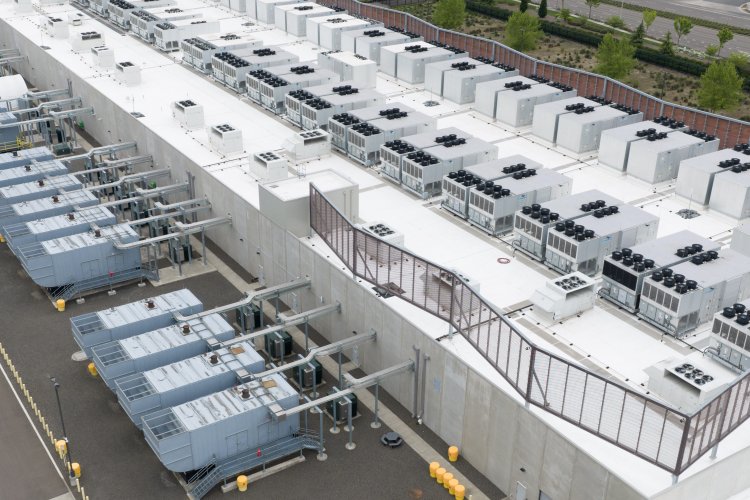
Remember when data centers were the future, riding a wave of AI enthusiasm from the business class and the general public alike? I remember it like it was yesterday … because basically, it was. And yet, seemingly overnight, those giant AI support structures’ star is fading, and it’s because they forgot a basic rule of PR: Don’t forget about the little people.
As Ars Technica described: “There is also growing resistance from communities all across the US to data centers.” I live in Virginia, one of the biggest data center states in the Union, where public opinion is turning “sharply against new data center development.” Loudoun County is opening up a fight from public officials, while local citizens closer to me are fighting to stop another center’s proposed construction.
When you get to be as big as Google or OpenAI, it’s easy to lose sight of the “little” picture. But I’ve seen big corporations lose billion-dollar projects this way. From 2010 to 2018, small-town activists in New Hampshire (my own sister was one of them) organized to scuttle the ambitious, expensive Northern Pass electrical transmission line. In Virginia last year, the then-governor’s agreement with the billionaire owner of the Washington Capitals and Wizards to move the stadium a few miles south was blocked by local resistance from the governor’s own party.
Those groundswells weren’t partisan, and the data center protests aren’t, either. They’re a combination of environmental concerns on the left, “leave me alone” on the right, and “big business shafting us” from everyone. That kind of united front is rare in 2026 – and a potential death sentence for data center ascendancy.
Of course, AI companies need support from lawmakers and regulators up the chain. President Donald J. Trump, the Department of Interior, and Congress play huge roles in AI regulation. Companies must excel at getting their projects past thousands of other bills on Capitol Hill, securing cosponsors, and then getting majorities in multiple hearings and multiple floor votes. Finally, there’s a presidential signature. For less high-profile objectives, you have to be on first-name terms with the lobbyist who can finagle a few lines into a “must pass” omnibus bill, or have the in-depth knowledge of “the system” to ensure regulators have your back.
But to paraphrase Jason Aldean, don’t “try that in a small town.” These officials’ concern is looking at how only 30% of voters vote in local elections, and how a few key business owners and community leaders seem to be on their side. The loudest people aren’t going to move them from office – and the 25 families whose companies rely on the data center’s construction for the next three years can stand up in front of those who aren’t sure what to think
Avoiding the data center meltdown goes beyond manipulating the political system. It’s better long-term to take residents’ concerns seriously long before you propose anything. Don’t go in only once your proposal is being presented. Instead, take 18 months to get to know the community, build relationships with the local press, and understand challenges and needs on the ground. Host some town halls. Go to the local coffee shops and breweries. Have the CEO, local leaders, and everyday people make your case.
That way, there’s no trusting luck by introducing a proposal that everyone might love – or, more likely, will hate because they’ve only heard about the heavy water usage and power needs of data centers. They’ll understand your point of view in a deeper way, which means that instead of being seen as carpetbaggers taking advantage of the yokels, data center executives could then be viewed as partners in the community.
I go back to Northern Pass. The company promised lots of temporary jobs and a few permanent ones, but failed spectacularly to account for how Granite Staters would see things: “Give up your beloved scenic views so we can ship electricity to wealthy southern New Englanders hundreds of miles away.” They never really made their case until opposition was under way – and then it took almost a decade and untold corporate dollars for the project to die.
If you understand the locals’ pain and have a realistic, sensitive way to relieve it, you’ll get that 40% approval. And trust me (and the data centers!): You can’t go without it.
In a regulatory environment that’s so global that the president weighs in on county zoning decisions, most politics is still local. Google, Oracle, and OpenAI are not too big to embarrass themselves on Main Street. As for the rest of us, let’s remember the little guy, who never goes out of style. If we forget that, he’ll remind us, in the picket line and at the ballot box.
