
[ad_1]
At a mid-April dinner at a D.C. think tank, I was asked to offer a few words on education and artificial intelligence. I observed that constantly improving AI platforms perform wonders – answering complex questions almost instantly, yielding remarkable efficiencies, and producing breathtaking innovations in industry, science, medicine, military affairs, and more. Yet like all technological advances, I said, AI brings curses as well as blessings. I emphasized the threats it poses to liberal education, starting with college students’ tendency to rely on AI to generate ideas, outline arguments, and even compose polished papers.
One veteran educator at the long table tut-tutted my concerns. AI is the future, she advised, and instead of lamenting days gone by and opposing progress, professors should facilitate students’ use of the dazzling technology.
I acknowledged that AI is the future but noted that students typically arrive at college accomplished in its daily employment and adept at outsourcing to it reading, analyzing, and writing. Our job, especially in the humanities, I contended, was to assist students in slowing down, savoring books, ruminating, questioning, refining their opinions by testing them in conversation with others who see matters differently, organizing their thoughts, and expressing themselves clearly both orally and in written work. Whereas overdependence on AI – or, for that matter, on human authorities – weakens the moral imagination and atrophies the intellect, pondering and interpreting, talking and listening, and writing and rewriting help the mind grow supple and strong.
Undercutting education by stunting students’ thinking and outsourcing their creativity is hardly the only peril to which AI gives rise. AI erodes empathy and human connection by serving as a replacement for clerks, consultants, therapists, teachers, and even friends and lovers. It dissolves the shared reality on which democratic self-government depends, blurring fact and fiction, amplifying propaganda, and proliferating falsehoods. It uses colossal data centers that consume enormous quantities of energy and potable water. It creates vast computer networks – essential to government, manufacturing, telecommunications, transportation, finance, health care, national security, and more – that are vulnerable to bugs and hacking, aid in cyberattacks, and execute unanticipated operations. It eliminates jobs, performing more efficiently than human beings tasks essential to industrial and postindustrial economies. It facilitates concentrations of wealth and power, generating massive market capitalizations and extensive ties to government for companies that devise the most effective large language models. And it can diminish the exercise of human judgment on the battlefield through its incorporation into autonomous weapons systems and robots.
Among this panoply of perils, the degradation of liberal education is the most fundamental. That’s because American citizens will be ill-equipped to form responsible judgments about AI’s blessings and curses without sustained study of the principles and practice of free societies, the prominent opinions about and leading controversies over ethics and politics in the Western tradition, and the cultural inheritance and political traditions of other peoples and nations.
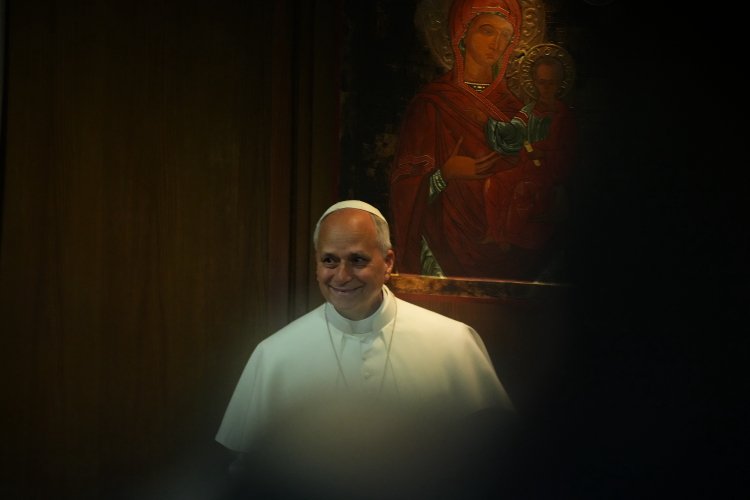
We should therefore welcome Pope Leo XIV’s “Magnifica Humanitas,” one purpose of which is to educate about the AI challenge. The 43,000-word encyclical, released on May 25, addresses not only Catholics in accordance with “the way of Jesus Christ” but also all men and women of goodwill and understanding. While embracing digital technology as a fruit of human intelligence and creativity, the pope warns against AI’s misuse and abuse: “The risk of dehumanization – of building a future that excludes God and reduces the other to a means – is an ancient and ever-new temptation that today takes on a technical guise.”
AI is the most recent manifestation of that “ever-new temptation.” In the “rapid phase of transition” through which we are living, states the pope, “crucial questions impose themselves on our conscience and can no longer be avoided: Where are we going? Toward what goal do we wish to orient ourselves? What direction should we choose as a people and as a human community?”
For answers, individuals must be “prepared to enter the construction sites of history – research laboratories, technology companies, schools, the media, institutions and local communities – in order to rebuild what has collapsed and protect what is threatened.” In this way we can “overcome our divisions” and “work together” to turn “the human city” into “a more fitting place to live.”
To illuminate the risks to our humanity and the conditions for harnessing AI to safeguard freedom and advance the common good, “Magnifica Humanitas” applies to the AI challenge the “Social Doctrine of the Church.” This body of teaching about justice stretching back to the Bible and the Church Fathers and elaborated by, among others, Augustine and Aquinas, received seminal modern expression in Pope Leo XIII’s 1891 Encyclical “Rerum Novarum.” Prompted by industrialization, Leo XIII affirmed the mutual dependence of capital and labor, “the natural rights of mankind” and “the inviolability of private property,” and the state’s obligation to protect the “poor and badly off.” Developed in papal writings over the last 135 years, the Catholic Church’s Social Doctrine furnishes, according to Pope Leo XIV, “a legacy of wisdom, where we find principles for thought, criteria for discernment and judgment, and concrete guidelines for action.”
Carrying forward that inspiring legacy, “Magnifica Humanitas” emphasizes that human beings are created in God’s image and therefore are equal in dignity and human rights. It distills key principles: the common good, the universal destination of goods, subsidiarity, solidarity, social justice, and human development. It criticizes “transhumanism” and “posthumanism” whose technology-intoxicated adherents seek to overcome, rather than flourish within limits set by, the human condition. It underscores the centrality to democracy and the common good of the search for truth, the dignity of work, individual freedom, and the family. And it clarifies how AI can degrade and subjugate human beings and how human beings can use AI to degrade and subjugate others.
Ambiguities, perhaps stemming from Pope Leo XIV’s responsibilities as pastor and shepherd of some 1.5 billion Catholics worldwide, occasionally muffle his urgent message. For example, despite Leo’s assertion that “‘just war’ theory” is “outdated,” the distinction between just and unjust wars – as the encyclical indicates elsewhere – remains vital because the human love of dominion persists, belligerent nationalism and religious fanaticism still command hearts and minds, authoritarianism has surged, and the harsh logic of geopolitics remains in force.
The pope explicitly condemns “the bombing of civilians, attacks on hospitals, schools or vital infrastructure, and violence that affects children.” In that context – and consistent with his rejection of war waged in religion’s name – it would have been fitting to condemn explicitly the religious fanatics who build military tunnels under and operate in and around hospitals, schools, and vital infrastructure to ensure that children and other civilians will die when the other side exercises its basic rights of self-defense.
And even as Leo’s affirmation of the equal dignity and human rights of all persons convicts every form of authoritarianism, it would have been helpful to highlight the moral superiority of rights-protecting democracies even with their flaws to authoritarian nation-states that reject basic rights and fundamental freedoms and believe their birthright consists in ruling over lesser peoples and nations. That’s not least because the pontiff’s stated hopes for humanity to steward AI responsibly depend on America’s prevailing in the contest for preeminence in AI with the Chinese Communist Party, which seeks to dominate world order and bend it toward authoritarianism.
Shining through the encyclical, nevertheless, is an uncompromising dedication to equality in dignity and human rights as the standard by which AI policy must be measured.
Education, the pope states, is of “decisive importance.” This is always true and particularly so as “digital media fosters a culture of immediacy and hyper-stimulation, which gives rise to fatigue, boredom and apathy concerning the effort required for seeking the truth.” Education, “a long journey requiring patience,” fortifies individuals against the depredations inflicted by omnipresent screens, instant communication, incessant churn of information and disinformation, obsessive production and consumption of clickbait, porn on demand, and manufactured preferences for virtual interaction over in person and face-to-face encounters.
The pope’s proposal for an “educational alliance for the digital age” summons Christians and non-Christians alike to organize education around freedom and the common good. The alliance aims to promote equality in educational opportunities, thoughtful classroom use of technology, and love of truth. It involves “teaching students a sense of moderation and limits; recognition of the rights of others and of future generations to enjoy the goods that are either provided for us or made available by human ingenuity; freedom and responsibility; and a sense of transcendence and the common good.”
In the United States, few citizens will form a coherent and compelling conception of freedom and the common good without a liberal education that revolves around study of America, the Western tradition, and other peoples and nations, and which fosters the robust exchange of opinions. Yet today the nation’s colleges and universities are more likely to encourage hostility to America, scorn for the West, blissful ignorance of other peoples and nations, and aversion to spirited debate.
Equipping Americans to enjoy AI’s blessings and manage its curses is one more compelling reason to focus on reforming liberal education.
Peter Berkowitz is the Tad and Dianne Taube senior fellow at the Hoover Institution, Stanford University. From 2019 to 2021, he served as director of the Policy Planning Staff at the U.S. State Department. His writings are posted at PeterBerkowitz.com and he can be followed on X @BerkowitzPeter. His new book is “Explaining Israel: The Jewish State, the Middle East, and America.”
[ad_2]
Source link
