
[ad_1]
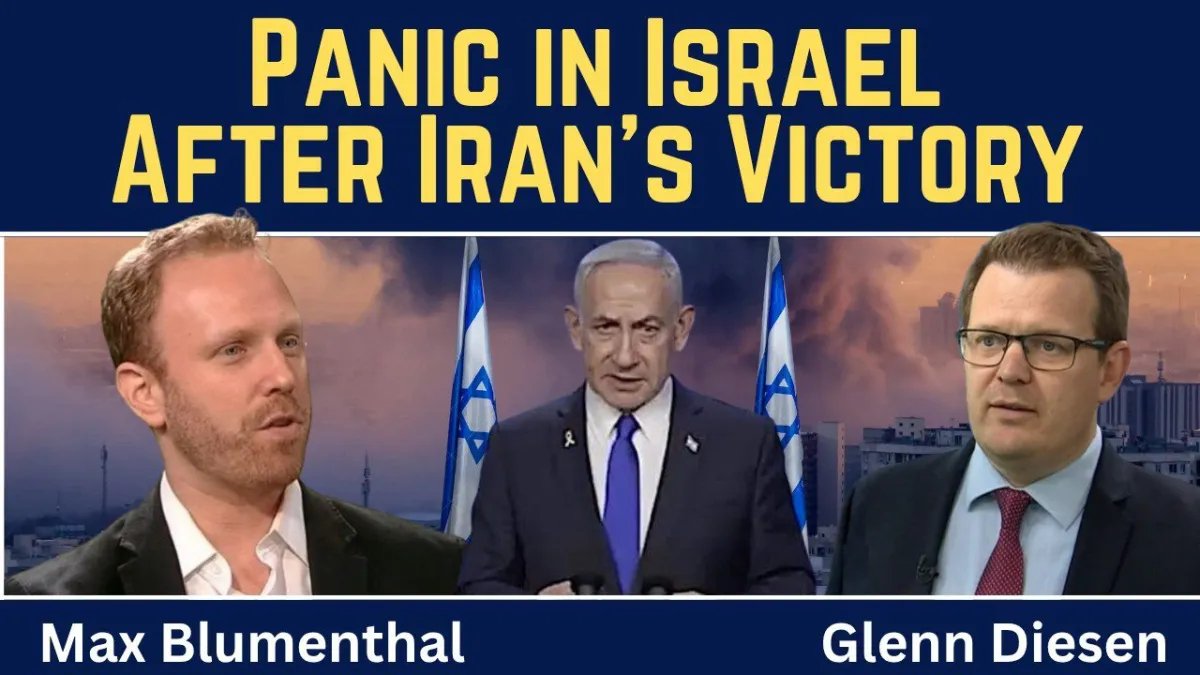
In a wide-ranging conversation with Glenn Diesen, journalist Max Blumenthal argues that the failed U.S.-Israel war against Iran has exposed new political fractures in Washington, accelerated public opposition to unconditional support for Israel, and raised questions about what comes next for a region still on the brink.
Joshua Scheer
Washington Went to War to Show Strength. The World Saw Weakness.
In a new interview with Glenn Diesen, investigative journalist and The Grayzone editor-in-chief Max Blumenthal argues that the recent U.S.-Israel conflict with Iran has produced consequences far different from those envisioned by its architects. Rather than restoring deterrence, Blumenthal contends, the war exposed military limitations, deepened political divisions inside the United States, intensified scrutiny of Israel’s role in American politics, and left Washington searching for a way out of a costly confrontation.
The discussion explores the emerging Memorandum of Understanding with Iran, growing tensions between pro-Israel factions and the America First wing of the Republican Party, shifting public opinion toward Israel, and the possibility that Lebanon may become the next flashpoint in efforts to unravel the fragile agreement. Whether one agrees with Blumenthal’s analysis or not, the interview captures a moment of profound uncertainty—one in which old assumptions about U.S. power, Israeli influence, and the future of the Middle East are increasingly being challenged.
As Washington attempts to navigate the aftermath of a conflict that rattled global markets and reshaped regional calculations, the political and strategic fallout may continue long after the shooting stops. The debate now is not only about Iran, but about the future direction of U.S. foreign policy itself
Israel’s Biggest Fear Isn’t Iran—It’s Losing America
Max Blumenthal argues that the greatest consequence of the recent Iran conflict may not be military at all. The real shock, he contends, is the accelerating erosion of unconditional American support for Israel.
According to Blumenthal, the war exposed deep fractures within the U.S. political establishment. While traditional pro-Israel voices continue to dominate Washington, growing opposition is emerging from across the political spectrum. On the right, figures associated with the America First movement are increasingly questioning why U.S. resources and political capital are tied so closely to Israeli objectives. On the left, criticism of military aid and lobbying influence has become more mainstream than at any point in recent memory.
Blumenthal argues that public opinion has shifted dramatically. Polls showing rising skepticism toward military support for Israel, combined with growing frustration over foreign entanglements, suggest that a decades-old political consensus is weakening. What once seemed untouchable in American politics is now being openly debated.
The interview also explores how Israeli leaders may respond to this changing landscape. Blumenthal warns that efforts to maintain the status quo could intensify regional tensions, particularly in Lebanon, where clashes continue despite diplomatic efforts to stabilize the region. At the same time, he suggests that Israel’s political establishment is struggling to adapt to a reality in which criticism is no longer confined to the margins.
The discussion highlights a growing debate over the future of U.S.-Israel relations. The question is no longer simply how Washington will respond to Iran, but whether the political foundations of America’s long-standing alliance with Israel are beginning to shift beneath everyone’s feet.
Editor’s Note: At a moment when the once vaunted model of responsible journalism is overwhelmingly the play thing of self-serving billionaires and their corporate scribes, alternatives of integrity are desperately needed, and ScheerPost is one of them. Please support our independent journalism by contributing to our online donation platform, Network for Good, or send a check to our new PO Box. We can’t thank you enough, and promise to keep bringing you this kind of vital news.
You can also make a donation to our PayPal or subscribe to our Patreon.
Please share this story and help us grow our network!
[ad_2]
Source link
