
Since I buy books faster than I read them, they accumulate on my shelves. I never buy a book without intending to read it, but often it has to wait for years before it is so honored, and at my death there will be many that remain undeservedly unread.
It must be 30 years at least, and probably nearer forty, since I bought a copy of the second edition, published in 1831, of Sir Walter Scott’s Letters on Demonology and Witchcraft. Finally, for the sake of a book that I was writing, I read it; and I finished it with a growing admiration for Scott’s humanity, humor, wisdom, learning, and insight into human psychology.
Scott is one of the great unread, barely more than a name in literary history even for people who read a lot. In the days when there were many more second-hand bookstores than there are now, and my delight was to frequent them, none seemed to be without a complete set of the Waverley novels, and sometimes several sets in bindings of various degrees of luxury. Though Scott was the most influential novelist of the first third of the 19th century, few read him now: For though life expectancy has increased greatly since his time, it still seems too short to spend on him.
Some might conclude that a book by Scott, now two centuries old and on so arcane a subject, would have little to tell us today, but they would be mistaken. He makes shrewd observations that could hardly be more pertinent to us today. Here is one, where he comments on the spread of accusations of witchcraft:
It has always been remarked, that those morbid affections of mind which depend on the imagination are sure to become more common, in proportion as public attention is fastened on stories connected with their display.
Reading this, who will not think that this is the explanation of the vast increase in gender dysphoria and transsexualism in the last few years, and indeed of the spread of psychopathology in general? The more we dwell on our psychological state, the worse it becomes; the more the psychotherapeutic dog chases the psychopathological tail, the faster and faster the two of them twirl round in useless or harmful circles. Note that Scott does not deny that there are morbid affections of the mind, but only asserts that advertising—only that rewarding them with attention—will increase the numbers who suffer from them.
Scott is scathing about the witch-craze and associated frauds, and funny about ghosts, but he is illuminating about the psychology of the perpetrators, the victims, and the believers. Education is no absolute protection against credulity, he says, and the educated man may be reluctant to give up his credulity because he does not want to admit even to himself that he has been credulous.
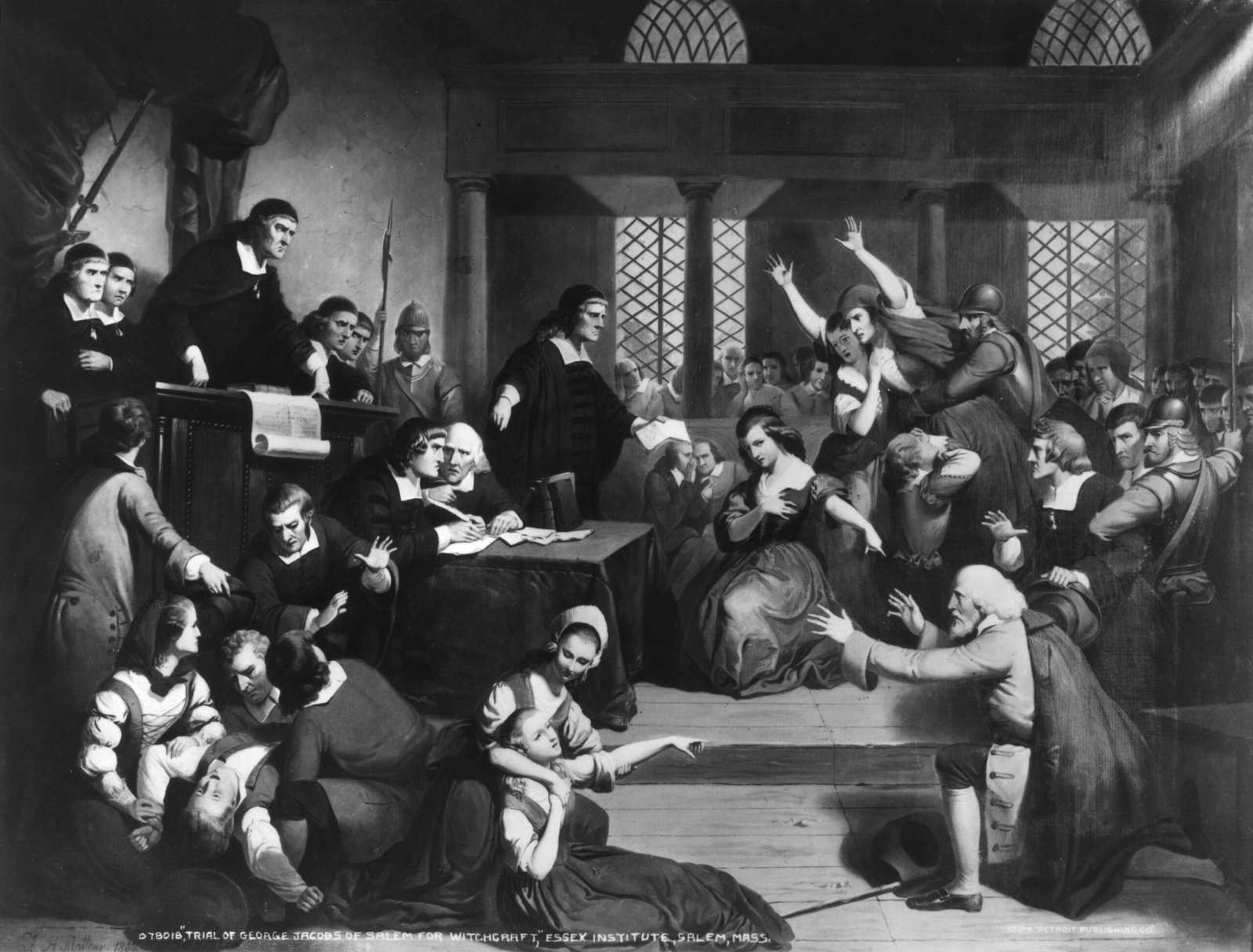
Scott describes the methods used by witchfinders in 17th century Scotland (where and when the craze was at its worst). They used both physical and psychological torture to extract confessions and further denunciations, which of course led to yet more arrests and more confessions and more denunciations. Among other methods, they pioneered sleep deprivation and hunger.
poor wretches, abandoned as they conceived, by God and the world, deprived of all human sympathy, and exposed to personal tortures of an acute description, became disposed to throw away their lives that were rendered bitter to them, by a voluntary confession of guilt, rather than struggle hopelessly against so many evils.
Scott ends with qualified optimism. Though, he says, “it seems… that every generation of the human race must swallow a certain measure of nonsense,” yet
whatever follies the present race may be guilty of, the sense of humanity is too universally spread to permit them to think of Tormenting wretches till they confess what is impossible, and then burning them for their pains.
Of even this qualified optimism, I am far from certain. I suppose it depends on what you consider the recent past, but what I consider the recent past is far from reassuring. The Cultural Revolution in China, for example, was at least the equal of the witch-craze. The show trials in the Stalinist Soviet Union were alarming not only in themselves, but in the degree to which members of the intellectual elite in the West were willing to believe the guilt of the accused who admitted to the most preposterous of crimes, and managed to disguise from themselves the obvious means by which the confessions were obtained, which were precisely those of the witchfinders in Scotland three centuries before. An eminent British trial lawyer, D. N. Pritt, a member of parliament for the Labour Party, attended the trials and pronounced them completely above board, because, like the accused witches in Scotland, the accused in the Soviet trials confirmed each other’s evidence.
There are none so blind as those who will not see. He wrote of the trial of Kamenev, Zinoviev and 16 others, that “it seems plain… on a number of different grounds, that anything in the nature of forced confessions is intrinsically impossible.” One of the grounds was that, if the confessions were forced, Stalin and his apparatus would have been monstrous. In other words, how could all those witches have been burnt if there were no such thing as witchcraft, to whose existence so many people, from the poorest peasant to King James I himself, had attested, and whose effects they had witnessed?
Subscribe Today
Get daily emails in your inbox
It is always hazardous to push analogies too far, but is not the search for institutional racism, as the explanation of the ills besetting the world (as ills will always beset it) a little like the searching out of witches or Trotskyist wreckers? No one is burnt at the stake or summarily shot, and that is not a small or unimportant difference. But just as during the witch-craze it was dangerous to not only to be accused of witchcraft but to express doubt about its existence, so it is now, or recently has been, dangerous, at any rate to career if not to life, to question the existence of institutional racism.
There is an amusing and instructive story about a British judge in Scott’s book. A prosecution witness tried to give testimony about a murderer’s identity that was told him by a ghost. The judge said he could not admit it because it was hearsay. But, if the prosecution cared to produce the ghost itself, he, the judge, would gladly listen to what it had to say.
Of course, it is always easier to identify the idiocy of the past than that of the present.
