
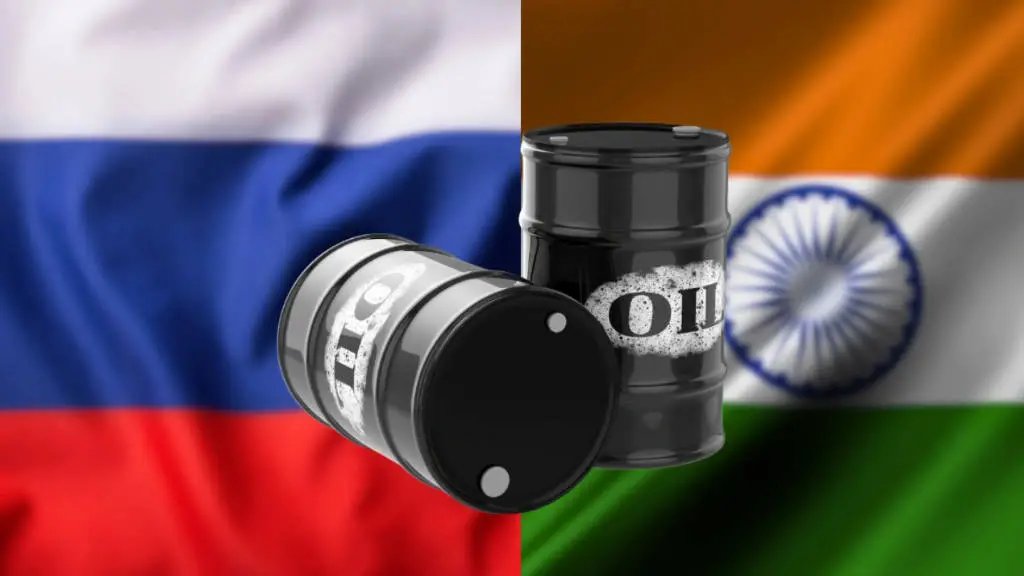
India’s imports of Russian crude oil have surged to a record high, with Moscow now supplying more than half of the country’s crude oil requirements. According to recent reports, Russian oil accounted for over 50% of India’s imports in June after a temporary US sanctions waiver expired. This development is far more significant than most people realize. It once again demonstrates that governments can impose sanctions, issue political declarations, and threaten economic consequences, but markets ultimately follow economic self-interest.
From the beginning, I argued that sanctions against Russia would not produce the outcome Western policymakers expected. Russia is not a small isolated economy. It is one of the world’s largest commodity producers. It exports oil, natural gas, fertilizers, metals, wheat, and countless other essential resources. The assumption that the world would simply stop buying Russian commodities ignored economic reality. Someone always buys discounted energy. In this case, India has emerged as one of the primary beneficiaries.

Before the Ukraine conflict, Russia supplied only a tiny portion of India’s crude imports. Today it has become India’s dominant supplier. Why? Because India is acting in its own national interest. Western governments may view energy through a geopolitical lens, but developing nations view it through the lens of economic survival. Cheap energy lowers production costs, supports industrial growth, and helps maintain economic competitiveness. India is not going to sacrifice its future to satisfy the foreign policy objectives of Brussels or Washington.
What makes this situation particularly revealing is that Europe itself continues finding indirect ways to consume Russian energy. Russian crude is refined in third countries and re-enters global markets in various forms.
The broader implication concerns the changing structure of the global economy. For decades, the United States and Europe largely dictated the rules of international commerce. That era is changing. Countries such as India, China, Saudi Arabia, Turkey, Brazil, and others are increasingly pursuing independent policies based on their own interests rather than automatically aligning with Western objectives. India’s continued expansion of Russian oil purchases is part of that larger trend.
What is remarkable is how many policymakers continue measuring success based on announcements rather than outcomes. The objective was supposedly to reduce Russia’s energy revenues. Instead, Russia redirected enormous volumes of crude toward Asia while maintaining a critical role in global commodity markets. India secured discounted supplies. China expanded purchases. New shipping networks emerged. Markets adapted exactly as they always do.
This is one reason our models continue pointing toward rising geopolitical and economic fragmentation into the years ahead. The world is dividing into competing spheres of influence. Nations are becoming less willing to subordinate their economic interests to foreign policy agendas crafted thousands of miles away. India’s record purchases of Russian oil are not simply an energy story. They are a sign of a much larger transformation in the global order. The sanctions era has revealed that governments can issue commands, but they cannot repeal economic reality. Markets always find a way.
[ad_2]
Source link
