
[ad_1]
After a day’s talks with the Iran, J.D. Vance’s claims to progress seem flimsy even by the slack standards the U.S. sets for itself these days in its diplomatic endeavors.
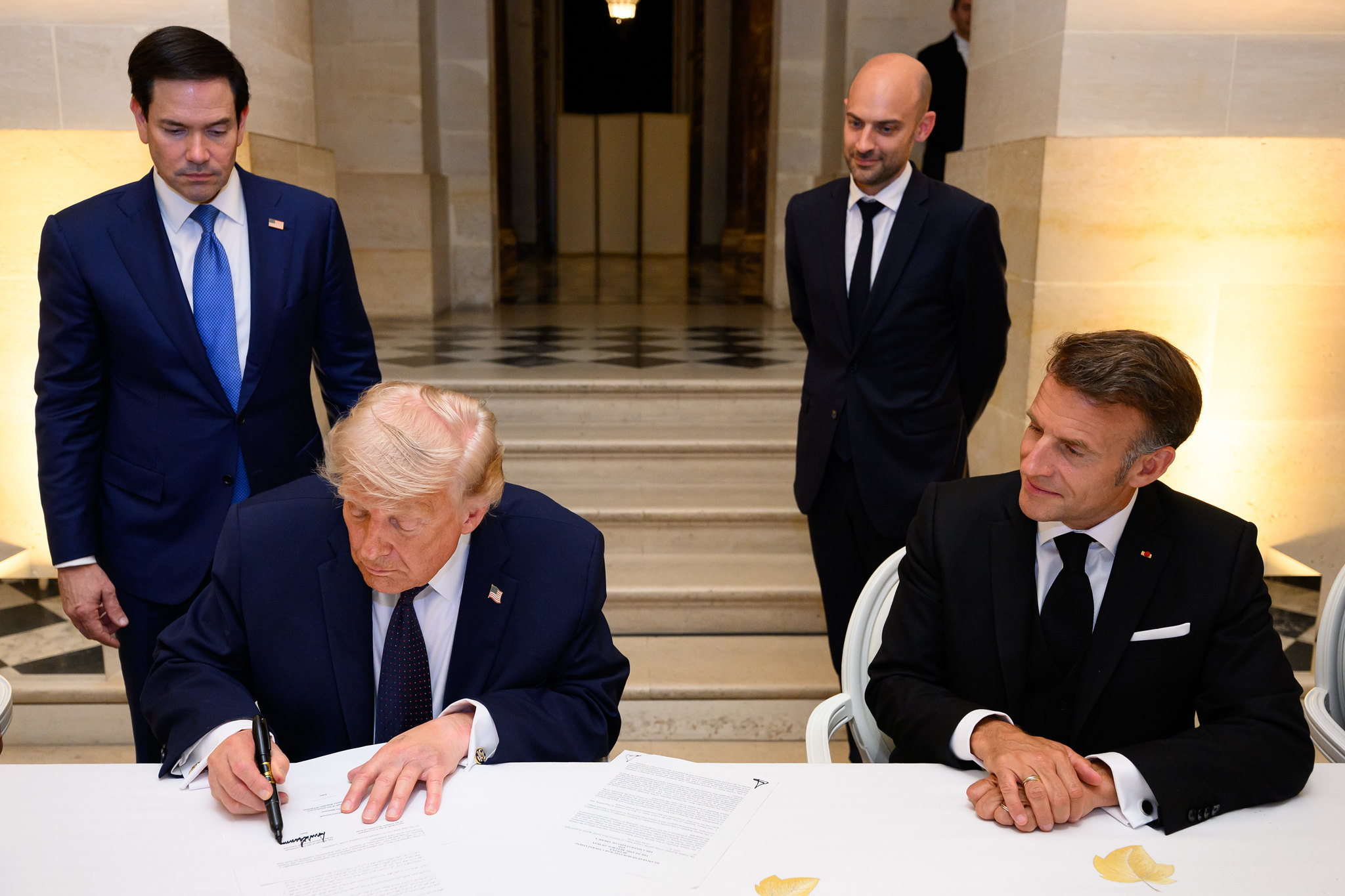
U.S. President Donald Trump signing a memorandum of understanding with Iran at the Palace of Versailles on June 17. French President Emmanuel Macron on right, U.S. Secretary of State Marco Rubio on left, standing. (White House / Daniel Torok)
By Patrick Lawrence
Special to Consortium News
 Well, J.D. Vance had his first talks with the Iranians — 18 hours of them Sunday tipping into Monday — since the American and Iranian presidents signed the two sides’ much-disputed memorandum of understanding last Wednesday.
And what got done?
Not nothing, the Trump regime’s vice-president and the media that clerk for the imperium invite us to conclude. “Yesterday was a very, very good day,” Vance said as he headed home. “We made a lot of good progress. We did exactly what we wanted to do.”
You have to read all such remarks coming from American officials as text and subtext these days. In this case, exactly what J.D. wanted to do was keep all significant questions between Washington and Tehran well off in the distance, so avoiding a disastrous rupture, first crack out of the box.
At this early moment the U.S. objective is simply to keep the Iranians at the table, in other words, and as 21st century American statecraft goes this counts as not-nothing.
We’ve been here before, notably in the case of the Americans and the Chinese: When the imperium has nothing to put on the mahogany table other than a set of aggressive demands the other side cannot possibly meet, “We’re still talking” goes down as an accomplishment.
Washington had several announcements, hastily delivered Monday, to suggest Vance achieved some measure of momentum as he sat across from Iranian officials and Pakistani and Qatari mediators in Lucerne, the Alpine city Switzerland has offered for the proceedings during the next 60 days of negotiations.
The Strait of Hormuz, top of the list, is now reopened, the U.S. Central Command contends. Scott Bessent, Trump’s Treasury secretary, announced a 60–day waiver permitting the Iranians to export oil into world markets. Vance now says Tehran has agreed to let inspectors from the International Atomic Energy Agency back into the country.
Toody-boom, as my father used to say. On we go.
I don’t see any toody-boom in any of this, actually.
The Strait may or may not be formally open and stay open, as there is no taking the U.S. Central Command, which has lately evinced a pronounced givenness to misinformation in these matters, at its word.
Immediately after talks concluded in Lucerne, in any case, members of the Iranian delegation departed for Oman to work out details of their bilateral plan to control the Strait.
It is a very nice thing for Scott Bessent to let the Iranians market their petroleum production abroad for a couple of months, but this is nothing more than what diplomats call low-hanging fruit. As The Cradle reported Monday, Iran has been doing well in its export markets since the war began.
It quoted Abdolnaser Hemmati, governor of Iran’s central bank, saying “the new arrangement” will merely cut some of the costs imposed by the sanctions.
Illusion of Progress
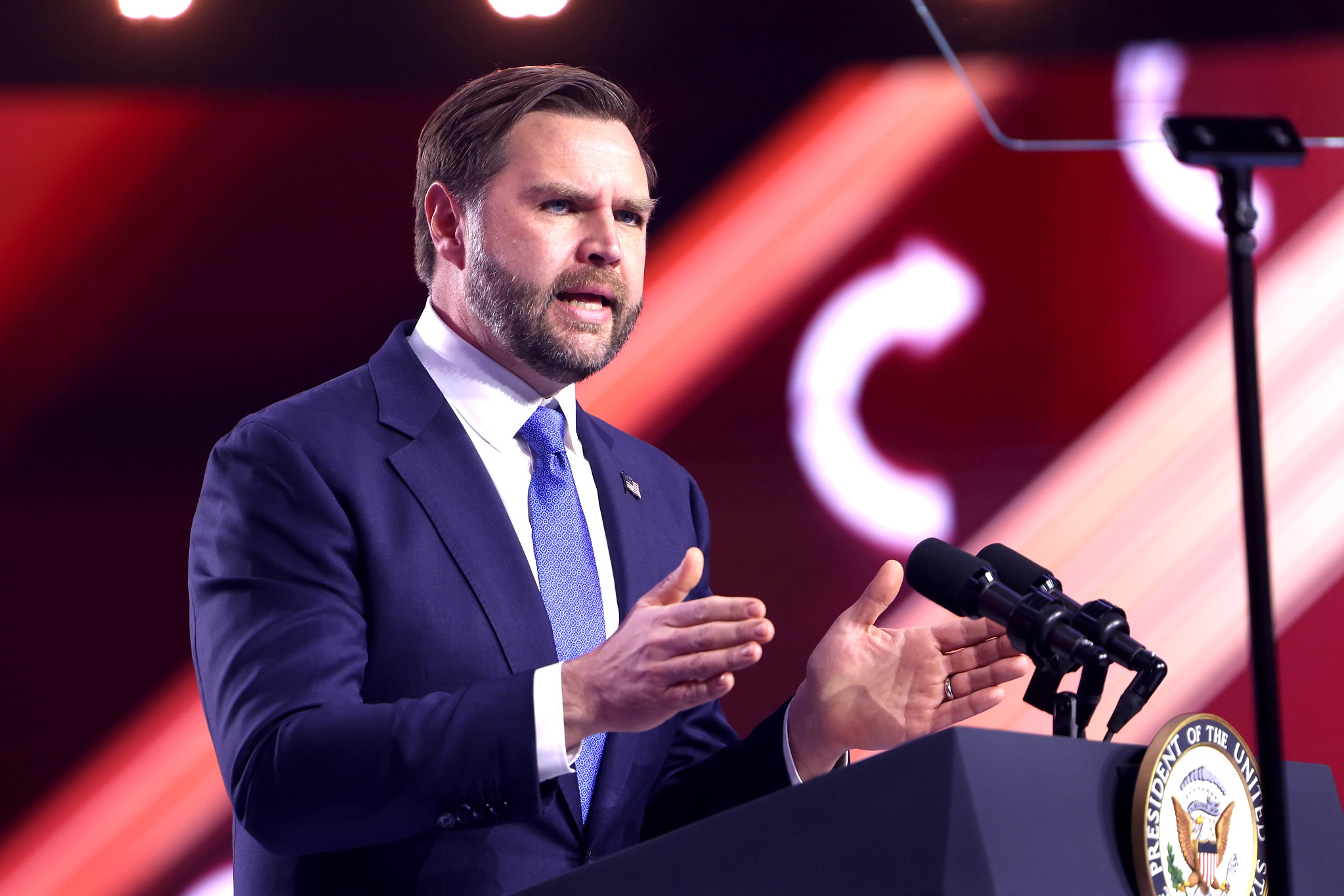
Vance at an event in Phoenix in 2025. (Gage Skidmore/ Flickr/ Wikimedia Commons/CC BY-SA 2.0)
As to the claim that Tehran is to permit International Atomic Energy Agency inspectors back in, well, this one I simply don’t buy. The Iranian side has pointedly declined to confirm Vance’s assertion. We have had nothing but silence from them on this topic.
Tehran may at some point allow IAEA inspectors entry, who knows, but who knows, also, under what conditions. I read this as an illusion-of-progress feint on Vance’s part.
Yet more to the point, while Vance held forth about plans for the eventual “denuclearization” of the Islamic Republic, Masoud Pezeshkian, Iran’s president, declared Sunday, as if in reply, that the Islamic Republic “will never give up” its right to enrich uranium.
Pezeshkian, a reformist ungiven to provocative statements, was not in Lucerne and may well have been satisfying a domestic audience, but I believe him anyway. The enrichment question is also a sovereignty question for Tehran, and the Iranians — greatly to their credit — have not an ounce of give in them in any and all such matters.
In this connection, Rafael Grossi, who has done a sterling job compromising the IAEA’s mandated neutrality since he was named its director in 2019, traveled to Switzerland over the weekend and met with the Swiss foreign minister. I suppose he had to meet with somebody, but the Iranian delegation declined to hold any talks with him.
There is also the Lebanon question, of course. An end to Israel’s occupation of the south and its aggression all the way up to Beirut remains an essential Iranian demand. And the Israelis — “We are not party to the negotiations” — show no intention of paying much attention to this beyond gestural measures to suggest it is obliging the Trump regime as the Swiss talks proceed.
Al Jazeera reported Monday that in a post–Lucerne telephone call Vance and Joseph Aoun, the Lebanese president, talked of a “deconfliction mechanism” intended to keep the peace in Lebanon. Is there no end to these kinds of charades? It does not matter what Joesph Aoun thinks, says, or decides: He does not have the power to run Lebanon.
Zionist Terror State
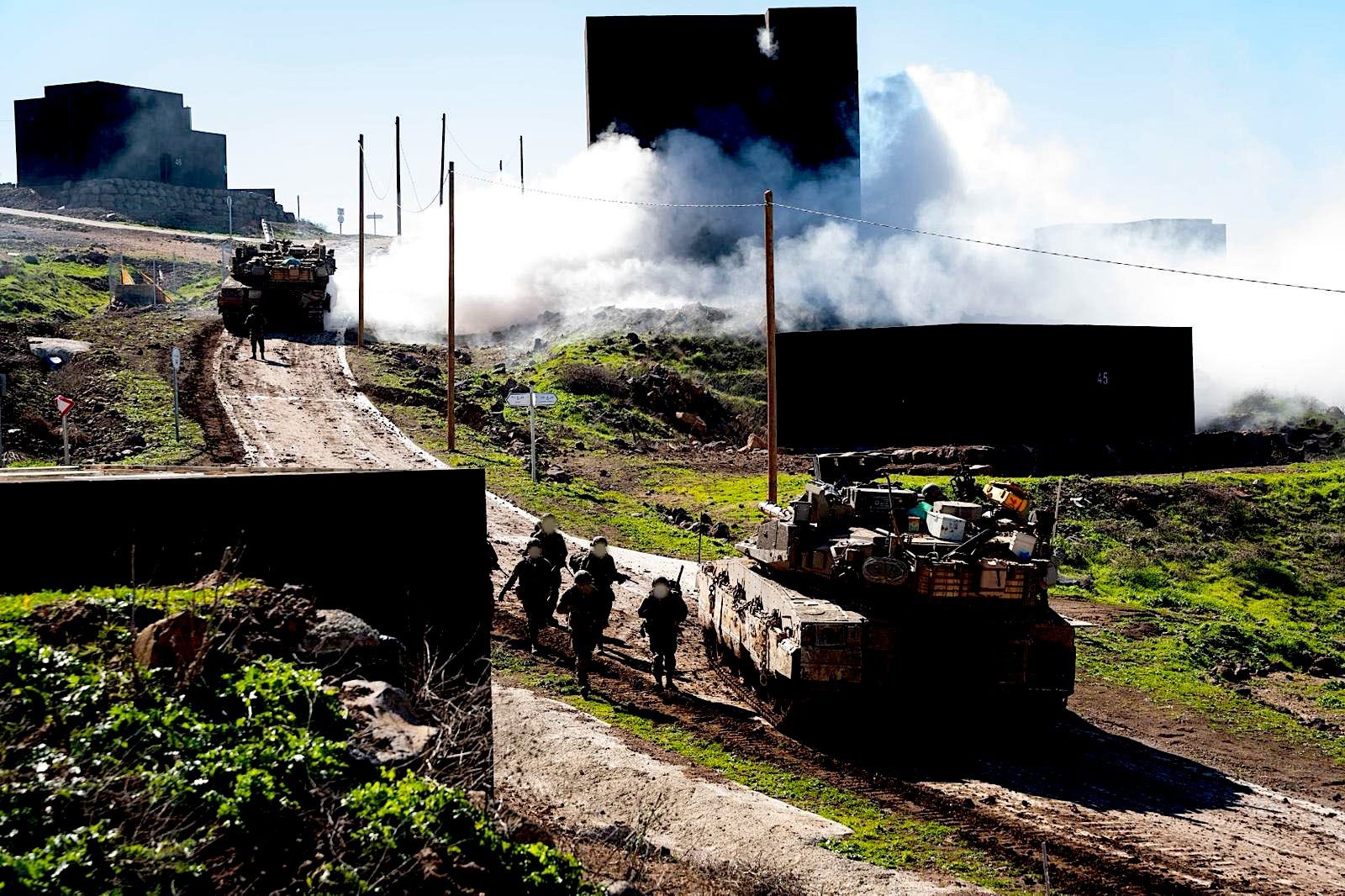
Israeli troops near the Lebanese border on March 21. (IDF Spokesperson’s Unit/Wikimedia Commons/CC BY-SA 3.0)
And putting a fancy-sounding name on this latest attempt to control the out-of-control Zionist terror state: Can anyone seriously think this will force the Tel Aviv regime to change course? I look in the opposite direction: I do not seem to be alone in worrying that this is a perfect moment for the Israelis to stage one of those false-flag ops to which they resort at the merest hint that peace may break out.
After a day’s talks, Vance’s opening attempt to find common ground with the Islamic Republic is a spit-and-baling wire proposition, in my read. The claims to progress seem to me flimsy even by the slack standards the United States sets for itself these days in its diplomatic endeavors.
So often does kicking it all down the road prove a ruinous temptation. In this case it leaves the United States exposed to all kinds of unwelcome surprises that ought not be surprises at all but for the givenness of the policy cliques to live in their “empire of pretend,” as I call the world of delusions they insist on as a defense against the realities of the 21st century.
I count on the Iranians remaining open to acceptable compromise as these talks proceed. But they will not, as Alastair Crooke puts it, climb back into the cage wherein they have been confined, one way or another, since the Islamic Republic came into being 47 years ago.
The concluding sentence of Point 4 in the MoU, which concerns the removal of the U.S. Navy’s blockade of Iranian ports:
“United States of America further undertakes to remove its forces from the proximity of the Islamic Republic of Iran within 30 days after the final deal.”
The implications of this one-sentence stipulation could scarcely be larger. And I do not see the Trump regime accepting them, Trump’s signature on the memorandum notwithstanding. We are talking about two profoundly different views of the world, how it works and how it will work as our century proceeds.
In putting off all the issues of substance between Washington and Tehran, I mean to say, J.D. Vance and his colleagues are putting off the day of an inevitable, irreconcilable rupture.
The 14 points of the preliminary memorandum signed last week represent an historic surrender on the imperium’s part, but it is a victory, if small, for what remains of American democracy. One must not lose sight of this distinction.
It is 23 years since the late Wolfgang Schivelbusch published The Culture of Defeat (Metropolitan, 2003), and how often the thesis of this wonderful writer (and friend) has seemed a propos of our time. While victors in war and conflict can conclude they need do no more than continue on as they have, the vanquished have the advantage of self-reflection, and of this a path to reinvention and a new direction can come.
Let us celebrate the imperium’s defeat in this spirit, and look forward to the day when those running it see the virtue of accepting its serial failures and its losses such that they may see the wisdom in beginning anew.
Patrick Lawrence, a correspondent abroad for many years, chiefly for the International Herald Tribune, is a columnist, essayist, lecturer and author, most recently of Journalists and Their Shadows, available from Clarity Press or via Amazon. Other books include Time No Longer: Americans After the American Century. His Twitter account, @thefloutist, has been restored after years of being permanently censored.
TO MY READERS. Independent publications and those who write for them reach a moment that is difficult and full of promise all at once. On one hand, we assume ever greater responsibilities in the face of mainstream media’s mounting derelictions. On the other, we have found no sustaining revenue model and so must turn directly to our readers for support. I am committed to independent journalism for the duration: I see no other future for American media. But the path grows steeper, and as it does I need your help. This grows urgent now. In recognition of the commitment to independent journalism, please subscribe to The Floutist, or via my Patreon account.
The views expressed are solely those of the author and may or may not reflect those of Consortium News.


[ad_2]
Source link
