
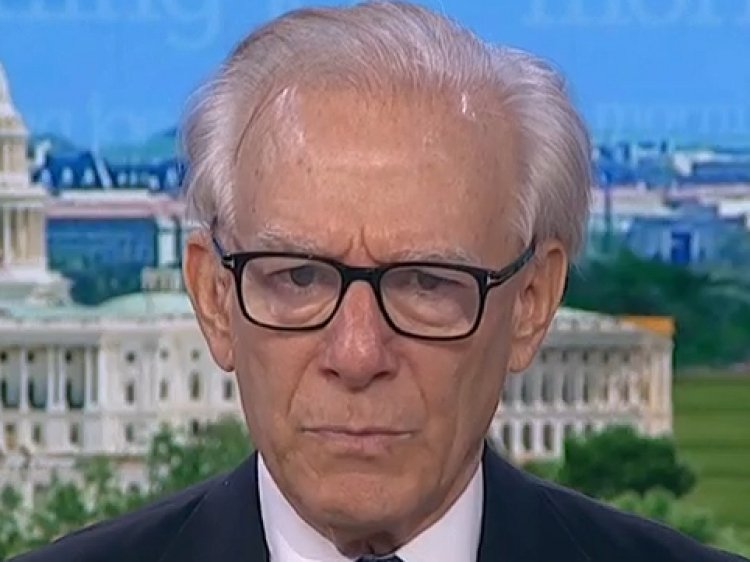
“Washington Post” associate editor and columnist David Ignatius said the White House believes it is gaining leverage over Iran and may be close to a deal. On Thursday’s “Morning Joe,” Ignatius said the Trump administration believes Iran is nearing a breaking point and momentum has shifted in favor of the United States.
What do you think? What are you hearing?
DAVID IGNATIUS, WASHINGTON POST: So, Joe, I think you described the sense of optimism of the White House team correctly. I think the meeting in Islamabad went better than it might have seemed, given that they immediately moved to the blockade. There was actually quite a lot of trust established.
And by the end of that meeting, they were down to kind of dickering over details, over how long the agreement to refrain from nuclear activity would last, the terms for which the Strait of Hormuz would be open. They couldn’t get to a deal. But I was told when the meetings broke up that Pakistan was likely to continue the process of dialogue.
And that’s what we’re seeing this week. I think two things strike me right now, Joe. First, President Trump continues to negotiate in this way where he plays both good cop and bad cop at the same time. And it’s sometimes confusing. He’s adding even more force to the Middle East at a moment where it’s clear he wants to get the exit ramp from military action. He doesn’t want to keep fighting this war. He wants to end it. But even so, he’s still maintaining military force. He’s using the blockade for an economic chokehold.
Viewers who know UFC fighting know when a fighter puts the other guy into submission, he gets him around the neck and then waits for him to tap out. And that means that the fight’s over. Donald Trump is waiting for Iran to tap out and then move into a different period where the U.S. has promised substantial economic aid, all kinds of inducements to get them to cross what one official called the Golden Bridge into the future. That’s the way Trump administration is trying to characterize the choices for Iran. So I think we’re close. I think the biggest problem, Joe, is that despite what the president says, there has not been regime change in Iran.
There’s been leadership change. And the person at the top of the leadership, Mohammad Ghalibaf, is a very pragmatic dude. He has been for 20 years. I’ve been writing about him that long as somebody who would like to do deals with the West. But he’s facing, I’m told, quite a lot of opposition at home. So that’s the space to watch, very opaque for us to know what’s going on in Tehran.
But there’s no question that President Trump and his advisors think they’re close, think this deal is one that they can sell, that will at once cap the Iranian nuclear program in a significant way and bring Iran into the life of the Gulf and into what would be a modern state that would try to behave more like the United Arab Emirates than the Iran of old.
SCARBOROUGH: You know, I don’t usually, I usually go to Andrew Ross Sorkin to ask economic questions. But when geopolitical events impact our economy, I think I’ll go to you on that one and just ask you, what impact has the market’s continued resiliency had on actually putting the White House in a stronger position? Because the markets are not responding quite as dramatically as many people thought at the beginning.
They were expecting $125 per barrel, maybe $150. It’s hovering at or below $100 and the S&P up to record highs. That gives the White House, that gives negotiators a lot more latitude with Iran, doesn’t it?
IGNATIUS: It does. I think Iran was thinking that as it continued to hold the Strait of Hormuz hostage, and again, Joe, I see this as a hostage taking, that the effect on markets would be enormous. And the level of pain for Donald Trump would be enormous.
Instead, the stock market is setting records. The oil markets seem to be kind of sloughing this off. And that, in effect, devalues Iran’s biggest weapon. And in fact, by blockading the blockade, it’s Iran that now has a problem. It’s only got a few weeks left. It needs the revenue badly to be able to, as one part of the U.S. team put it, Iran has been living in a military version of COVID. There’s no economic activity. There’s nothing going on in Tehran. They need this to end soon.
So I think you’re right to describe the optimism that the White House feels as it looks at the markets, and undoubtedly the disappointment the Iranians feel that their weapon isn’t drawing much blood.
