
[ad_1]

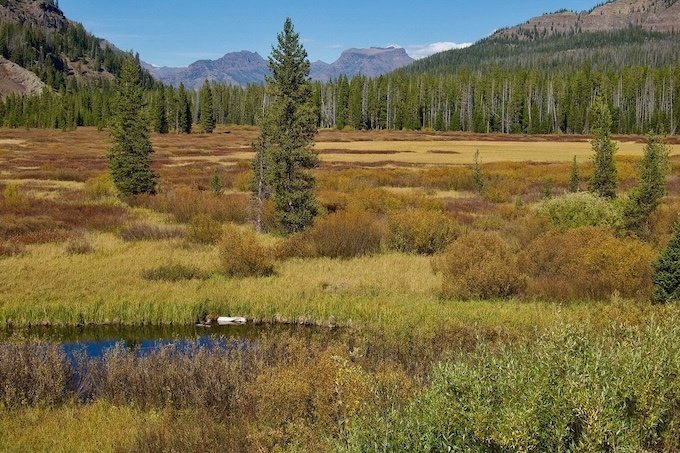
Washakie Wilderness, Shoshone National Forest, Wyoming. Photo: Howie Wolke.
The U.S. Forest Service has approved a tree-cutting project in the Washakie Wilderness in Wyoming behind closed doors. Does it promote a wilderness ethic? Certainly not. Will it violate the Wilderness Act? Most likely. Will the public know the full details about this project before it is complete? Unlikely. Should the Forest Service still hear from you on this? YES, ABSOLUTELY.
There are two parts to this story. The first is the utter absurdity of the project itself. The second is how the Forest Service cut the public out of any notice or engagement. You should be furious at both—I am.
Last month one of our fellow conservation groups alerted us about a Forest Service project in the Shoshone National Forest’s Washakie Wilderness to cut down a tree. At that point, just about the only information available originated from a news article about the Wyoming state legislature’s debate on funding this project.
The Forest Service approved a project to cut down a tree and helicopter it out of a protected Wilderness so it may stand in a museum and remind us that we should preserve—and not log—our federal lands. Kind of like paving paradise to put up a parking lot, but then adding an interpretive sign describing the paradise that once existed.
What motivates this project? A survey crew stranded in a snowstorm 133 years ago carved their names into a tree outside of Yellowstone National Park. The survey crew was marking the Yellowstone Forest Reserve in early efforts to preserve forests instead of logging them. That forest reserve eventually became the Shoshone National Forest. The Washakie Wilderness was later established with the original passing of the 1964 Wilderness Act. Congress expanded this Wilderness in 1972, and then again in 1984. The survey tree is within the Washakie Wilderness—over two dozen miles from the nearest trailhead.
The survey crew might have even been proud that what they sought to preserve was ultimately protected by our strongest environmental law. But they didn’t count on others valuing their carvings over actual wilderness preservation.
When I connected with the Forest Service project lead on July 31, 2026, he confirmed that the plan was to go into the Wilderness to cut down and remove this tree. The Forest Service had decided a couple weeks before that to do the project under a categorical exclusion. He told me that they had already cut out trees and brushed out a user-created trail to get to this tree. Flooding had blown out a trail, delaying their project, but on August 7, 2026, a state-contracted crew would haul equipment in on this new trail to image this tree for historic preservation purposes. Then, the project lead said, the plan was to go back in, cut the tree down, and helicopter it out of the Wilderness later this year when a slowing fire season freed up a helicopter. Neither of these later two action items have dates, though they seem imminent. The tree would be displayed in a museum to tell the story of our public lands.
On August 4, 2026, Wilderness Watch sent the project lead and the Shoshone National Forest Supervisor Ken Coffin a letter asking the Forest Service to delay this project until the agency could meaningfully engage the public. The Forest Service hadn’t notified the public of this project—it wasn’t even listed as a project on their website when I went looking for it in July. We reminded Supervisor Coffin that the Forest Service’s primary obligation in administering Wilderness is to protect wilderness character, which includes “preservation and protection in their natural condition.” To the extent that the Wilderness Act allows narrow administrative exceptions for prohibited tools, it’s only when necessary to further the purpose of the act: an enduring wilderness resource for future generations. We noted that this project has no wilderness purpose.
We asked for the Forest Service to minimally pause this project until they at least meaningfully engage interested folks and organizations in a public process.
Supervisor Coffin emailed back on August 13, 2026, declining our request. Even though the U.S. Department of Agriculture has current regulations that allow the agency to engage the public on projects, Supervisor Coffin’s response email indicated that he intended to move forward without public input because it wasn’t “required.” He said he believed that this project would “benefit” Wilderness because telling a story about public lands achieved the “greater good,” particularly, “why it’s important for us to hold [public land] in the highest regard now and into the future.”
Does 1) building a non-system trail in Wilderness; 2) cutting down trees in Wilderness to access this “survey” tree; 3) cutting down that tree, which is well over a century old; and 4) helicoptering it out of Wilderness hold our most protected places in the “highest regard now and into the future?” Or is this human folly? The names that were carved into this tree 133 years ago were carved into a tree that was big enough to carve names into it 133 years ago. Dead or alive, this tree (and the others cut down to access it), could have been preserved and protected in its natural condition within the Wilderness. This survey tree and the space around it might have been, still are, or might become home to a community of life larger than our human sphere. Keeping the tree where it is—and saying no to whoever had this truly perverse idea—is how we act to hold Wilderness in the highest regard now and into the future.
This past summer, I visited a famous site for Ediacaran fossils in Newfoundland. Ediacaran fossils existed over 540 million years ago—when life transitioned from single cell to multi-cell organisms. It was life before dinosaurs. These fossils, on slabs of rocks right next to the Atlantic, are slowly eroding away. But instead of drilling them off of their rocks and putting them in a museum, archeologists took a cast for replicas, and will allow people to enjoy it in situ while nature takes its course. If the Province of Newfoundland can do that for ancient fossils, surely there are alternatives that the State of Wyoming could suggest to the current course so 133-year-old carvings can be preserved without removing the tree from the Washakie Wilderness?
There is a lot we don’t know about the project, and this is the much shorter second part to this story. When will they cut the tree? How many miles of work did the Forest Service allow on a non-system trail in Wilderness and how intensive was that trail work? Did they use chainsaws? Are chainsaws involved in plans moving forward? Do they have to land a helicopter in the Wilderness to remove the tree? Do they have to cut down more trees in the Wilderness for a helicopter landing pad?
I submitted a Freedom of Information Act (FOIA) request for decision documents on July 30, 2026, the day before the Forest Service project leader called me back. I asked for “expedited processing” because there was so much the public doesn’t know about a project that is imminent. If granted, it would have shortened the response time to 10 days instead of the statutorily mandated 20, and we would have had the documents by August 13. When I spoke with the project leader, he indicated the Forest Service had done a “minimum requirements analysis” and considered that their decision document. Even though the project leader referenced their decision document, which presumably is at their fingertips and an easy “search” for a responsive record, even though the forest supervisor received a copy of my targeted FOIA request the same day I submitted it, and even though the supervisor responded to Wilderness Watch’s letter that they wouldn’t engage the public, the Forest Service has yet to provide this decision document.
There can be a third part to this story—it’s one I hope our members and supporters write. The Shoshone National Forest Supervisor and project lead should hear from you. Though they have not sought public involvement, the public should involve itself. This must have been someone’s pet project, and the Forest Service circumvented all of us to accomplish it. This is not unlike going behind the public’s back to let outfitters loose with chainsaws in Wilderness, allowing permanent private cabins to persist in Wilderness, or finding vacant grazing allotments in Wilderness that are recovering and permitting the reintroduction of cows at the behest of ranchers without notifying or engaging the public. All of these developments are happening right now. Though it’s not selling off your public lands, it is the agency’s alternative plan—letting private interests have their way with Wilderness without the public’s knowledge or involvement.
Please email the Shoshone National Forest supervisor and copy the project lead for this survey tree.
Shoshone National Forest Supervisor, Ken Coffin: [email protected]
Shoshone National Forest Project Lead, Mike LaFrentz: [email protected]
Ask them to delay the project and engage the public. Also, tell them what you think about this project based on the limited information available, and ask for them to publish the decision document and any other analysis they conducted. Let the public employees who administer your Wilderness know that this doesn’t hold America’s wilderness heritage in high regard, and you don’t appreciate the clandestine way the Forest Service handled this project.
Wilderness deserves better.
[ad_2]
Source link
