
[ad_1]
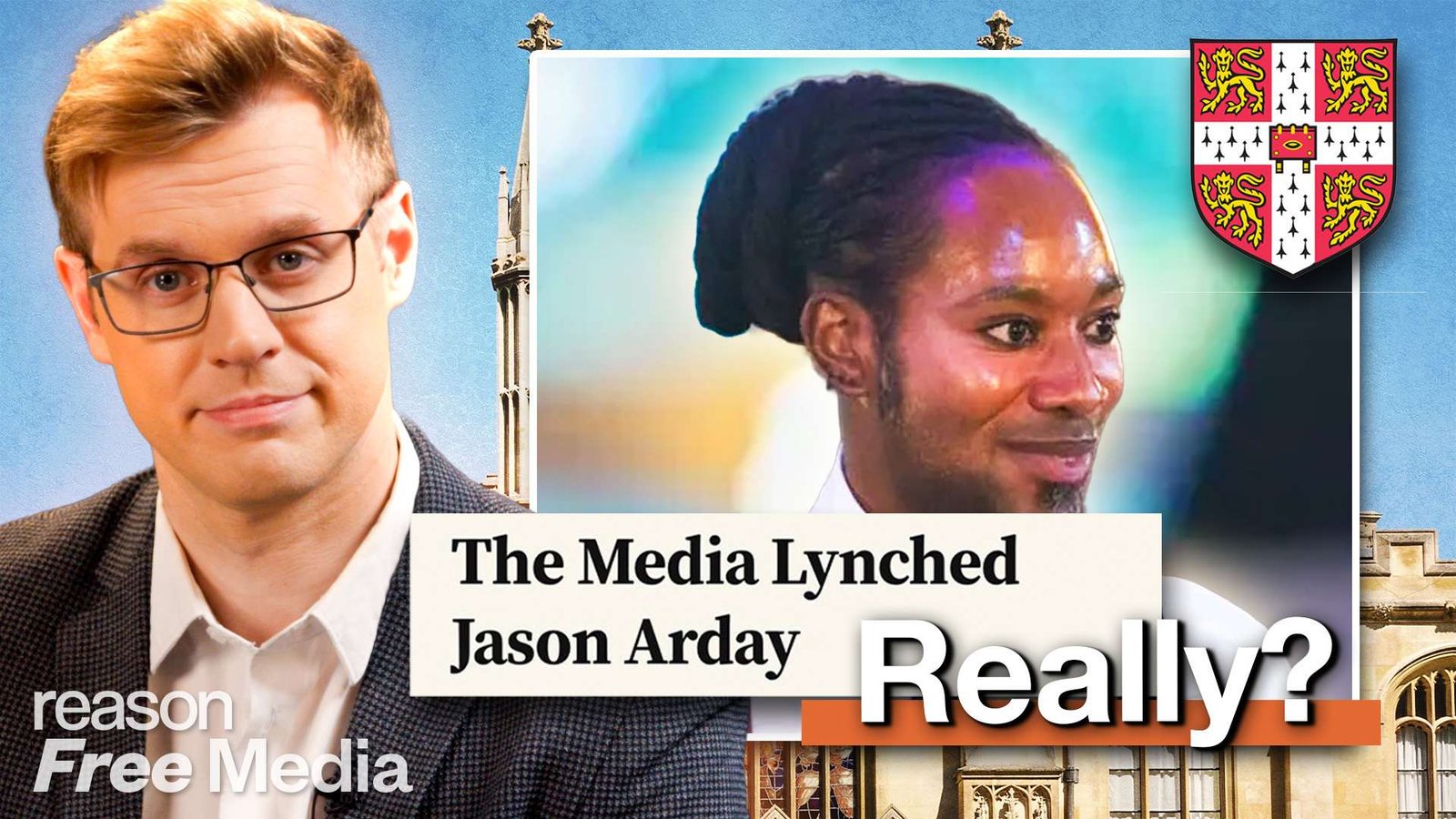
Are the media responsible for the demise of a famous black professor at the University of Cambridge? Jason Arday was found dead last week after resigning from the university following widespread serious plagiarism allegations. But his defenders say Arday was unfairly targeted by racist reactionaries. Sadiq Khan, the mayor of London, assailed the media for engaging in a campaign of “pernicious public shaming,” and the activist group Stand Up to Racism said he’d been subjected to a racist witch hunt.
Most notably, the anti-racist activist Ibram X. Kendi stated unequivocally that “the media lynched Jason Arday.”
The death of Jason Arday hit so close to home that I had no words yesterday. But I woke up with words.
To be a prominent antiracist Black scholar is to know you are a target, almost totally surrounded by resentments. You know that at any point, the attacks can come like a lynch… pic.twitter.com/XetSepzJrx
— Ibram X. Kendi (@ibramxk) August 15, 2026
He writes:
To be a prominent antiracist Black scholar is to know you are a target, almost totally surrounded by resentments. You know that at any point, the attacks can come like a lynch mob.
And if you die from all the attacks, the media still calls the attacks on you “accusations” to wash their hands of the blood. Your lynchers announce your death as if they had no role in your lynching.
That is completely and utterly absurd. It’s grossly offensive. And it elides the real harms that Arday perpetrated: serial plagiarism, fabulism, and lying. Now, Arday’s death is clearly a tragedy, and no one should be making light of it. There’s nothing good or pleasant about this sad affair. But when Kendi and others accuse the media of complicity in his death, what they are essentially saying is that it’s your fault for noticing and calling out his serious transgressions—that he should have been left alone to continue lying about who he was and his qualifications.
And to be clear, the fact that Arday was a fabulist is not in dispute at all. He made outrageous and self-discrediting claims about his background: alleged crippling autism, being nonverbal until age 11, running 600 miles, raising huge sums of money for charity. Those were widely noted details of his personal life, and he simply lied about them. And that’s without even getting into his professional failings: his sloppy work, his continuous plagiarism.
It’s not as if he was some harmless or vaguely relevant academic. He was a huge deal at Cambridge, and even advised the British government on the school’s curriculum. And when a reporter for Times Higher Education had questions about Arday’s work and background, Arday had him investigated by the police. That’s right, rather than face well-justified criticism, Arday called the British police on Jack Grove, a journalist. The police told Grove not to contact Arday again because it was negatively impacting his mental health.
And indeed, it probably was. But there’s no way around this: Arday brought this on himself by lying.
Moreover, his inclination to sic the cops on a critic was very, very bad behavior and entirely contrary to basic principles of free inquiry—principles that supposedly undergird higher education. Unfortunately, some people are taking the opposite lesson and calling for more restrictions on freedom of speech and press freedoms in order to prevent them from causing emotional harm. The author and journalist Matt Haig called on U.K. Prime Minister Andy Burnham to take action to punish journalists for engaging in speech. He writes: “The ability right now for UK journalists to face zero consequences for politically motivated campaigns against vulnerable individuals, often in minority groups, is a massive blight on the UK’s moral standing.”
That right there is an endorsement of censorship, and it’s wrong. It’s wrong to weaponize the concept of mental health and use it as some kind of veto over legitimate criticism. Arday’s death is tragic, and everyone should wish he’d gotten whatever help he needed. But that doesn’t mean we should blame the people who called out his sensational lies—and we certainly shouldn’t have prevented them from speaking out.
If we start policing people for asking totally legitimate questions of public figures, like a notable academic, then we are quickly going to render important institutions—like academia—immune to criticism. That would be a terrible mistake, quite obviously. Already, higher education is facing a crisis of legitimacy due to the perception—and in some cases, the reality—that out-of-touch liberal elites have used race and ideology as stand-ins for merit, allowing charlatans to peddle dubious research that they can’t defend when challenged. Worse, higher education administrators have weaponized the concept of diversity and used it as a cudgel to promote groupthink on cultural issues. In America at least, this has engendered a significant backlash, and the Trump administration has undertaken various efforts to roll back DEI initiatives.
If you want an elite culture that is even more closed-minded, and thus even more prone to capture by bad actors, then you’d do exactly as Arday’s defenders are advising: You would make it a crime to call him out.
If you enjoy this kind of content and want more, subscribe to my newsletter, Free Media.
[ad_2]
Source link
