
[ad_1]
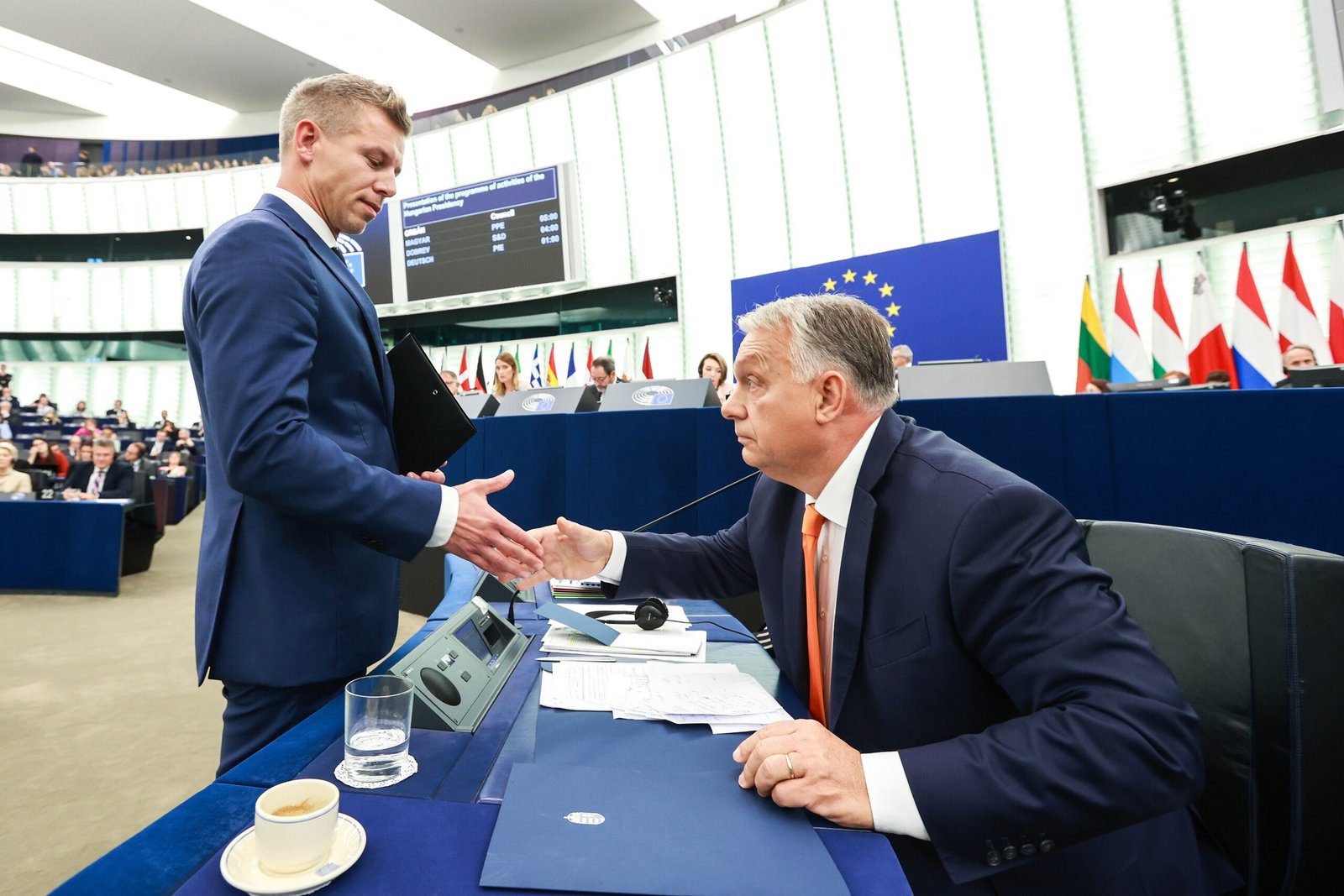
Photograph Source: © European Union, 1998 – 2026
The international liberal commentariat is celebrating again. Viktor Orbán, the long-reigning right-wing strongman of Hungary, has been defeated in the April 2026 elections by Péter Magyar, a slick, photogenic opposition leader who stormed to power in a matter of months. Headlines scream “democracy wins,” “Orbánism is over,” and “a new dawn for Europe.” Don’t believe a word of it.
This is not a victory for the left, for working people, or for any genuine progressive force. It was a squalid palace coup within Hungary’s corrupt political elite — a transfer of power from one faction of the ruling class to another, dressed up as a heroic popular uprising. The Hungarian people did not win. They simply exchanged one set of oligarchs for another.
Péter Magyar is no savior. He is a former insider of Orbán’s own circle, a playboy from one of Hungary’s most powerful families, whose rapid rise reads like a trashy soap opera: sordid affairs, a bitter divorce from his wife (who happened to be Orbán’s Justice Minister at the time), blackmail, extortion, and backroom deals. He didn’t defeat the system — he was vomited up by it. His campaign was fueled by sex scandals, personal vendettas, and the kind of polished PR that liberal media loves. Now, many are pretending this represents a meaningful shift.
It doesn’t.
One of the key triggers for the shift in public opinion was a major corruption and abuse scandal involving a juvenile detention center under Orbán’s government. Reports revealed systemic abuse, sexual exploitation, and cover-ups in state-run facilities for minors, with high-level officials implicated in protecting perpetrators and silencing victims. The scandal exposed the rotten core of Orbán’s “law and order” regime and severely damaged public trust. Péter Magyar — whose very surname literally means “Hungary” in Hungarian — cleverly positioned himself as the fresh face who could clean up the mess, even though he had been deeply embedded in the same system just months earlier.
Orbán was notoriously antagonistic toward Brussels and the EU establishment, often clashing with them over migration, rule of law, and his relatively softer stance toward Russia. Magyar, by contrast, served in the foreign ministry under Orbán and represented Hungarian interests in Brussels. He is widely seen as more willing to align with the dominant EU anti-Russian position, pushing the endless war with Putin and deeper integration into the Atlanticist war machine. While Orbán embodied a certain nationalist defiance against “liberal Europe” and Trump’s anti-EU posturing, Magyar appears ready to smooth Hungary’s re-entry into the mainstream neoliberal consensus — more arms spending, more sanctions on Russia, with continued subservience to Washington and a more cooperative approach towards Brussels.
One area certain not to change under Magyar is Hungary’s warm relationship with Israel and support for the zionist project. Orbán repeatedly rolled out the red carpet for Benjamin Netanyahu, hosting the indicted war criminal with full honors despite the International Criminal Court’s arrest warrant for crimes against humanity in Gaza. This cozy alliance — including strong diplomatic support, arms deals, and joint intelligence cooperation — is deeply embedded in Hungarian politics. Magyar, despite his “fresh face” image, has shown no inclination to break with this policy. Like Orbán, he is expected to continue shielding Israel from accountability while the genocide in Gaza and the illegal wars on Lebanon and Iran continue.
Hungary remains one of the most right-wing and corrupt countries in Europe, a laboratory for authoritarian neoliberalism. Orbán built a mafia state that fused political power with economic control, crushed independent media, attacked LGBT rights, and weaponized anti-immigrant hysteria. But the new boss is unlikely to be any better. Magyar has already signaled even harder lines on immigration and is deeply embedded in the same transnational networks of casino capitalism, weapons manufacturers, and Zionist-aligned oligarchs that are driving Europe’s rot from within.
This is the classic trap: liberals celebrate any defeat of a right-wing populist as a win for “democracy,” even when the replacement is just another servant of the same empire. They cheered when a CIA-backed stooge in Venezuela, Machado, was handed a Nobel Peace Prize while working on regime change. They cheer now as Magyar takes the reins in Budapest. In both cases, the underlying power structures — Western capital, NATO militarism, and the refusal to confront the real enemies of humanity — remain untouched.
The Hungarian election exposes the bankruptcy of the so-called “democratic” opposition. Magyar’s victory offers no real alternative to Orbán’s authoritarian model. It simply promises a more polished, EU-friendly version of the same neoliberal policies: continued subservience to Washington, more weapons spending, more austerity for workers, and continued silence or complicity on the US-Israeli led genocidal wars in Gaza, Lebanon, and the illegal war on Iran.
Across Europe the endless flow of funds to Ukraine, pressure to increase military spending, and the rising cost of living driven by skyrocketing energy costs and inflation have left workers paying the price for geopolitical games they never consented to. Neither Orbán’s authoritarian crony capitalism nor Magyar’s slicker, EU-aligned version offers any relief — both ultimately serve the same transnational capital and imperialist interests that keep wages low, services gutted, and the working class squeezed.
This is the deeper tragedy. Large sections of the European left still refuse to confront the fact that the real enemy is not just the far-right clown show, but the entire imperialist system that produces and sustains it. Orbán and Magyar are two sides of the same coin: one openly authoritarian and nationalist, the other neoliberal and seemingly “respectable,” both ultimately serving the same masters.
The Italian experience with Meloni offers a warning. The so-called “center-left” opposition in Italy has proven utterly incapable of offering a real alternative, leaving the field open to the far right on one side and growing popular disillusionment on the other. The same dynamic is playing out across Europe and in the United States.
Real resistance cannot be built on liberal fantasies or astroturfed “democratic” coalitions. It requires naming the empire, rejecting the endless wars, opposing the rearmament of Europe, and breaking with the Zionist project and its enablers. It requires a genuine socialist, anti-imperialist politics that puts working people and the oppressed — from Budapest to Gaza to Tehran — at the center.
The Hungarian people deserve better than another chapter in this endless elite puppet show. So do the rest of us.
[ad_2]
Source link
