
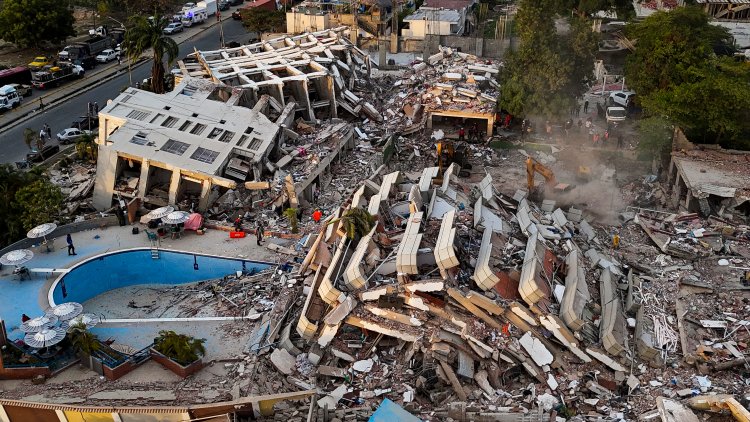
June 23, 2026, became one of the deadliest days in Venezuela’s recent history. A pair of powerful earthquakes, measuring magnitudes of 7.2 and 7.5, struck the capital region of northern Venezuela, devastating the coastal communities near Catia La Mar and Caracas.
The devastation continued long after the initial shaking stopped. More than 1,400 aftershocks rattled the region in the weeks that followed, complicating rescue efforts and forcing thousands from their homes. The earthquakes killed more than 5,500 people, injured tens of thousands more, and overwhelmed Venezuelan emergency response teams across the region.
Beyond the immediate humanitarian response, the disaster demonstrated how artificial intelligence is reshaping disaster relief. As emergency crews raced against time, AI-powered drones provided critical aerial intelligence, helping responders assess damage, locate survivors, and direct rescue operations when every minute was crucial to saving lives.
The scale of destruction became clearer in the weeks following the initial disaster. A July 23 assessment from the World Bank estimated the earthquakes caused $19.6 billion in direct physical damage. Nearly half of the losses were to residential buildings (47%), followed by infrastructure (27%), and non-residential buildings (26%). As damaged roads, collapsed bridges, and disrupted communication networks slowed standard response efforts, aerial artificial intelligence became invaluable to Venezuelan emergency crews, quickly identifying the areas of greatest need.
The first 72 hours after an earthquake are often the most critical, as rescuers race to find survivors trapped beneath collapsed infrastructure. In Venezuela, that task became even more difficult because widespread damage left large portions of Caracas inaccessible. Damaged roads and unreliable communication outlets limited access to affected communities, delaying medical care, the delivery of essential supplies, and evacuation efforts.
As tens of thousands of people were displaced and local resources were stretched thin, the response quickly became an international effort, with 44 international urban search-and-rescue teams from 27 countries joining the mission.
Artificial intelligence-powered drones have become a lifeline for search-and-rescue teams by giving first responders a clear view of the disaster from above. Companies from Canada, the United States, and Europe have supplied specialized drones that capture aerial imagery to quickly map the destruction and help emergency crews determine where help is most needed.
During the first days of recovery, rescue teams use the drones to identify the hardest-hit neighborhoods and prioritize rescue efforts. Equipped with thermal cameras, the drones can detect heat patterns that may indicate trapped survivors, even at night. They also help identify damaged buildings, fires, and other hazards, allowing first responders to choose the safest routes through unstable debris.
Some drones can also deliver critical supplies to communities cut off by the earthquake. They can transport first-aid kits, emergency medications, communication devices, and other essential items to areas that ground crews cannot reach. This technology became especially valuable after damage forced the temporary closure of Caracas’ airport and destroyed key transportation routes, making it difficult to deliver aid by traditional routes.
The technology also helps to prevent a second wave of tragedy. Aerial imagery enables drones to detect fires, chemical leaks, gas spills, and unstable structures before first responders enter disaster zones. Detecting these dangers early, drones help protect rescue while making recovery operations faster and safer.
Beyond search-and-rescue efforts, drones are helping officials make faster, more informed decisions throughout the recovery process. Their aerial images give emergency managers a clearer picture of the damage to help prioritize rebuilding efforts. As Susana Cordeiro Guerra, the World Bank’s vice president for Latin America and the Caribbean, said, “Recovering effectively begins with reliable evidence.” She added that the pace of reconstruction will play a major role in shaping Venezuela’s economic recovery and long-term outlook.
Throughout Venezuela’s historic period of disaster, drones operated by artificial intelligence have underscored AI’s growing value in disaster response. Not by replacing emergency responders, but by helping them make faster, safer, and more informed decisions during the transition from recovery to rehabilitation.
