
[ad_1]
Abdullah al-Ahsan Informed Comment
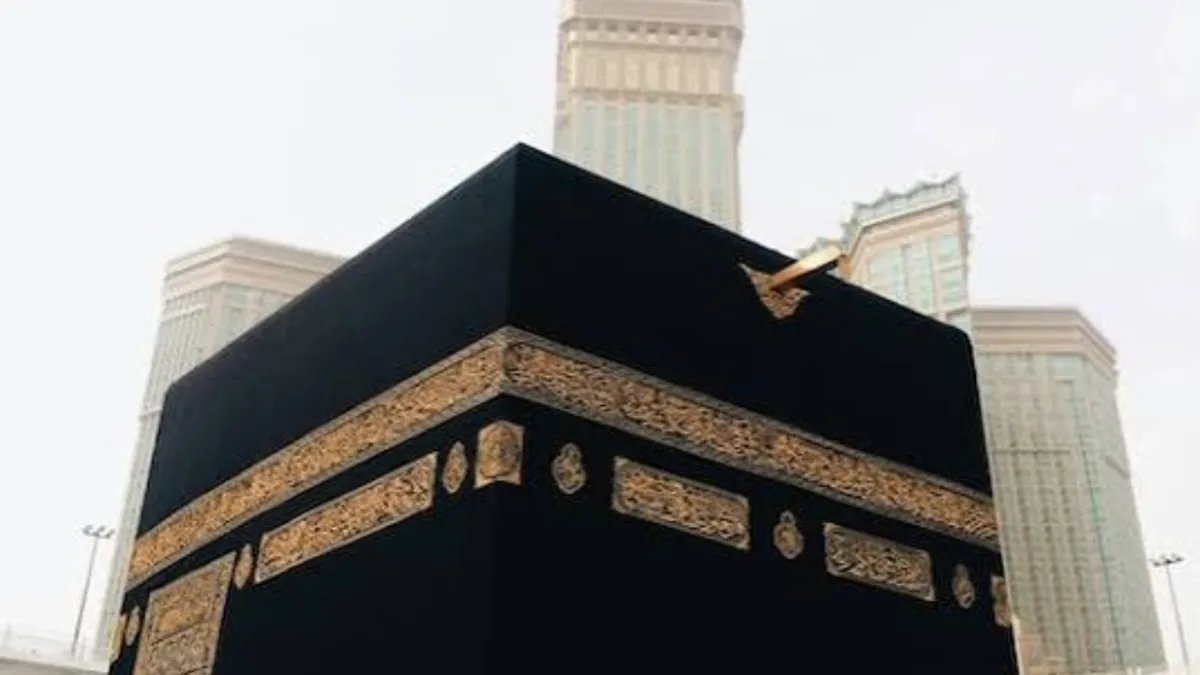
On 7 August 2026, Pakistan, Saudi Arabia, and Türkiye signed a trilateral defense agreement in Mecca declaring that an armed attack against any one of the three states would be regarded as an attack against all. They have presented the agreement as a major step toward collective security and strategic autonomy in a rapidly changing map in the area. Yet the choice of Mecca as the place and symbol of this agreement invites a question that goes beyond geopolitics. What does it mean to invoke Mecca in the name of collective defense when the Islamic tradition associated with Mecca speaks not just merely of military solidarity, but of justice, mercy, responsibility, and the moral unity of the believers? The question becomes even more significant when one compares the 2026 agreement with another initiative launched in Mecca twenty-one years earlier: the Ten-Year Program of Action to Meet the Challenges Facing the Muslim Ummah in the 21st century, adopted at the Third Extraordinary Islamic Summit in Mecca on 7–8 December 2005. The contrast between the two moments is striking. Let us reflect on these two developments.
In 2005, the Organization of Islamic Cooperation (OIC) attempted to formulate a program of civilizational renewal. In 2026, three major Muslim states have come together around collective defense. Has the Muslim world therefore moved from asking how the Ummah can become healthy to asking how it can protect itself? More troublingly, it seems to have narrowed down the ideal of Islamic solidarity from a moral community to an alliance of states concerned primarily with security and regime survival.
The Mecca Program of 2005: An Ambition for Renewal
The 2005 program emerged from a widespread recognition that the Muslim world faced problems that could not be solved by military power alone. The program was prepared following consultations with scholars and intellectuals. It was adopted with the stated objective of strengthening Islamic solidarity, projecting the values of Islam, and addressing the challenges facing Muslim societies objectively and realistically. Its agenda was extraordinarily broad. It addressed political solidarity and joint Islamic action, moderation and tolerance, human rights and good governance, Palestine, conflict prevention, economic cooperation, poverty alleviation, higher education, science and technology, women’s rights, youth and children, and cultural exchange. The program also envisaged institutional reforms intended to make the OIC more effective.
This interpretation of the program is important. The architects of the program understood that the Muslim world’s crisis was not simply a crisis of military weakness. It was a crisis involving governance, knowledge, economic development, social cohesion, political fragmentation and moral credibility. The program therefore represented an attempt to revive the Ummah from within. It was, at least in conception, a project of civilizational renewal.
Türkiye played an especially important role in this process. Ekmeleddin İhsanoğlu, a Turkish scholar and diplomat, became OIC Secretary-General in January 2005, the first Turkish citizen to hold the position. His tenure was associated with efforts to reform and strengthen the organization. The OIC itself describes the Ten-Year Program as a comprehensive roadmap addressing political, social, economic, scientific and moral challenges. The program even led to the creation of an Independent Permanent Human Rights Commission. Still, the program encountered the fundamental problem that has repeatedly confronted the OIC: the gap between collective declarations and the political will of sovereign governments to implement them.
From the Moral Community to the Nation-State
The difficulty lies partly in the structure of the modern Muslim world. The Qur’anic conception of the Ummah is fundamentally moral. The Qur’an declares, “The believers are but brothers (49: 10).” It also says, “The believing men and believing women are allies of one another (9: 71).” In this connection, one should recall a saying of the Prophet Muhammad (peace be upon him) when he said, “The believers are like one body; when one part of the body suffers, the rest of the body responds with sleeplessness and fever: Ṣaḥīḥ al-Bukhārī, Kitāb al-Adab (Book of Good Manners), Ḥadīth 6011.” The body metaphor does not describe a military alliance. It describes shared moral vulnerability. A military alliance, by contrast, begins with states. Its basic question is not, “Who is suffering?” but “Which member state has been attacked?” That distinction is fundamental.
A nation-state can ally because of strategic interests, geographical considerations, economic dependence or common external threats. The prophetic conception of solidarity asks something more demanding: Can one remain indifferent when another human being suffers injustice? The difference becomes particularly significant in the case of Palestine.
The OIC has repeatedly reaffirmed Palestinian rights and condemned occupation. The problem has not primarily been the absence of declarations. The problem has been the enormous discrepancy between declarations and effective collective action. The 2005 program itself placed Palestine prominently on its agenda. Yet two decades later, the Palestinians are suffering from a live genocide that has attracted the attention of thousands of Westerners, but the Muslim world has hardly demonstrated their care and compassion for the Palestinians. The inability of Muslim governments to translate their repeated commitments into effective protection of Palestinian civilians has become one of the most painful demonstrations of the limitations of the present system. Muslim governments are aggressively suppressing their public sentiment on the issue.
The 2026 Mecca Agreement: From Renewal to Defense
The new agreement represents a fundamentally different kind of initiative. Pakistan, Saudi Arabia and Türkiye have agreed that an attack against one will be regarded as an attack against all and have pledged to strengthen defense cooperation. The agreement comes amid extraordinary regional instability and uncertainty about existing security arrangements. There is nothing inherently illegitimate about such an arrangement. Under the current international system, states have a legitimate obligation to protect their populations and territories. Collective defense can deter aggression and potentially reduce the likelihood of war. No one should dismiss the agreement simply because it is based upon the modern nation-state system. Muslim-majority states have every right to cooperate in defense, technology, intelligence, and economic development. Nevertheless, the dilemma is not whether the agreement is legitimate as a defense pact; the challenge is whether it represents the revival of the Ummah or simply the consolidation of a regional security bloc. That distinction matters because the agreement is being concluded in Mecca, a city whose symbolism reaches far beyond the sovereignty of any individual state.
The Paradox of Mecca
Mecca represents perhaps the most powerful historical symbol of transcending tribal and political boundaries. The Qur’an says, “O humanity! Indeed, We created you from a male and a female, and made you peoples and tribes so that you may know one another. Surely the most noble of you in the sight of Allah is the most God-conscious of you (49:13).” The message is remarkable. Human beings may possess different identities, peoples and political communities, but these identities are not ends in themselves. They are subordinated to a higher moral criterion. The symbolism of Mecca therefore creates an attention-grabbing paradox.
The question, therefore, is whether the new agreement will survive. Why has the Muslim world repeatedly been producing declarations of solidarity but struggling to produce institutions capable of translating Islamic moral principles into accountable governance, human development, scientific advancement, and protection of the oppressed? Naming a modern defense alliance setting of a city whose religious meaning transcends the modern nation-state. The question is whether the moral significance of Mecca will transform the political alliance—or whether the political alliance will borrow the moral authority of Mecca. That question cannot be answered by examining the treaty alone. This question relates to examining the conduct of the governments that signed it.
The Domestic Test of Islamic Solidarity
This is where the 2026 agreement encounters its greatest moral challenge. A government that invokes Islamic solidarity externally cannot indefinitely separate that principle from its treatment of its own citizens. The Qur’an places justice at the heart of political responsibility, “Indeed, Allah commands you to render trusts to whom they are due and, when you judge between people, to judge with justice (4: 58).” More demanding still is in the verse, “Stand firm for justice, as witnesses for Allah, even if it be against yourselves, your parents, or close relatives (4: 135).” This principle is profoundly different from ordinary political loyalty. It means that justice must take precedence over regime, family, faction, party and even one’s own interests. That standard raises difficult questions for all three states.
Türkiye has experienced prolonged controversy over the treatment of opposition politicians, civil society, universities and independent institutions. Saudi Arabia remains a highly centralized monarchy with extremely limited avenues for political participation and severe restrictions on dissent. Pakistan has likewise experienced repeated confrontations between elected political forces, the military establishment and the judiciary, with the imprisonment of former Prime Minister Imran Khan becoming one of the most consequential examples of the country’s continuing political crisis. All these countries share a common problem: the tension between the Islamic language of justice and the political imperatives of regime stability. This is precisely why domestic conduct matters.
If the prophetic metaphor of the body means that the whole should feel the suffering of one member, then the question cannot be restricted to Muslims suffering because of foreign aggression. What about the citizen imprisoned because of political disagreement? What about the academic whose university is pressured because of dissent? What about the journalist who exposes government wrongdoing? What about the opposition leader whose political rights are denied? If these forms of suffering do not evoke the same moral sensitivity, then the body metaphor has been transformed into something narrower: solidarity among governments rather than solidarity among common citizens, common human beings.
From Ummah Solidarity to Regime Solidarity?
This may be the most uncomfortable question raised by the 2026 agreement. The modern state naturally encourages rulers to identify the security of the state with the security of the regime. However, the Qur’anic tradition makes a distinction between the trust of political authority and the interests of those who temporarily exercise that authority. A government is not identical with the nation. A regime is not identical with the Ummah. A ruler is not identical with Islam. This distinction is essential. Otherwise, the invocation of Islam can become a source of legitimacy for political power rather than a moral standard by which political power is judged.
The danger is therefore not that Pakistan, Saudi Arabia, and Türkiye are cooperating militarily. The danger is that Islamic solidarity might gradually be reduced to solidarity among governments that invoke Islam while remaining accountable primarily to their own strategic interests.
Palestine as the Ultimate Test
The Palestinian question makes this contradiction impossible to avoid. If the principle is “An attack upon one of our states is an attack upon all,” then the agreement is a conventional collective-defense pact. However, if the principle is “The suffering of one part of the moral community is a wound to the whole,” then the question becomes much larger. Palestinians do not possess a fully sovereign and militarily protected state capable of invoking a defense treaty in the same way. Their suffering therefore tests whether Muslim solidarity is conditional upon state sovereignty.
The Qur’an provides an uncompromising principle. It says, “And what is wrong with you that you do not fight in the cause of Allah and for the oppressed—men, women and children… (4: 75)?” The criterion is oppression, not membership in an alliance. This does not mean that the Qur’an provides a simple blueprint for modern military intervention. It does, however, mean that Islamic political ethics cannot be reduced to the defense of territorial sovereignty. Justice toward the vulnerable is part of the meaning of solidarity.
What Happened to the 2005 Vision?
It would be too simplistic to say that the 2005 program completely failed. The OIC established institutions and pursued many of its objectives. Its own account describes the program as having been completed and succeeded by another ten-year program covering 2016–2025. Nevertheless, the need to reproduce many of the same objectives in successive programs is itself revealing—the 2005 program called for human rights and good governance. The subsequent OIC agenda continued to call for them. The 2005 program emphasized science and technology. The subsequent program continued to emphasize them. The 2005 program emphasized Palestine. Palestine remains a burning issue, and the 2005 program emphasized economic cooperation and social development.
Many of the structural disparities and institutional weaknesses that motivated the program remain. This suggests that the principal failure was not necessarily a failure of vision. It was a failure of implementation and political will. The Muslim world has often known what needs to be done. It has struggled to create institutions in which rulers are compelled to do it.
The Deeper Civilizational Problem
This is where the distinction between power and moral authority becomes crucial. A civilization cannot be renewed simply by accumulating military strength. Military power can protect a civilization, but it cannot give that civilization a moral purpose. Economic wealth can finance development, but it cannot determine what development is for.
Political sovereignty can protect independence, but it cannot by itself produce justice. The 2005 program implicitly recognized this. Its agenda was not merely about making Muslim states stronger. It was about making Muslim societies healthier. The 2026 agreement asks a different question: How can three Muslim states protect themselves in an increasingly dangerous geopolitical environment? That is a legitimate question. But the deeper civilizational question remains: How can Muslim societies become worthy of the moral principles in whose name they claim to act?
The Body Metaphor Revisited
The prophetic metaphor now becomes particularly revealing. A human body requires both defense and health. The immune system protects the body from external threats, but a powerful immune system cannot compensate indefinitely for disease within the body itself. The same may be true of the Muslim world.
The Mecca Program of 2005 was concerned largely with the health of the body: knowledge, education, justice, development, governance, social solidarity and intellectual renewal. The Mecca Defense Agreement of 2026 is concerned primarily with protecting the body from external attack. Both are necessary, but the second cannot substitute for the first. A civilization that possesses weapons but loses its moral compass would eventually decline and fall. Indeed, such patterns are common in history.

Photo by Untung Bekti Nugroho on Unsplash
From Civilizational Renewal to Regime Security?
Has the Muslim world therefore moved from civilizational renewal to regime security? The answer might not be an absolute yes. The 2026 agreement may represent a legitimate attempt by three states to create greater regional security at a time when existing security arrangements are uncertain. However, one must remember that military strength alone has never ensured security; moral principles are a fundamental requirement for civilizational continuity.
In 2005, the central question was how the Muslim Ummah could overcome its internal weaknesses. In 2026, the immediate question is how three states can defend themselves against external threats. The first is a civilizational question. The second is a geopolitical question. The danger arises when the second is mistaken for the first.
The Muslim world does not need to choose between security and moral renewal. It needs both, but security without justice can become regime protection, while moral rhetoric without institutional capacity becomes empty symbolism. The real test of the Mecca agreement will therefore not be whether the three states can defend one another. It will be whether their cooperation can contribute to a political order in which justice is defended even when it is politically inconvenient, dissent is tolerated rather than criminalized, knowledge is valued, the vulnerable are protected, and the suffering of Palestinians—or any other oppressed people—is not forgotten because they lack the protection of a powerful state.
The Qur’an offers a standard that leaves little room for ambiguity. It says, “Stand firm for justice, as witnesses for Allah, even if it be against yourselves (4: 135).” That is a far more demanding principle than collective defense. Perhaps this is the real significance of the two Mecca moments. In 2005, Muslim leaders gathered in Mecca and asked how the Ummah could renew itself. In 2026, three states gathered in Mecca and asked how they could defend themselves.
The unfinished question between these two moments is therefore: Can the Muslim world build the moral and institutional strength necessary to ensure that its pursuit of security serves the human beings it claims to protect, rather than merely protecting the regimes that govern them?
Until this question is answered, the transition from the Mecca Program to the Mecca Defense Agreement may represent not the fulfillment of the prophetic ideal of the Ummah, but a narrowing of that ideal—from a community bound by justice and compassion to an alliance bound by strategic necessity. The challenge of the 21st-century Muslim world is consequently not simply to become stronger. It is to become worthy of its own moral vocabulary.
Editor’s Note: At a moment when the once vaunted model of responsible journalism is overwhelmingly the play thing of self-serving billionaires and their corporate scribes, alternatives of integrity are desperately needed, and ScheerPost is one of them. Please support our independent journalism by contributing to our online donation platform, Network for Good, or send a check to our new PO Box. We can’t thank you enough, and promise to keep bringing you this kind of vital news.
You can also make a donation to our PayPal or subscribe to our Patreon.
Please share this story and help us grow our network!
[ad_2]
Source link
