
[ad_1]
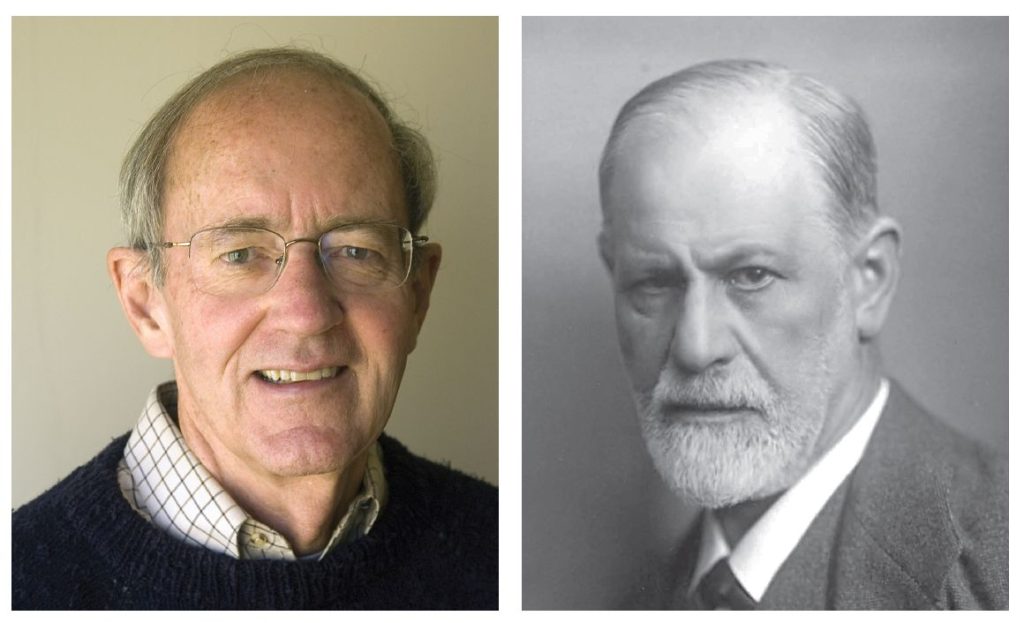
Frederick Crews (a fellow of the Committee for Skeptical Inquiry), who died in June 2024, devoted decades of his life to convincing his colleagues in the humanities that the time had come to let psychoanalysis go.
During a very productive life of more than nine decades, Crews—literary critic and professor emeritus of the University of California Berkeley—became famous twice. The first round, between 1963 and 1965, came after the publication of The Pooh Perplex, an erudite satire that became an unexpected bestseller. The second time, from 1993 onward, came after his explosive article “The Unknown Freud,” which appeared in The New York Review of Books, igniting the so-called Memory Wars and opening up the debate about the true cultural, social, and scientific legacy of Sigmund Freud and the psychoanalytic movement.
As far as psychological science and neurology went, when Crews’s explosive article came out, Freudianism had been reduced, at least in the United States, to a kind of historical landmark in the field, much like the miasma theory of disease in medicine. But in certain branches of the humanities, such as literary criticism, and several “critical theory” models in sociology and political philosophy, it was still taken quite seriously. Being part of that world, Crews was acutely aware of that fact and of the need for correction.
Separated by thirty years, The Pooh Perplex and “The Unknown Freud” are animated by the same skeptical and critical spirit. This spirit is manifested in a relaxed and playful way in The Pooh Perplex and in an acutely and decidedly serious manner in “The Unknown Freud.” The Pooh Perplex is a satire, a series of alleged academic analyses of the adventures of Winnie-the-Pooh, each of them written by Crews as a parody of the dominant style in some branch of the humanities: Marxist, Freudian, existentialist, etc. The Marxist sees in Piglet the revolutionary potential of the proletariat; the Freudian finds sinister Oedipal implications in the fact that none of the stuffed animals in Christopher Robin’s collection has a dad.
The collection of parodies, signed by a then newly minted PhD (Crews had obtained the degree at Princeton in 1958), already pointed to what would become one of the dominant concerns of the mature author: the fatal attraction of the humanities to farfetched, logically circular theoretical schemes that lose themselves in doctrinal labyrinths and generate texts that confuse rhetoric with rigor, leaving behind any contact with empirical, verifiable reality.
Skeptical Journey
Ironically, it was the concern with empirical adequacy—Do our ideas, after all, correspond to the facts of the world?—that at first led Crews to become a champion of the use of Freudian psychoanalysis in literary criticism.
The reasoning could not have been clearer: if literature is a product of the human mind and the human mind is governed by laws and processes correctly described in the psychoanalytic doctrine, then psychoanalysis must be a precious source of literary insight. This phase of Crews’s career was punctuated by his 1966 book Sins of the Fathers, a Freudian reading of the works of Nathaniel Hawthorne.
Crews’s growing discomfort, both with the second premise—“the human mind is governed by laws and processes correctly described in the psychoanalytic doctrine”—and with the greedy character of psychoanalytic thought (which proposes to explain everything from the origin of civilization to the individual behaviors of human beings), became clear in the 1975 volume of essays Out of My System. Here, Crews still defended psychoanalysis as a useful tool for the interpretation of works of literature but condemned what he saw as overblown psychoanalytic claims. For example, when philosopher Norman O. Brown wrote that the history of humanity should be seen “as neurosis, pressing restlessly and unconsciously toward the abolition,” Crews was exasperated: “We must first agree that history can be usefully personified as a psychoanalytical patient … and whether there is any meaningful sense in which history can be regarded as harboring repressed memories of its infantile traumas.”
 In his 1986 book of essays Skeptical Engagements, Crews completes his journey from the belief that psychoanalysis can be useful and valid if kept within its proper domain of application and the strong conviction that the acreage of such purported “proper domain” is exactly zero. The announcement appears right on the first page of the introduction: “For a decade or so I was convinced that psychoanalysis, with its distrust of appearances and its stoic willingness to face the unspeakable, was a useful adjunct to my skeptical principles. Only in halting stages did I come to reverse that opinion and acknowledge that Freudianism is a faith like any other.”
Skeptical Engagements includes, in its first section, four previously published essays on psychoanalysis that appeared in different publications between 1975 and 1985. The last of these was a review of philosopher Adolf Grunbaum’s Foundations of Psychoanalysis.
The reasons for the “apostasy,” as Crews refers to his radical rejection of psychoanalysis, were developed and argued throughout these essays. The common thread is the lack of epistemic basis and empirical adequacy of the doctrine. Psychoanalysis is, after all, based on “things that Freud said,” but the historical and scientific evidence, plus the very texts the Viennese doctor left, show that he had no valid reasons to say such things (hence the absence of an epistemic basis) and that what he said doesn’t tally with the facts (therefore absence of empirical adequacy).
Rhetorical manipulation and appeals to the vanity of the faithful produce the illusion of solidity (the psychoanalytic treatment “seems to produce many more converts than cures,” writes Crews in “The Unknown Freud”). These faithful believe they now have the interpretative key to the universe. Or, as Crews wrote in Skeptical Engagements:
It was not by adding to our scientific knowledge but rather by concocting an ingenious witches’ brew of speculative neurophysiology, mythic conceptualizing about subterranean psychic agents, literary charm, debater’s tricks, mendacious therapeutic claims, and grotesque sexual tales that Freud eventually captured the fancy of civilization—or rather, of those of its members who were trying to modernize their morals and see through all “sublimations,” including the resented achievements of mainstream science.In the essay “The Liberal Unconscious,” Crews pointed out that this defect reappears throughout the psychoanalytic tradition and in attempts to adapt Freud to modern times—because not even the reformist disciples give up the “Freudian mode of drawing inferences,” always ready “to corroborate any number of incompatible hunches about any given phenomenon, which can, according to the analyst’s whim, be taken to mean either what it seems to mean, or exactly the opposite, or some other idea which it has supposedly ‘displaced.’”
The essays of the other sections of Skeptical Engagements do not spare other cultural-academic fads, such as Marxism or deconstructionism. Crews attacked them for the same reasons that led him to reject psychoanalysis: because he saw them as closed, circular theoretical systems—which do not recognize or accept calls for external validation—supported by intellectual communities that will rather try to smear critics instead of engaging with criticism.
Freudian Wars
The essays in Skeptical Engagements made Crews the target of harsh criticism, much of it of a personal character (“diagnostic condescendence,” he defines, coming from “Freudians who see my apostasy more as a symptom than as an intellectual stance”).
But nothing could prepare him for the avalanche of personal attacks that would follow the article “The Unknown Freud,” which was soon followed by the two-part essay “The Revenge of the Repressed” (in the November 1994 and December 1994 issues of The New York Review of Books).
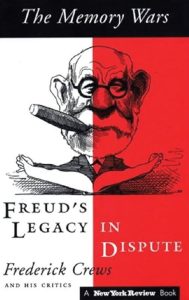 In an afterword of The Memory Wars, which compiled these articles as well as part of the critical reaction to them, Crews commented on the response from psychoanalysts: “These and other writers, though they usually deem years of daily clinical inquiry to be scarcely sufficient for grasping a patient’s deep unconscious structures, did not scruple to diagnose my own fixations by return mail.”
In the set of articles Crews insisted on the same facts exposed in Skeptical Engagements: the standards of ethical behavior and scientific rigor of the man Sigmund Freud were abysmal, and his creation—psychoanalysis—is a pseudoscience. These were not conclusions drawn from thin air but rather a compelling synthesis of the work of philosophers (Adolf Grunbaum, Karl Popper, Frank Cioffi, Ernest Gellner, etc.) and historians (Frank Sulloway, Peter Swales, Frédéric Masson, among others) who had focused not only on the Freudian corpus but also on documents and testimonies that only began to come to light in the 1980s, such as the full content of the letters sent by Freud to his sometime best friend and mentor, Wilhelm Fliess.
The pushback—from psychoanalysts and from academics from areas where psychoanalysis was still considered a valid tool—was probably intensified by the publication in which the exposé had appeared. After psychoanalysis’s decades of decline in the Departments of Psychology of universities and in psychiatric clinics, The New York Review of Books was one of the last bastions within American culture in which the technique was still presented as unquestionably respectable.
As Crews wrote at the beginning of “The Unknown Freud”: “Freudian concepts retain some currency in popular lore, the arts, and the academic humanities, three arenas in which flawed but once modish ideas, secure from the menace of rigorous testing, can be kept indefinitely in play.”
In addition to mocking the psychoanalysts who had set themselves to analyze him instantly (at a distance—and for free!), Crews, in the afterword of The Memory Wars, offered a useful distinction between Freud’s supposed cultural legacy and his real legacy. Freud, he commented, is credited as the originator of several ideas, including unconscious motivation, the belief that the mind deceives itself as a defense mechanism, and that there is an imbalance between reason and desire as well as between reality and fantasy that produces visible symptoms and is a cause of suffering.
Formulated in this vague, generic way, these concepts have been part of Western common sense since at least the Platonic dialogues. Some version of them can be found in wisdom, folklore, and religious traditions all over the globe and in the worldview fostered by literary movements, such as Romanticism.
What distinguishes Freud from Socrates, Plato, or the Buddha (or William Shakespeare, Friedrich Nietzsche, Johann Goethe, or the author of Ecclesiastes) is the specific form he gave to these ideas: he claimed to have discovered where the unconscious motivations come from, what causes them, why they remain unconscious, and how they can be revealed; the exact mechanisms by which the mind manages the conflicts between passion and reason and fantasy and reality; and how to use this knowledge to restore physical and mental health. It turns out that such specific pronouncements lack any foundation beyond the word of their creator, and the structure that organizes them is pseudoscientific. In short, the general merits attributed to Freud do not belong to him, while the specific ones are not merits.
‘Freud Basher’
The controversy surrounding the articles in The New York Review of Books earned Crews the label “Freud basher.” Then there was for a while a certain academic vogue of distinguishing between “Freud critics”—who despite having their caveats still treat psychoanalysis with some respect (Grunbaum and Gellner are usually included in this group)—and the “bashers,” those rude and appalling fellows. But that was only a very superficial distinction: differences in tone do not imply differences in substance, and both “bashers” and “critics,” in general, recognize among themselves much more similarities than differences.
About the label of “basher,” Crews wrote in The Memory Wars that “what passes today for Freud bashing is simply the long-postponed exposure of Freudian ideas to the same standards of noncontradiction, clarity, testability, cogency, and parsimonious explanatory power that prevail in empirical discourse at large.”
Anyway, he seemed to have had fun with it all. A 2006 book of essays, Follies of the Wise, brought a few anecdotes of interactions at campus events in which Crews saw himself as the only dissonant voice among dozens of psychoanalysts and academic groupies of psychoanalysis. (Judith Butler even made a veiled threat of “cancellation.”)
Follies of the Wise is not only about psychoanalysis, however; Crews had never lost sight of the need for empirical adequacy—for demanding that theories about facts should respect the facts they theorize about instead of distorting them. The book is a broad criticism of the anti-scientific and anti-empirical tendencies at the heart of the humanities, against the seduction of fads and discourses that aim to sound politically correct without even trying to be empirically correct—or that reject, in principle, the possibility (or desirability) of empirical corroboration.
If the theme of psychoanalysis keeps popping up throughout the book, Crews wrote, “that is because psychoanalysis, as the queen of modern pseudosciences, has pioneered the methods and directly supplied some of the ideas informing other shortcuts to ‘depth.’” His main target is the notion of “deep knowledge” in the sense of an insight so convincing that it needs no validation.
Illusion
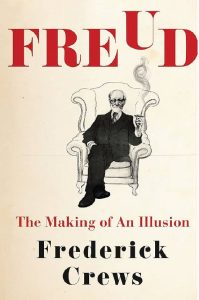 In 2001, Crews published a second volume of satirical reviews of Winnie-the-Pooh—Postmodern Pooh—in which the parody extended to more recent ideas, such as evolutionary psychology, and 2017 saw the issuing of his monumental and demolishing biography of Freud, Freud: The Making of an Illusion.
The Making of an Illusion is important not only because it is one of the rare biographies of Freud written by someone who is not a fervent evangelist of psychoanalysis—like the most famous works of Ernest Jones and Peter Gay—but also because it was one of the first to come out after the beginning of the publication of the Brautbriefe, the vast correspondence exchanged between Freud and his then-fiancée, Martha Bernays, between 1882 and 1886.
This material had been kept secret for more than a century; only the most harmless letters and the excerpts congruent with the Freudian myth had been disclosed before, and only biographers and researchers sympathetic to the “cause” had received access to the complete collection. The full uncensored publication of these materials began only in the year 2000, when the embargo imposed by Anna Freud ended.
Along with the letters sent to Fliess and other documents that have come to the fore in the past four decades, the resulting portrait is not flattering at all. A review of Crews’s biography of Freud published in The New York Times mentioned that Freud, the character, “doesn’t really develop, he just builds a rap sheet.” In another review, published in the January/February 2018 issue of Skeptical Inquirer, psychiatrist Peter Barglow said that “Crews has convinced me to question or jettison most of Freud’s spurious contributions.”
[ad_2]
Source link
